
In the shadow of Japanese history, far from the exuberance of many modern hybrids, grows an orchid that needs no grand gestures to impress. Neofinetia falcata, known in Japan as Fukiran, has been appreciated for generations for its compact build, refined appearance and distinctive fragrance in the evening hours.
This Japanese orchid is not a species that stands out primarily for size or bright colors. Rather, its appeal lies in nuance. In the regular fan growth, in the tension of the leaves, in the shape of the roots and in the quiet elegance the plant exudes, even outside of flowering. For this very reason, Neofinetia falcata has earned a reputation among collectors that goes far beyond that of an ordinary chamber orchid.
What is Neofinetia falcata
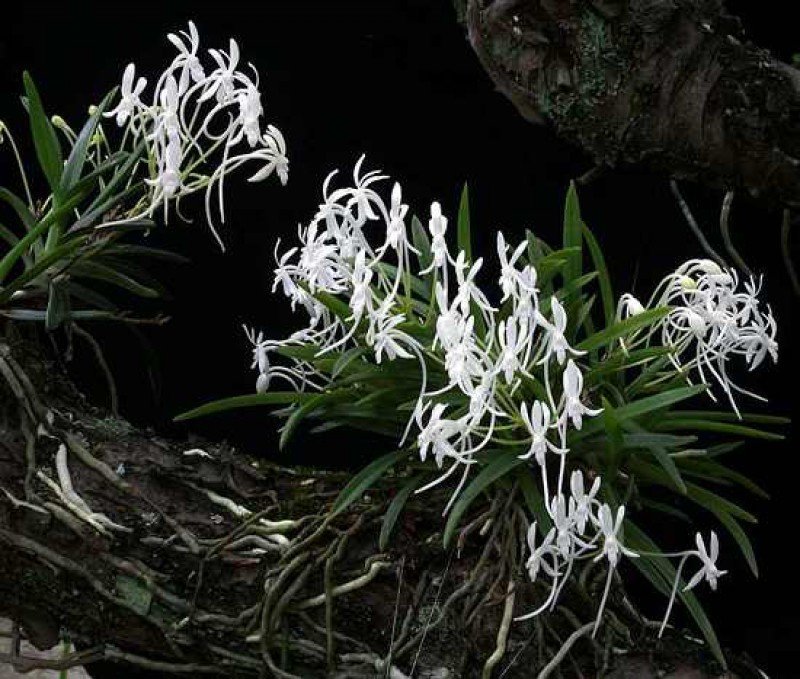
Neofinetia falcata is a compact, epiphytic orchid native to Japan, Korea and parts of China. In its natural habitat, it grows on trees and sometimes on rocky substrates, in places where air movement, moisture and rapid drying alternate constantly.
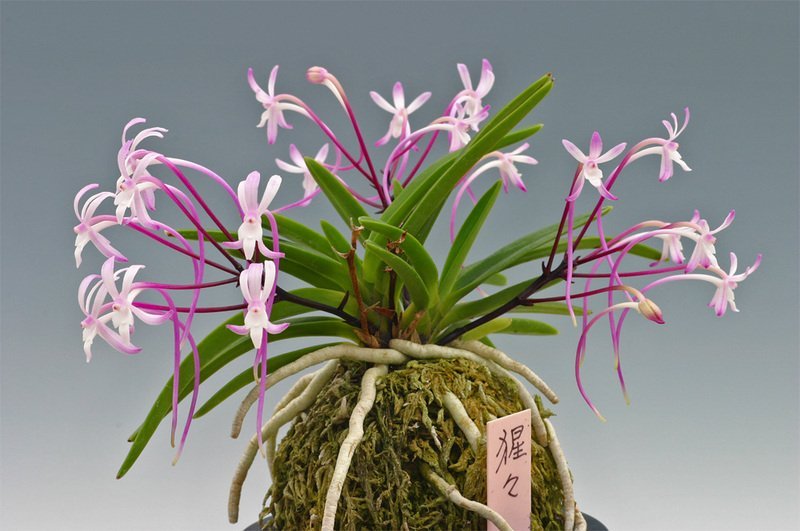
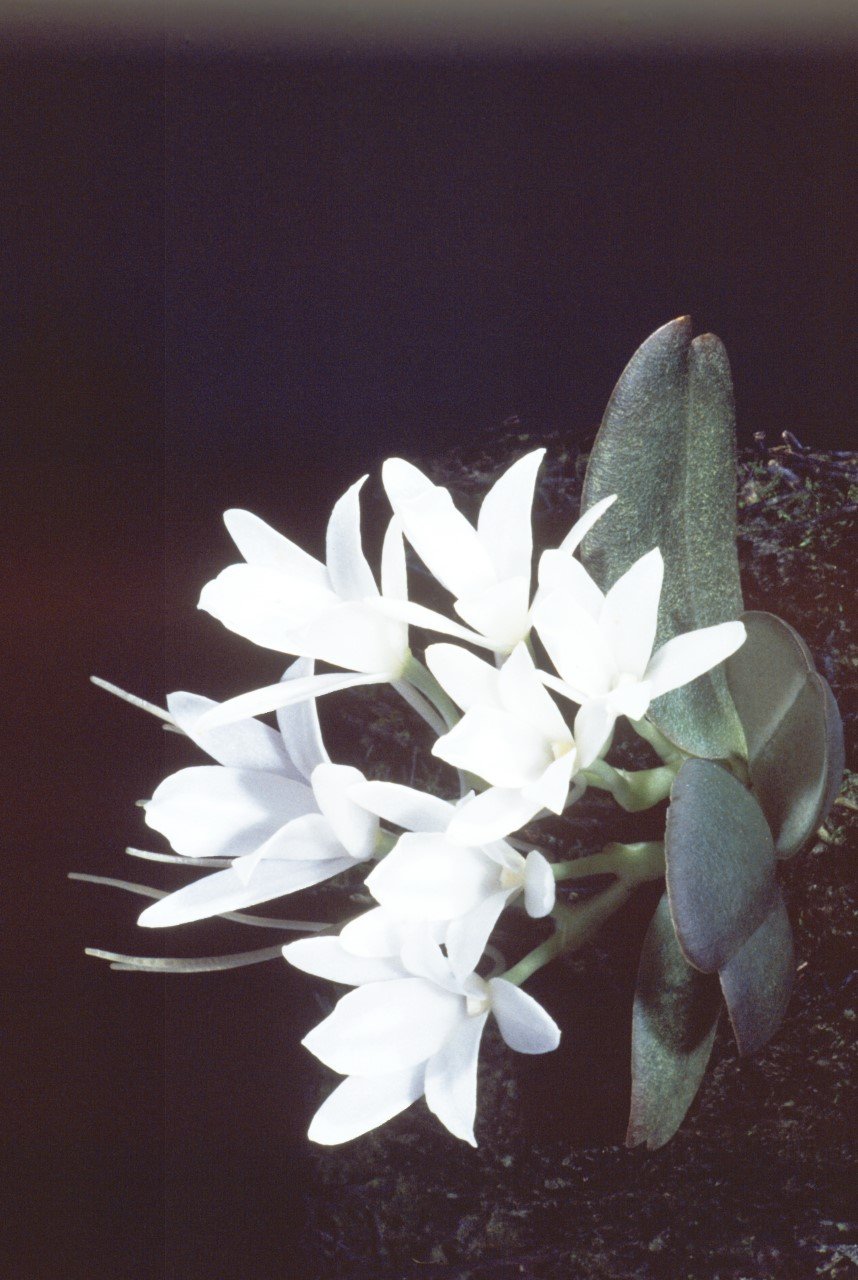
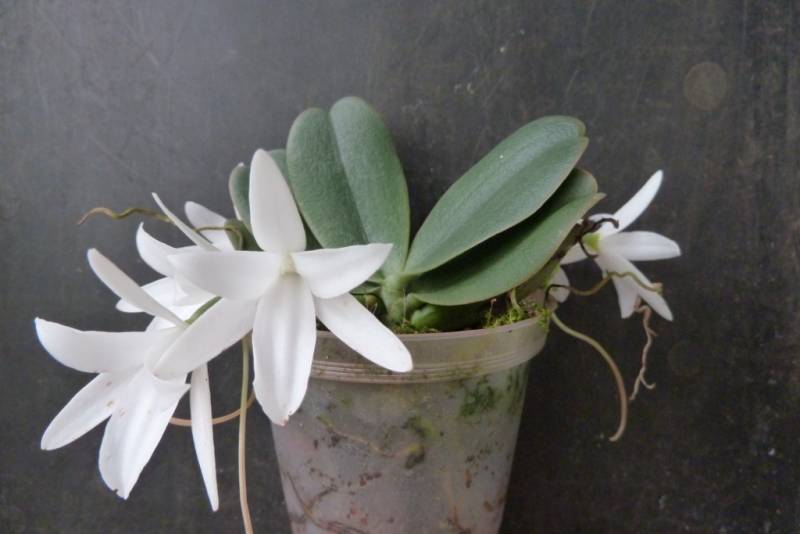
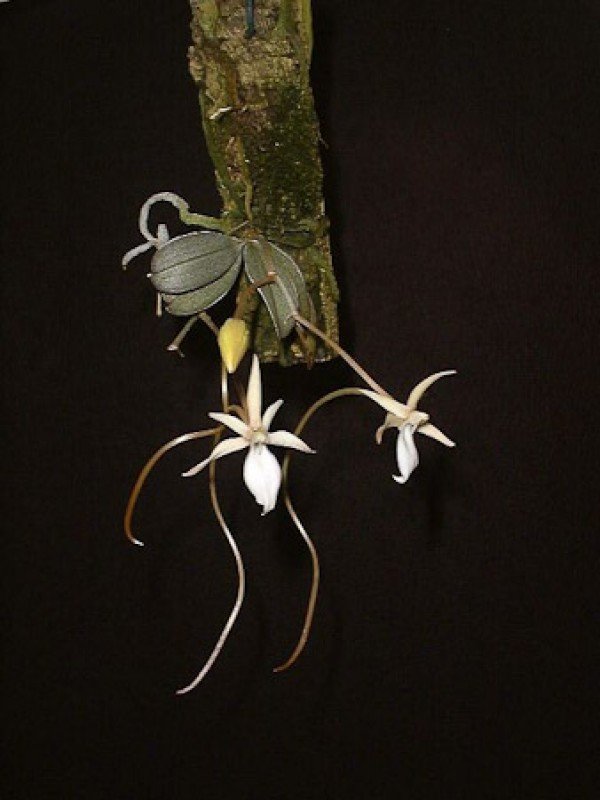
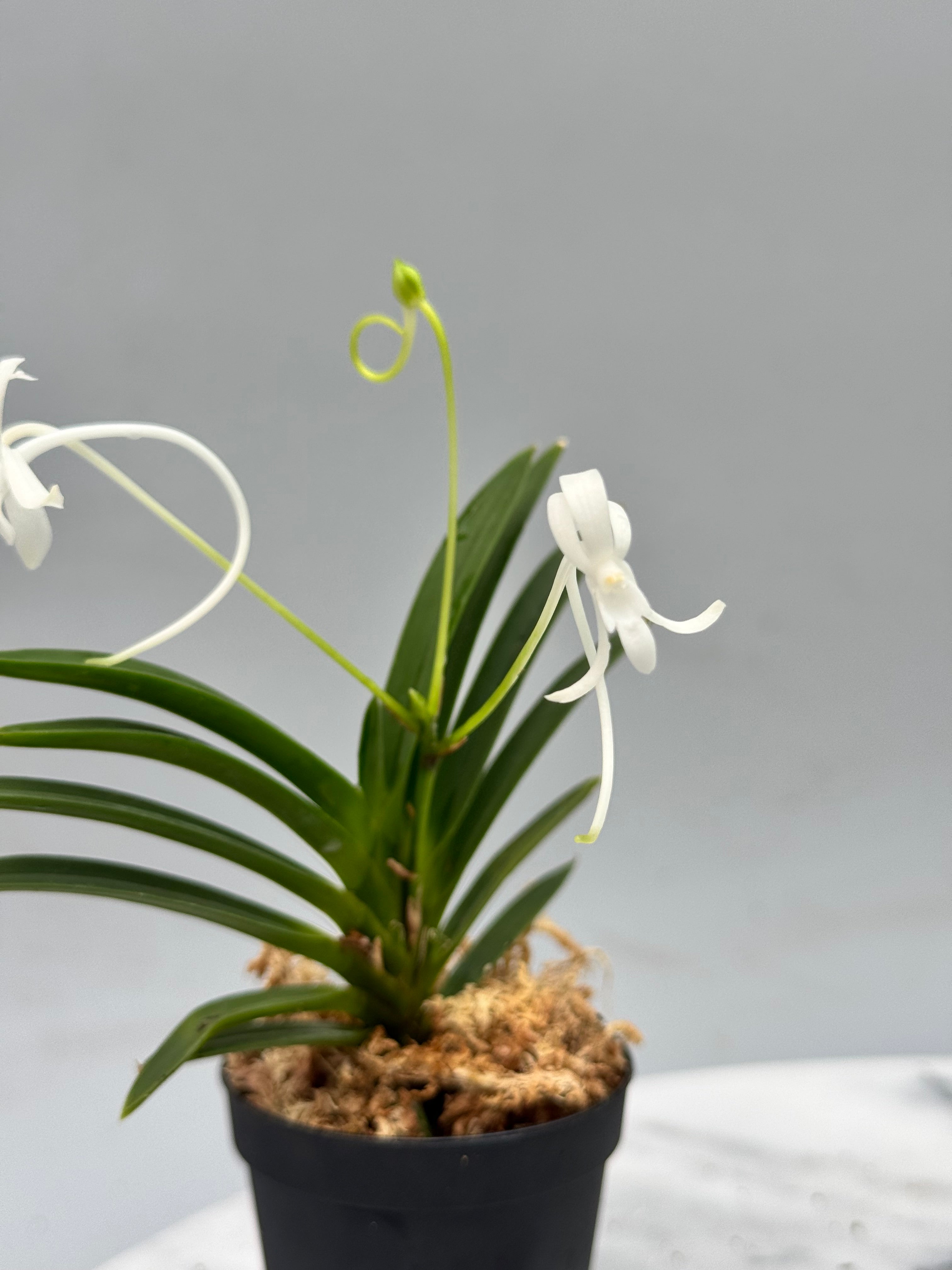
This origin is directly reflected in the plant's structure. The leaves are arranged in a compact fan, feel sturdy and remain uncluttered in size. In the flowering period, small white flowers appear with a long spur. The flowers are subtle, but their fragrance adds an extra dimension to the plant. Especially later in the day and in the evening hours, that fragrance is often most noticeable.
For many enthusiasts, therefore, the appreciation of Neofinetia falcata does not begin only with the flowers. Even without flowers, the plant already has a strong appeal due to its symmetry, tranquility and compact architecture.
Why Neofinetia falcata is so appreciated in Japan
In Japan, Neofinetia falcata has had a special status for centuries. There, the species is known as Fukiran, a name inextricably linked with refinement, tradition and attention to detail.
Within the Japanese appreciation of Fukiran, the focus was not only on the blooms. It was precisely the subtle differences between plants that received much attention. The position of the leaf, the shape of the leaf, the way new leaves appear and even the appearance of the roots could make a plant special. This created a culture in which not the spectacular but the refined was admired.
That distinction is still palpable today. Those who delve into Neofinetia falcata quickly notice that this orchid is viewed in a different way than many common species. It is not only a flowering plant, but also an object of observation and appreciation beyond its flowering period.
Fukiran, an orchid for lovers of detail
The world of Fukiran revolves around small differences that are hardly noticeable to outsiders, but are all-important to collectors. Within this Japanese orchid tradition, considerations include growth form, leaf type, variegation and overall appearance.
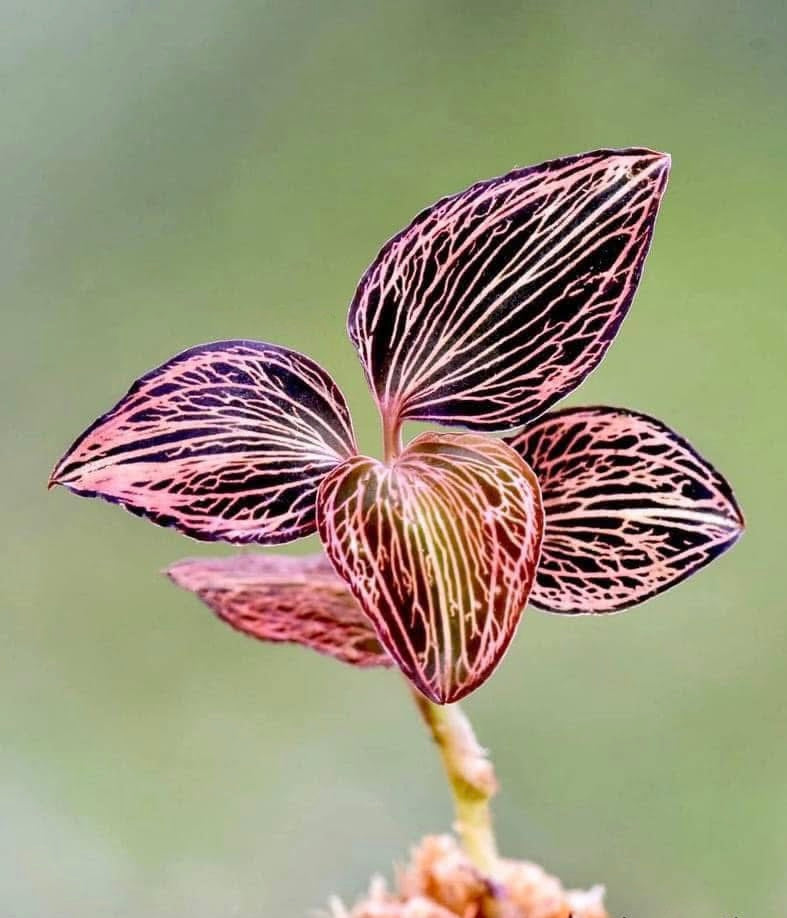
Some selections stand out because of variegated leaves with fine light streaksor patterns. Others, on the contrary, are appreciated for their compact form, divergent leaf position or balanced structure. As a result, Neofinetia falcata can offer a surprisingly broad collecting world within a single species.
For the true enthusiast, the charm is not in massiveness, but in nuance. This makes Fukiran fundamentally different from many orchids chosen primarily on striking flowers alone.
The fragrance and blooms of Neofinetia falcata
Although Neofinetia falcata often evokes admiration already without flowers, the blooms remain an important part of its appeal. The flowers are white, elegantly shaped and feature a long spur that gives the plant its characteristic silhouette.
What makes these blooms extra special is the fragrance. Many enthusiasts describe it as sweet, soft and rich, with a warm character that comes out especially well in the evening hours. As a result, the flowering of Neofinetia falcata is not showy, but rather intense for those who experience the plant with attention.
For collectors, this is typical of this species. Not big or loud, but refined and enduringly impressive.
Why collectors keep looking for Neofinetia falcata
The collecting value of Neofinetia falcata lies in several factors at once. The species is compact, culturally charged, slow-building and rich in subtle variation. This keeps it attractive to enthusiasts looking for more than just a pretty bloomer for the windowsill.
The pace of the plant also comes into play. A well-developed Neofinetia falcata builds up gradually. Beautiful specimens therefore often gain extra value precisely because their appearance is the result of time, rhythm and careful cultivation.
In addition, this Japanese orchid has its very own place within collections. Where many species may visually overlap, Fukiran has an instantly recognizable appearance that is difficult to compare with other orchids.
Neofinetia falcata care requires rhythm and air
Anyone who wants to care for Neofinetia falcata properly would do well to look at its natural growth habit. This orchid likes plenty of air around the roots, regularity in moisture and a clear alternation between growing season and dormant period.
That's why Neofinetia falcata is often grown on a raised, airy base of sphagnum, allowing the roots to dry out quickly while still getting adequate moisture. That method of cultivation matches the species' need for ventilation and control over watering.
A cooler winter period often plays an important role as well. That helps the plant to follow its natural rhythm and supports the establishment of new growth and flowering. As such, Neofinetia falcata is not a difficult orchid in the classic sense, but it is a species that performs better when its seasonal rhythms are taken seriously.
Is Neofinetia falcata suitable for beginners
Neofinetia falcata is not the most demanding orchid, but she does require a different approach than many standard chamber orchids. For beginners open to a more mindful way of growing, this species can actually be very instructive and satisfying.
Those looking primarily for large flowers and quick results may be more likely to reach for other varieties. Those who see charm in compact growth, refinement, fragrance and tradition will discover in Neofinetia falcata, on the contrary, an orchid with exceptional character.
A small Japanese orchid with a big story
Neofinetia falcata proves that an orchid does not have to be large or exuberant to make a deep impression. It is precisely the combination of compact growth, fragrant flowering, cultural significance and subtle variation that makes this species so special.
Within the world of Fukiran, it is not about haste, but about attention. Not about effect, but about precision. This makes Neofinetia falcata an orchid that continues to captivate collectors and maintains its special place within the world of rare and botanical orchids even today.
Frequently asked questions about Neofinetia falcata
Is Neofinetia falcata the same as Fukiran
Yes. Neofinetia falcata is the botanical name of the species. In Japan, this orchid is traditionally known as Fukiran.
Does Neofinetia falcata really smell strong
Many specimens have a distinct, sweet fragrance, especially in the evening hours and during warm conditions.
Is Neofinetia falcata difficult to care for
Not necessarily, but the species does require airy growing conditions, good ventilation and a natural seasonal rhythm.
Why is Neofinetia falcata popular with collectors
Because this Japanese orchid is valued not only for its blooms, but also for its growth form, leaf character, variety and cultural background.
There are many different forms of Neofinetia falcata
Yes. Many selections and cultivars exist within Fukiran, including those with variegated leaves, more compact forms or other subtle growth characteristics.