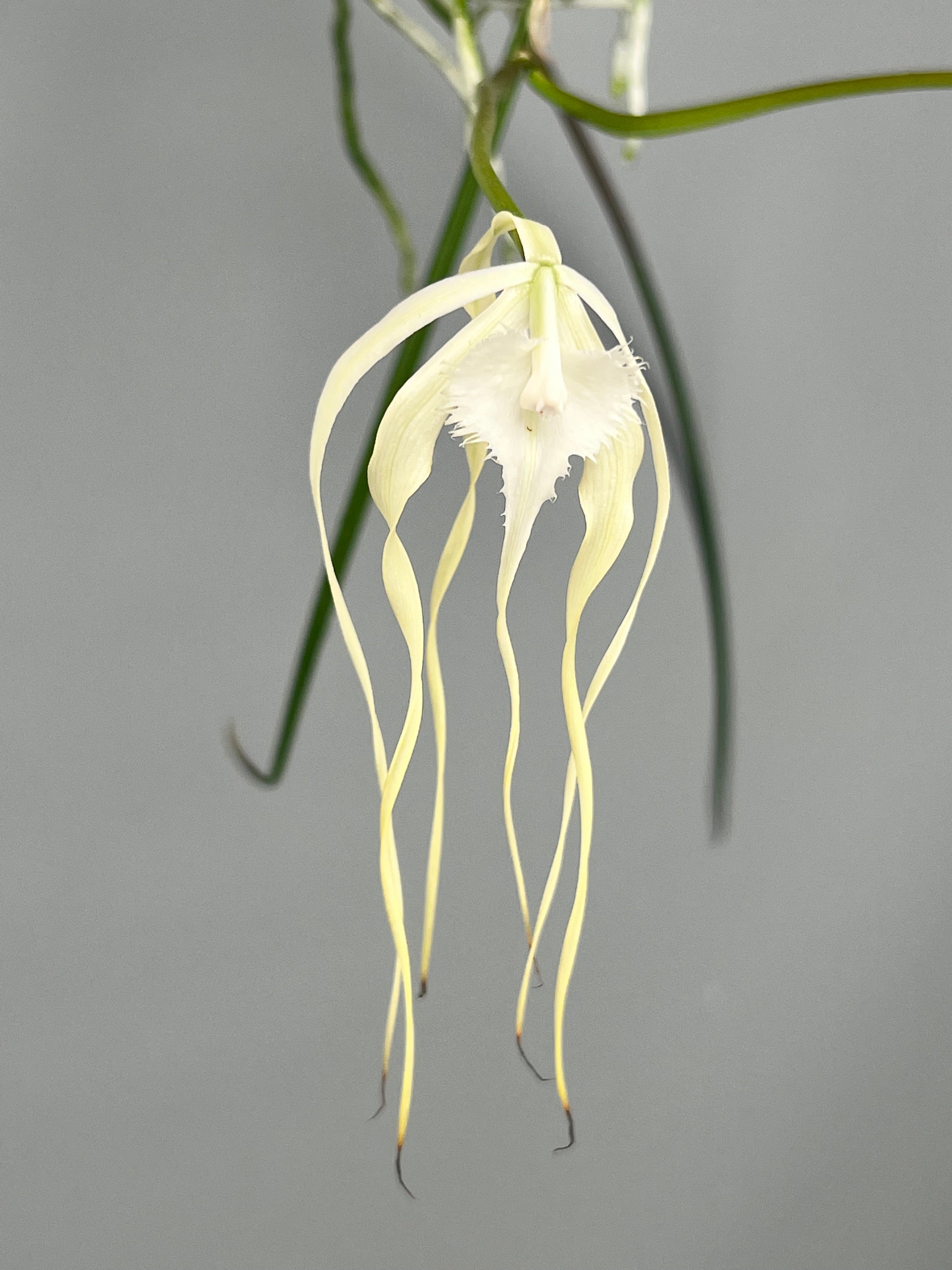
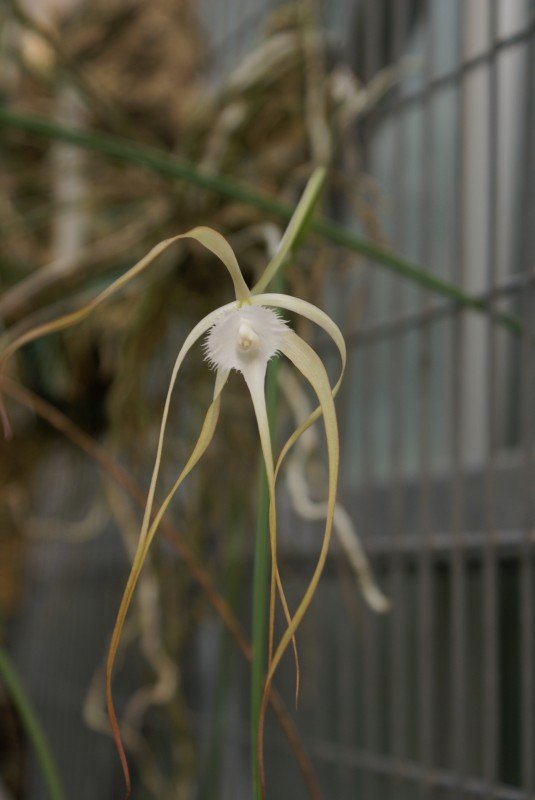
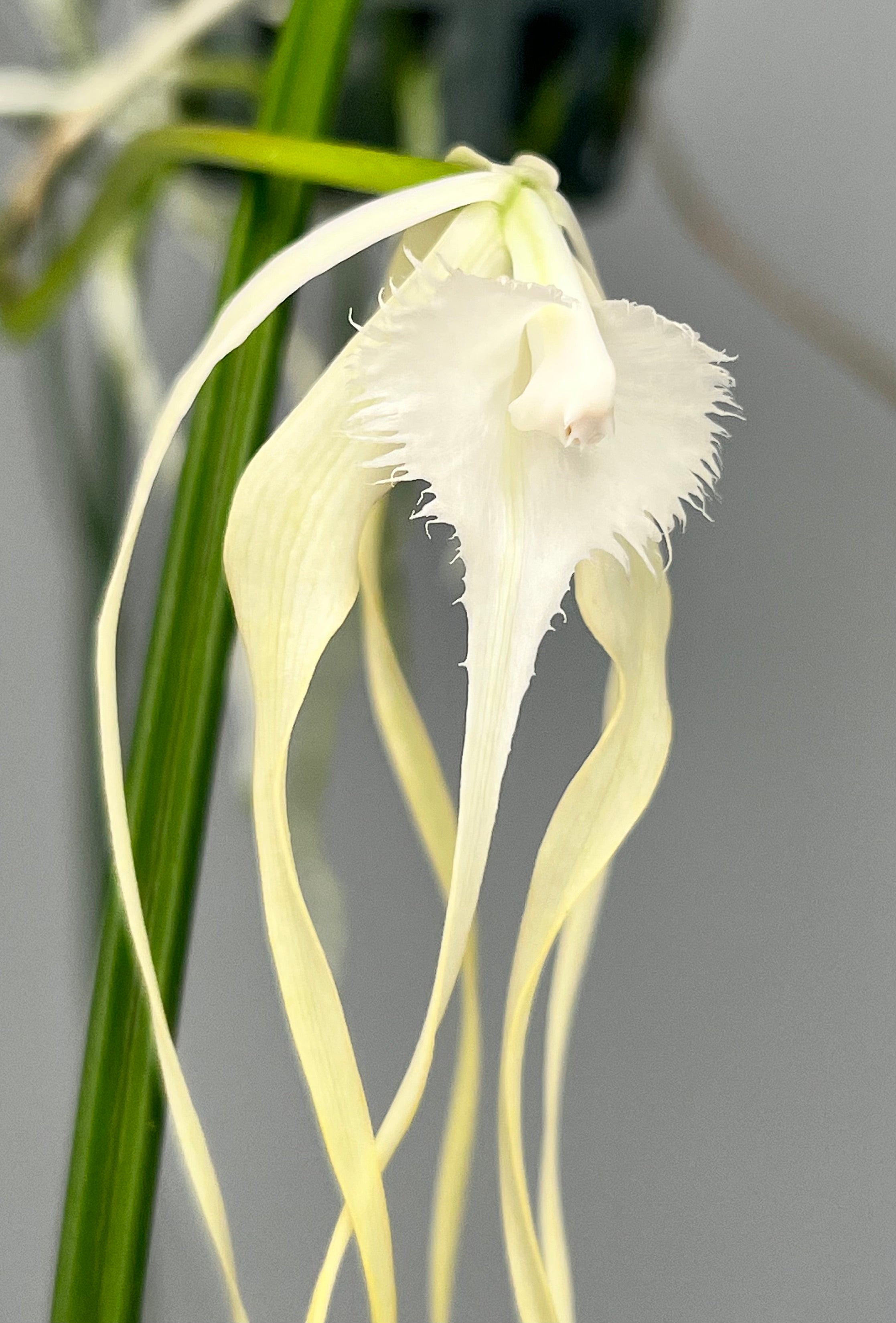
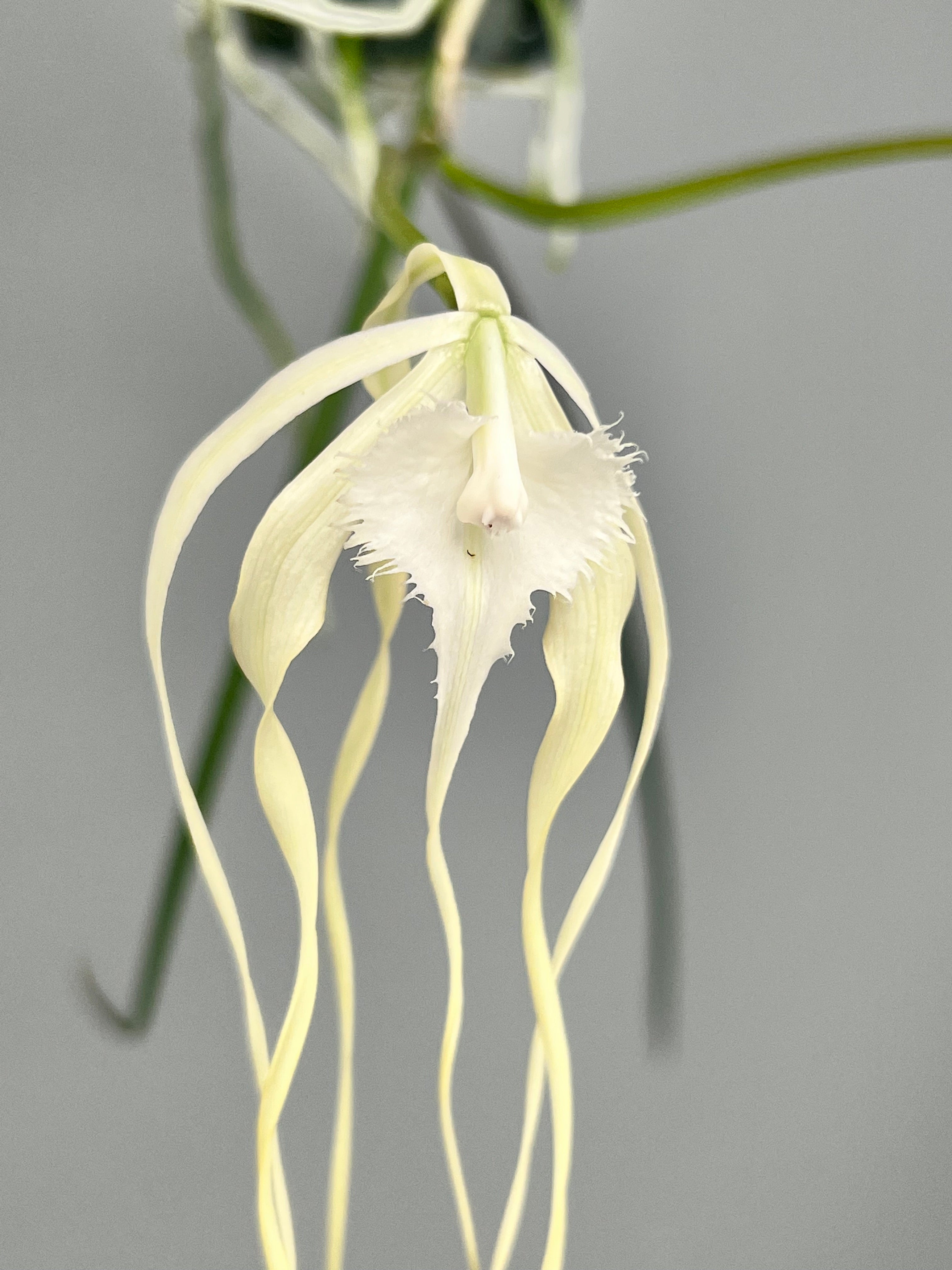
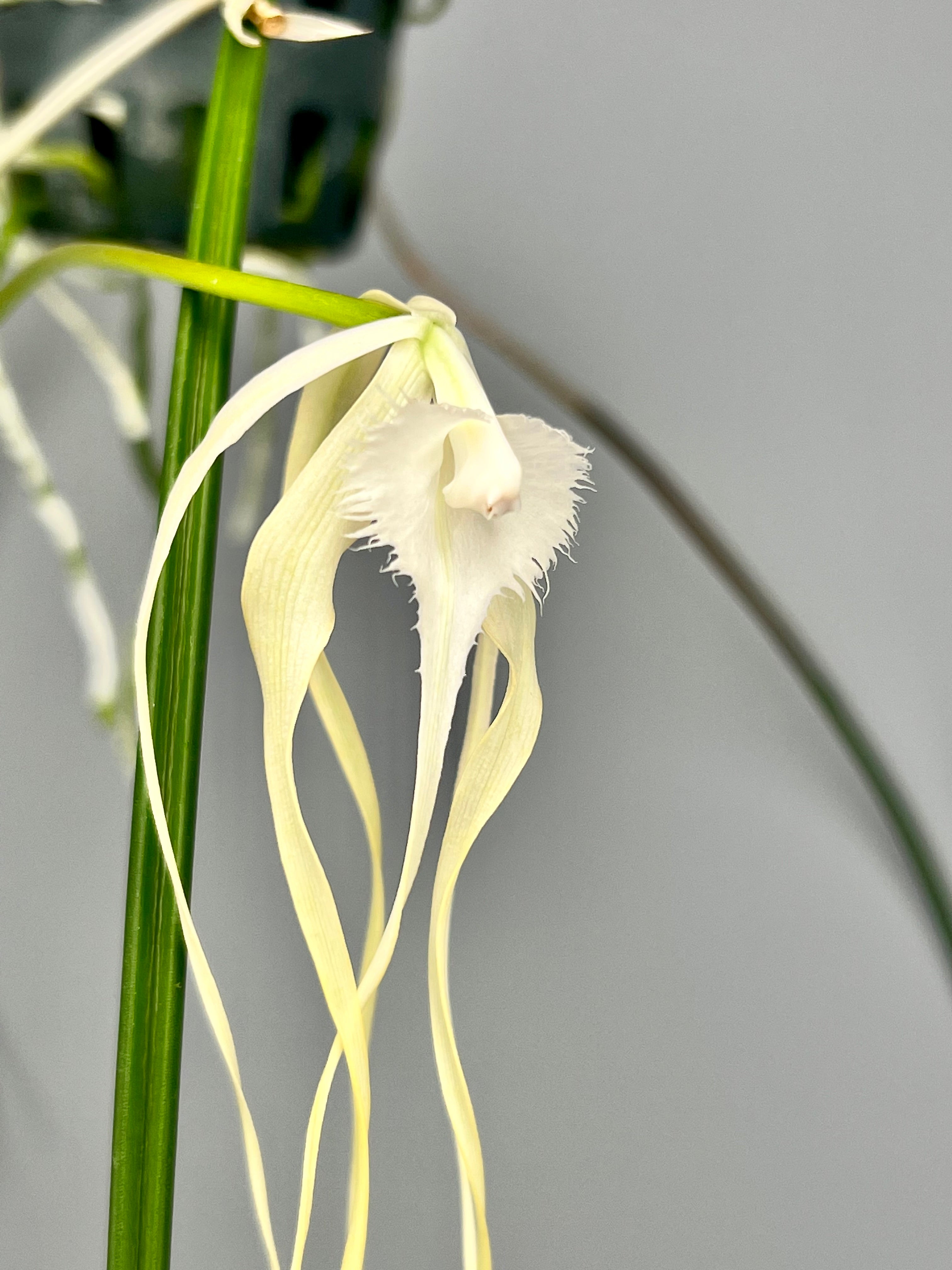
Brassavola cucullata is a unique botanical orchid with an elegant, almost spider-like flower shape. The long, narrow flower parts, the white to creamy-yellow color, and the fringed lip give this species a look all its own. This is not a classic orchid with round, full flowers, but rather a species for enthusiasts who appreciate natural forms, a nocturnal fragrance, and a somewhat wilder character.
The plant has slender, hanging to curved leaves and thrives in an airy growing environment. Brassavola cucullata is particularly prized by collectors of botanical orchids and enthusiasts of fragrant species. The flowers are often most fragrant in the evening and at night, as is typical of many Brassavola species. This makes this orchid particularly striking in a spot where you can truly experience its scent.
Origin
Brassavola cucullata is native to tropical America. Kew lists the Caribbean, Colombia, and Venezuela as its natural range. Other orchid sources also mention the species more broadly as occurring in parts of Central and South America. In the wild, Brassavola cucullata grows as an epiphyte on trees or as a lithophyte on rocky outcrops, usually in warm to humid tropical conditions.
This habitat explains a great deal about its care requirements. The roots are accustomed to air, rain, rapid drying, and good ventilation. The plant does not grow in heavy soil but naturally attaches itself to bark or rock, where water drains quickly and the roots are re-oxygenated.
Characteristics
Brassavola cucullata has a slender, graceful growth habit. The leaves are long, narrow, and often somewhat pendulous or curved. They may appear almost grass-like or reed-like, but are sturdier and leathery in texture. Because of this shape, the plant does not take up a great deal of space, but it can grow long and elegantly.
The flowers are highly distinctive. They are usually white to cream-white, sometimes with yellow-green or warm yellow hues. The sepals and petals are long, narrow, and pointed, giving the flower an airy, spider-like shape. The lip is striking and often finely fringed, giving the flower an almost lace-like appearance.
The fragrance is an important part of its ornamental value. As with many Brassavola species, the scent becomes stronger mainly in the evening or at night. This aligns with natural pollination by nocturnal insects. Depending on the plant, its age, and conditions, blooms may appear during the warmer months and continue into fall or winter.
Care
Light
Brassavola cucullata thrives in plenty of bright, indirect light. It can tolerate brighter conditions than many shade-loving orchids and often withstands morning or late afternoon sun. However, intense midday sun through a window can cause leaf damage, especially when humidity is low.
If there is too little light, the plant will usually continue to grow but will be less likely to bloom. A very bright windowsill, a sunroom, a warm greenhouse, or a spot under good grow lights is suitable. The leaves should remain firm and fresh green; reddish or yellowish discoloration may indicate too much direct sun.
Temperature
This species grows well in warm to moderate conditions. A daytime temperature of about 20 to 28°C is suitable. At night, the temperature may drop to about 15 to 20°C. Short-term fluctuations are usually not a problem, as long as the plant is not left cold and wet for extended periods.
Brassavola cucullata can be found at various elevations in the wild and is therefore not extremely picky, but it grows best with stable warmth, sufficient light, and good air circulation.
Substrate and Cultivation Method
Brassavola cucullata grows best in a very airy growing medium. The plant can be mounted on cork or wood, optionally with a small amount of sphagnum moss around young roots. An open basket or pot filled with coarse bark is also suitable, as long as the growing medium dries out quickly.
Do not use a compact potting mix that stays wet for a long time. The roots must be allowed to breathe again after watering. When growing in pots, repotting is not recommended: a pot that is too large stays damp for too long and increases the risk of root rot.
For growing indoors, an open basket with coarse bark is often more practical than growing in a fully mounted setup. Mounted plants look natural but require more frequent watering.
Humidity
A humidity level of about 50 to 75% is suitable. For mounted plants, the humidity may be higher, as the roots dry out more quickly. Good air circulation remains important in this case. Damp, stagnant air can cause mold or rot.
Brassavola cucullata is often slightly more tolerant of shorter dry periods than many thin-leaved orchids, but active root growth and flowering are clearly better with more stable humidity.
Watering
Water generously when the roots are dry or nearly dry. Allow the plant to dry out thoroughly afterward. Brassavola cucullata prefers regular watering during active growth, but does not tolerate roots that remain wet for extended periods.
When grown on a mount, watering may be needed more frequently during hot periods. In an open pot or basket filled with coarse bark, slightly more moisture remains available, making it easier to control watering. Water preferably in the morning so the plant can dry out during the day.
Preferably use demineralized water, rainwater, or other soft water at room temperature. Rinse thoroughly from time to time to prevent the buildup of fertilizer salts.
Fertilization
During the active growth period, apply a light dose of orchid fertilizer regularly. A quarter to half the recommended dose is usually sufficient. Brassavolas respond well to regular, light fertilization, especially when they receive plenty of light and are actively developing roots.
During cooler or darker periods, fertilization may be reduced. Do not apply heavy fertilization when the plant is growing slowly or when the substrate remains moist for extended periods.
Flowering
Brassavola cucullata blooms with striking, narrow flowers featuring a fringed lip. The flowers are usually white to cream-white with yellow-green or warm yellow hues and have a characteristic spider-like shape. The fragrance is often most noticeable in the evening and at night.
Flowers may appear on mature shoots when the plant has sufficient light, healthy roots, and a steady growth rhythm. After flowering, the flower stalk may be removed once it begins to dry out.
Care Level
Brassavola cucullata is of moderate difficulty. The plant is not extremely difficult, but it does require a different approach than orchids that grow in a moister potting mix. The most important factors are plenty of light, well-aerated roots, and sufficient drying time after watering.
This plant may be suitable for enthusiasts who already have some experience with Cattleya-like orchids, Brassavolas, or mounted plants. For beginners, it is particularly manageable as long as care is taken to ensure the roots do not remain wet for too long.
Who is this plant suitable for?
Brassavola cucullata is suitable for enthusiasts of botanical orchids, fragrant varieties, and plants with a striking natural flower shape. This is a good choice for someone who isn’t necessarily looking for large, round flowers, but rather a graceful, distinctive variety with a nighttime fragrance.
The plant thrives on a bright windowsill, in a sunroom, a warm greenhouse, or a plant room. It is less suitable for a dark living room or a spot where little attention is paid to watering and drying times. For collectors who love Brassavola, Cattleya relatives, or unusual epiphytic orchids, Brassavola cucullata is a particularly attractive variety.
Caring for it at home or in a greenhouse
Indoors, Brassavola cucullata is best kept in an open basket or small pot filled with coarse bark. This keeps the roots well-aerated, but the plant doesn’t dry out as quickly as it would on cork. In a greenhouse or display case, mounted cultivation can work well, especially when humidity is higher and the plant is misted regularly.
The plant gives clear signals. Firm leaves and active root tips indicate good conditions. Wilted leaves may indicate insufficient water uptake due to damaged or overly dry roots. Soft, brown roots usually indicate too much moisture without enough air.
Additional care tip
It’s better to provide Brassavola cucullata with plenty of light and an airy growing environment than to keep it in a pot that’s too damp. This species tolerates brief periods of drying out better than constantly wet roots. When the plant is actively growing, producing new root tips, and maintaining firm leaves, the balance between light, water, and air is usually just right.