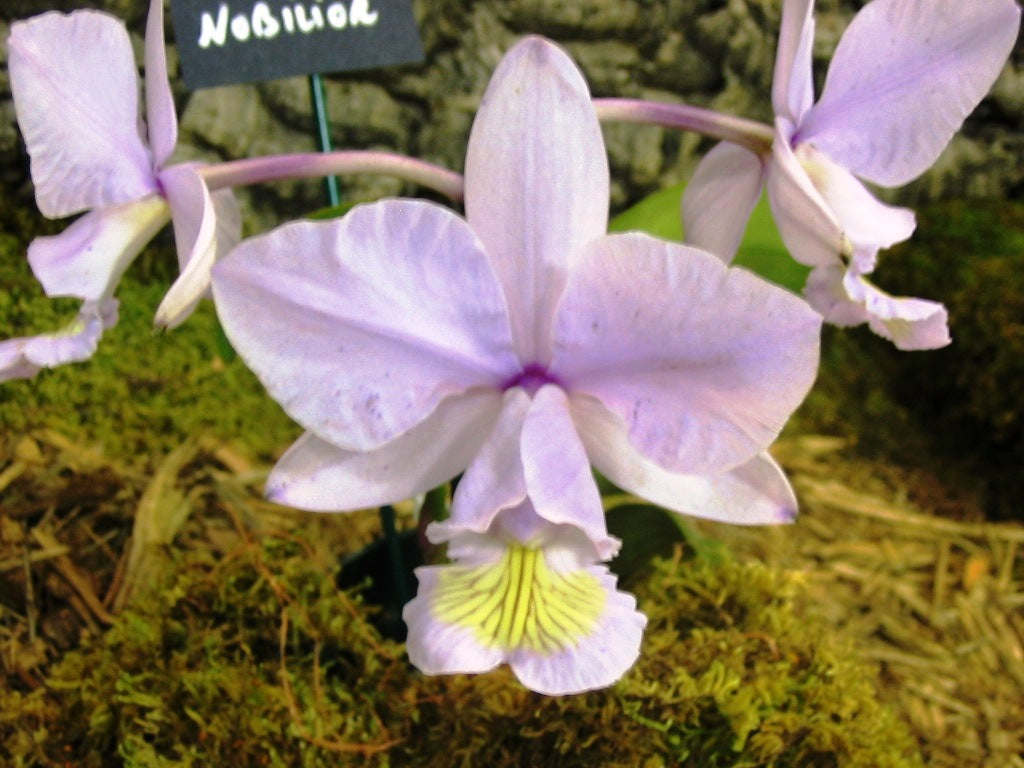
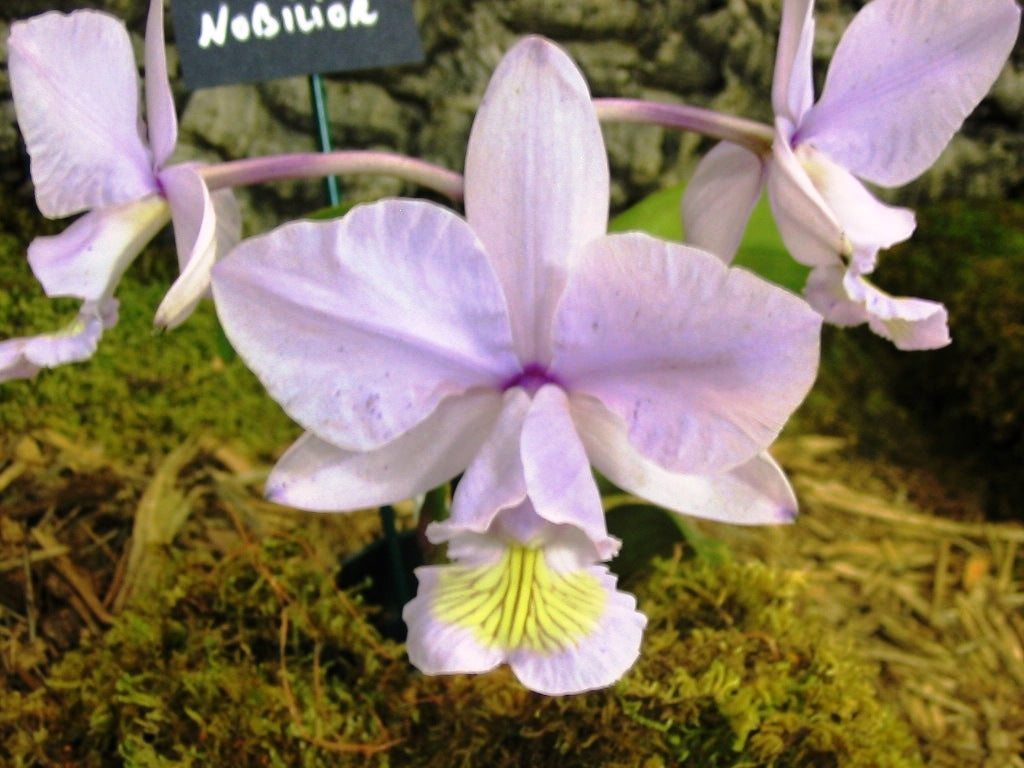
Some Cattleyas don't push themselves forward; they invite you to look more closely. Cattleya nobilior var. amaliae opens flat and spacious, with pale pink to soft lilac petals that take on a striking depth in bright daylight. In the lip, a yellow-green, lemony throat glows with fine purple-lilac veining. The fragrance is distinct without being overpowering. Usually one to a few large flowers appear per stem. The whole looks calm and balanced, just the kind of look you like to see in your collection.
Origin
Cattleya nobilior* comes from the interior of Brazil, where light, air and distinct seasons set the rhythm. The species grows both on branches and on rock slabs and is therefore accustomed to rapid drainage and constant ventilation. A special characteristic of nobilior is its rhizanthous flowering: the flowering stalk does not emerge from the top of the pseudobulb, but straight from the rhizome between the shoots. Amaliae retains the classic silhouette, with the softer color tone that made its name.
Characteristics
The flowers are large, often 12-{fa6abc08dd332bb028e8944de4b8c917}}, and in good light show a vibrant but subdued combination of soft lilac with the distinctive yellow-green throat in the lip. The plant remains compact, usually with bifoliate pseudobulbs and sturdy leaves. In culture, it appreciates plenty of light, air and a growing method that allows roots to dry out regularly without drying out.
Care
Light
This Cattleya likes lots of bright light. Morning sun and late afternoon sun are ideal. In the bright afternoon sun a light filter is pleasant. Too little light quickly translates into hesitant or absent flowering.
Temperature
Moderate to warm is most pleasant. During the day the plant feels comfortable at 18-30 °C, at night it may be a few degrees cooler. A noticeable difference between day and night supports bud establishment.
Substrate
Choose airy and rapidly draining. Coarse bark with some charcoal works well. Repot a little tighter, so the mixture dries predictably and the roots get plenty of oxygen. Mounting on cork is also possible, provided you adjust the water regime accordingly.
Humidity
Aim for 60-75% with good ventilation. Brief misting is allowed in drier air, but allow leaves and growing tips to dry smoothly each time. A gently moving airflow prevents stagnation and keeps the plant vital.
Nutrition
During active growth, amaliae appreciates regular, light feeding. A diluted orchid fertilizer once every one to two weeks is more than sufficient. As the shoots mature, the frequency can be reduced.
Watering.
Use demineralized water or clean rainwater. During the growing season, water regularly and allow the substrate to dry slightly in between. In cooler or shorter days, the plant may be noticeably drier without drying out completely. On an assembly, it dries faster; adjust frequency accordingly.
Flowering
A little more light leading up to the season helps. A stable stand without major temperature shocks prevents bud drop. Keep open flowers out of bright afternoon sun and from dry, hot air currents so that color and shape are nicely preserved.