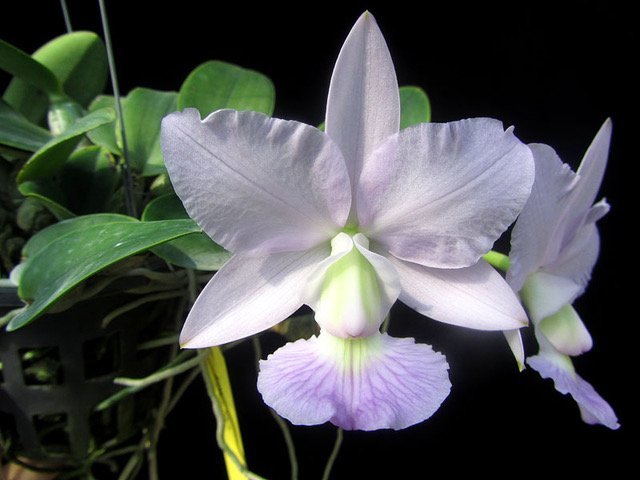
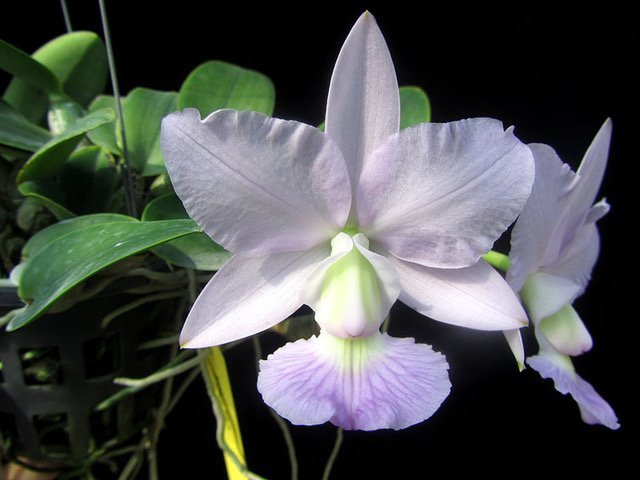
Cattleya walkeriana Blue is a compact Brazilian orchid species that demonstrates that a plant doesn't have to be large to produce impressive Cattleya flowers. The short pseudobulbs and sturdy leaves remain modest in size, while the fragrant flowers are strikingly large in proportion to the plant.
“Blue” refers to the rare coerulea color form. Don’t expect a bright sky blue, but rather subtle shades ranging from silver-lavender to slate blue and cool violet. The lip is usually slightly darker in color and may have a contrasting white to pale yellow center. The cool character of the flower really stands out, especially in bright daylight.
Thanks to its compact growth habit, powerful fragrance, and unique color, this plant is particularly appealing to collectors who have limited space but are seeking a true botanical Cattleya with a distinct character.
Name and Color Form
Cattleya walkeriana Blue is not a registered hybrid, and “Blue” is not an official clone name that has been officially recognized. It is a trade designation for plants belonging to the blue or coerulea color form of Cattleya walkeriana.
Within the orchid world, the word “blue” is used more broadly than with many other plants. Cattleya orchids do not produce a pure blue pigment. Their so-called blue flowers therefore usually have a gray-blue, lavender-blue, or violet-blue hue.
The color can change under different lighting conditions. In cool daylight, the flower often appears grayer and bluer, while under warm indoor lighting, more purple becomes visible. Camera settings and the display also influence how blue the sample photo appears.
If the plants offered have not been vegetatively propagated from a single designated clone, flower shape, color intensity, and pattern may vary slightly from plant to plant. The product photo therefore provides a representative image of the color variety but does not guarantee a completely identical flower.
Origin
Cattleya walkeriana occurs naturally in west-central and southeastern Brazil. Its primary range lies on and around the Brazilian Central Plateau, where the species is also known as the “queen of the Brazilian savanna.”
There, the plant grows as an epiphyte on trees and as a lithophyte on rocky substrates. Some populations grow on rough tree bark, along limestone formations, or near watercourses. The roots receive plenty of air and can dry out quickly after rain.
The climate features distinct dry periods. As a result, this species is adapted to rapid alternation between becoming thoroughly wet and drying out again. The pseudobulbs and sturdy leaves store enough moisture to survive short dry periods.
This origin explains why Cattleya walkeriana thrives in conditions with plenty of light and air around its roots but does not respond well to compact substrate that remains wet for extended periods.
Characteristics
The plant grows sympodially from a short, creeping rhizome. Compact, usually round to spindle-shaped pseudobulbs develop on this rhizome. Each pseudobulb typically bears a single sturdy, leathery leaf; some specimens may occasionally produce a second leaf.
A well-established plant spreads slowly sideways and can eventually form a dense cluster of pseudobulbs. Despite this growth, the species remains considerably more compact than many classic large-flowered Cattleya’s.
The flowers are usually about 8 to 12 centimeters wide. They have a firm, somewhat waxy texture and open relatively flat. The broad petals and striking lip give the flower a much fuller appearance than one would expect given the plant’s size.
Each inflorescence usually produces one to a few flowers. The most important ornamental feature is therefore not a long cluster of flowers, but the combination of large individual flowers, substantial bloom, and a powerful fragrance.
The fragrance is often sweet and spicy and may be reminiscent of vanilla or cinnamon. It is generally strongest during the day and at slightly warmer temperatures. The exact fragrance profile and intensity may vary by plant and flowering stage.
An Unusual Flowering Pattern
Cattleya walkeriana blooms differently than most well-known Cattleya species. In a typical Cattleya, the flower stalk emerges from a sheath at the top of a mature pseudobulb. In Cattleya walkeriana, the inflorescence usually develops on a separate, short shoot emerging from the rhizome.
This flowering shoot does not bear a normally developed leaf and may initially resemble a young shoot. Therefore, examine any new growth carefully before assuming it is a new pseudobulb.
The flower buds are not protected by the long floral sheath seen in many other Cattleya species. Therefore, do not allow water to pool at the base of the leaves or between the protective scale-like leaves surrounding a young shoot. Standing water can damage a developing bud before it is clearly visible that the plant is about to bloom.
Care
Cattleya walkeriana Blue has a moderate to slightly higher care level. It is not impossible to keep this plant indoors, but it requires more light and a more precise wet-dry cycle than a typical Phalaenopsis.
In particular, roots that remain wet for extended periods pose a risk. At the same time, a plant with active new roots should not be kept so dry that the root tips stop growing. Recognizing active growth is therefore more important than following a fixed watering schedule.
A bright windowsill, conservatory, orchid cabinet, or moderately warm greenhouse may be suitable. A dark living room or a closed, constantly humid terrarium is less suitable for this species.
Light
Provide Cattleya walkeriana Blue with plenty of bright light. Gentle morning and evening sun are ideal. The plant can also grow behind a south-facing window, but on hot summer days, protection from intense midday sun is necessary.
The leaves should be firm and medium green to light green. Very dark green leaves often indicate insufficient light. The plant may still produce new pseudobulbs, but the likelihood of flowering decreases significantly.
A slight reddish-purple discoloration along the leaf margins can be normal under strong lighting. Pale, dry, or sharply defined spots, on the other hand, indicate sunburn.
Under plant grow lights, this species can be placed relatively close to the light source. Be sure to monitor leaf temperature and ensure adequate air circulation. Abundant light without ventilation can lead to overheating on hot days.
Temperature
Moderately warm to warm growing conditions are suitable. During active growth, the ideal daytime temperature ranges from approximately 20 to 28 °C. At night, the temperature may drop to about 15 to 20 °C.
A clear difference between day and night temperatures promotes compact growth and can contribute to flower bud formation. The plant can tolerate temporarily higher temperatures, provided there is air circulation and the roots do not dry out for extended periods.
During the dormant period, the plant may be kept in a slightly cooler location. Above all, avoid the combination of low temperatures and a wet root zone. Cold and wet conditions are much more risky for this species than a brief dry spell.
Substrate and Cultivation Method
Use a very airy and fast-draining substrate. Medium-coarse to coarse bark can be combined with charcoal, pumice, or coarse perlite. The mixture must allow oxygen to circulate around the roots quickly after watering.
The plant prefers to grow in relatively cramped conditions in the pot. A large pot can quickly lead to too much moist substrate surrounding a limited root system. When repotting, therefore, allow only enough space for one or two new growth directions.
Because the rhizome grows sideways, a shallow pot or open basket is often more practical than a deep pot. Place the oldest part of the plant against the edge and leave free space for the active growth direction.
Mounting the plant on cork or hardwood also aligns well with its natural growth habit. However, a mounted plant dries out quickly and may need to be checked daily in a dry living room during active growth. For most living rooms, a small, open pot or basket is therefore more convenient.
The plant offered is in a 10-centimeter pot. This is a normal size for a mature, yet naturally compact, Cattleya walkeriana. “Mature” here means that the plant has reached the flowering stage, not that it must form a large Cattleya plant.
Repotting
Repot only when the growing medium has broken down, the plant is growing over the rim of the pot, or new root tips begin to appear. The onset of new root growth is the safest time to repot, as the plant can then quickly establish itself in the fresh growing medium.
Older Cattleya roots do not always recover well from damage. Unnecessary repotting can therefore cost a growing season. Carefully remove old potting mix and trim away only completely dead, hollow, or soft roots.
Position the rhizome on or just above the substrate. If the base of the pseudobulbs is planted too deeply, water can easily pool there and cause new growth points to rot.
The plants offered here have been recently imported and acclimated at our facility. The presence of active root growth is a positive sign. After receiving the plant, it is best to let it rest first and repot only when the current condition of the growing medium truly warrants it.
Humidity and Ventilation
A humidity level of approximately 50 to 70 percent is generally sufficient. In a warm greenhouse or orchid cabinet, this level may be higher, as long as there is a constant, gentle air current.
Good ventilation is essential when the plant is kept moist. Water on young shoots, between the leaves, or around a developing flower bud must be able to dry within a few hours.
In a normal living room, there’s no need to artificially raise the humidity to 80 percent. A well-aerated growing medium and proper watering are more important. Do not place the plant in a closed decorative pot where water pools at the bottom.
Watering
Water thoroughly during active root and shoot growth. Moisten the entire growing medium and allow excess water to drain completely. Water again when the growing medium is nearly dry.
Cattleya walkeriana thrives on a distinct wet-dry cycle. Keeping the soil constantly slightly moist is riskier than watering thoroughly and then allowing the roots to dry out.
Preferably use rainwater, filtered water, or other water with few dissolved minerals. Using only demineralized water is not necessary, but very hard tap water or water softened with salt is less suitable. If you use fully demineralized water, you must regularly apply a diluted fertilizer containing sufficient calcium and magnesium during the growing season.
Reduce watering as soon as a new pseudobulb has matured and active root growth slows down. The plant should then be allowed to dry out more noticeably. However, do not let the pseudobulbs shrivel severely for long periods.
Water preferably in the morning. After watering, check to make sure no water remains at the base of the leaves or between the scales around new growth.
Fertilization
During active growth, apply a highly diluted orchid fertilizer once every one to two weeks. A quarter to half the recommended dose is usually sufficient.
More fertilizer does not automatically result in faster growth or more flowers. In fact, too high a salt concentration can damage the active root tips. Therefore, rinse the growing medium regularly with clean water.
Reduce or stop fertilizing when growth slows down. Resume as soon as fresh root tips or a new shoot become visible.
Flowering
The flowering period can vary from fall to spring. Under favorable conditions, well-established plants may also bloom at other times or produce more than one growth cycle.
The flowers appear on short, separate flowering shoots emerging from the rhizome. Usually, one to three flowers form. Due to their large size and strong fragrance, even a few flowers are enough to make the plant stand out.
The flower color ranges from silvery lavender to cool violet-blue. The lip is usually darker, with a lighter white, creamy yellow, or pale yellow zone in the center. As the flower ages, the shade may change slightly.
The flowers often retain their shape for two weeks or longer. A slightly cooler location without direct sunlight on the flower can extend their vase life.
Care Level
This species is best suited for an enthusiast with some experience with Cattleya orchids. Care is easy to learn, but the plant is less forgiving of a persistently wet root environment than many modern Cattleya hybrids.
The combination of plenty of light, air circulation around the roots, and proper watering is more important than exceptionally high humidity. Those who monitor active root growth and avoid watering according to a rigid schedule can successfully care for this compact variety indoors.
The plant offered is mature and is potted in a 10-centimeter pot. Depending on the product variant selected, it will be delivered as Blooming or non-Blooming. A non-Blooming specimen may first form new roots and pseudobulbs after being moved to a new environment before the next flowering growth appears.
Who is this plant suitable for?
Cattleya walkeriana Blue is suitable for collectors looking for a compact botanical Cattleya with a strong fragrance and an unusual color. The plant takes up relatively little space, while the flowers have the same appearance as those of much larger Cattleya species.
It’s also an interesting choice for enthusiasts of blue, coerulea, or silver-lavender-colored orchids. Keep in mind, however, that “Blue” does not mean a bright sky blue, and the shade may appear different under various lighting conditions.
This variety is less suitable for an absolute beginner who wants to place an orchid in a dark spot or water it according to a fixed weekly schedule. Those willing to monitor light levels, root growth, and drying time will be rewarded with a plant of great collector’s value.
Experience growing indoors, in a greenhouse, or in an orchid cabinet
Indoors, the plant does best when placed directly next to a bright east-, west-, or south-facing window. A small, open pot makes it easier to monitor the drying time of the growing medium.
In a greenhouse, Cattleya walkeriana can be placed relatively high up and in a well-lit area. Ensure there is sufficient space between plants so that air can circulate freely around the leaves and roots.
A bright, well-ventilated orchid cabinet may also be suitable. Keep in mind the plant’s high light requirements and do not place it under larger species that cast a lot of shade.
A closed terrarium is less suitable. The roots must be able to dry out quickly, and the plant requires more light and air circulation than is available in most traditional terrarium setups.
Additional Care Tip
With this species, keep an eye not only on new pseudobulbs but also on short growth points emerging directly from the rhizome. These may be future flowering shoots. Do not allow water to pool here, and take care not to damage the growth during repotting.
The best indicator of when to care for the plant remains root growth. Fresh, green root tips mean the plant is active and could use more water and light fertilization. As soon as this activity stops, care can be reduced to a drier and more restful regimen.
Brief Product Description
Cattleya walkeriana Blue is a mature, compact Brazilian species orchid with large, strongly scented flowers ranging in color from silver-lavender to cool violet-blue. The flowers appear on separate short shoots emerging from the rhizome and typically feature a darker lip with a light center. A unique color form for the experienced enthusiast with a bright windowsill, orchid cabinet, or greenhouse.