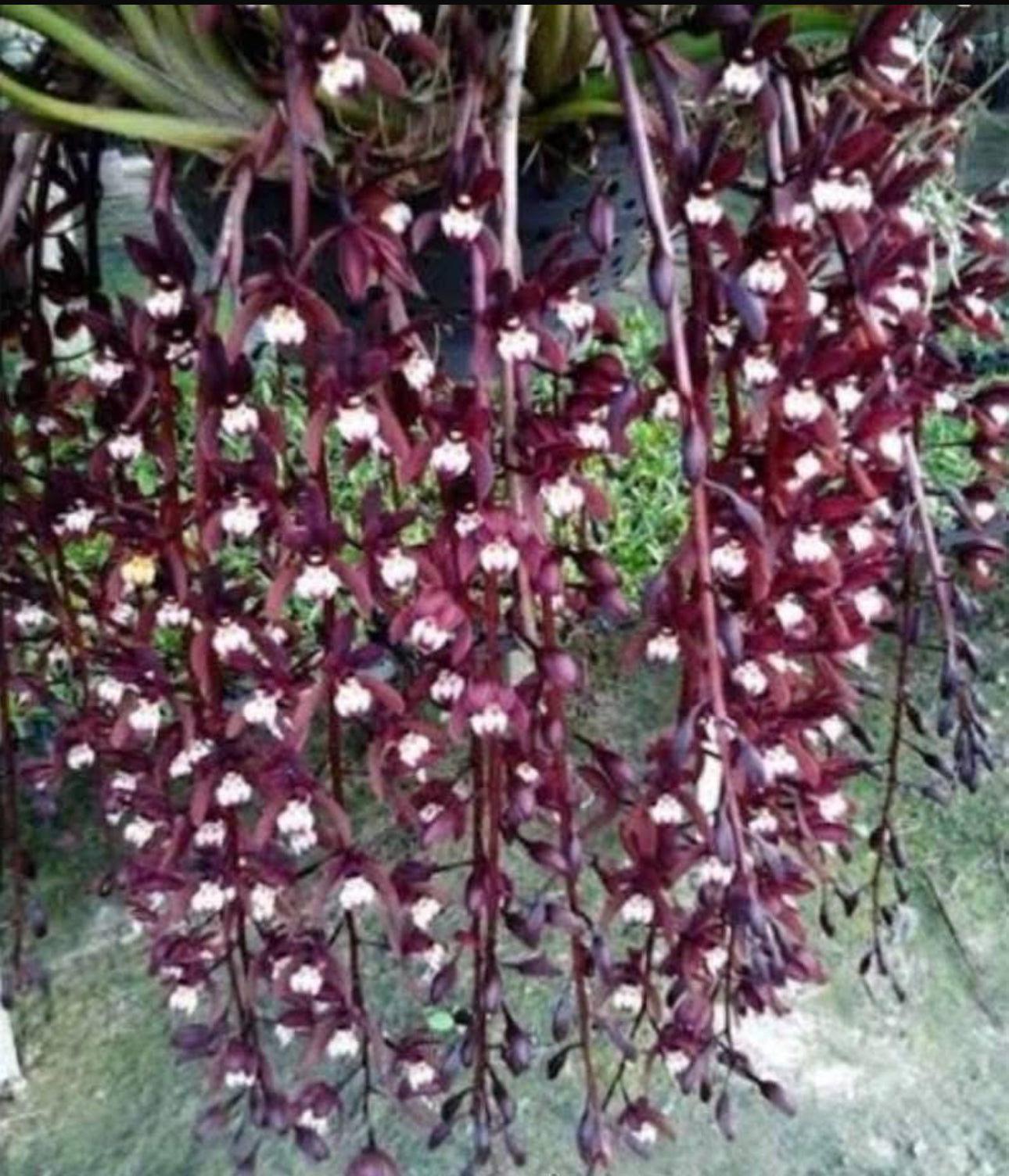
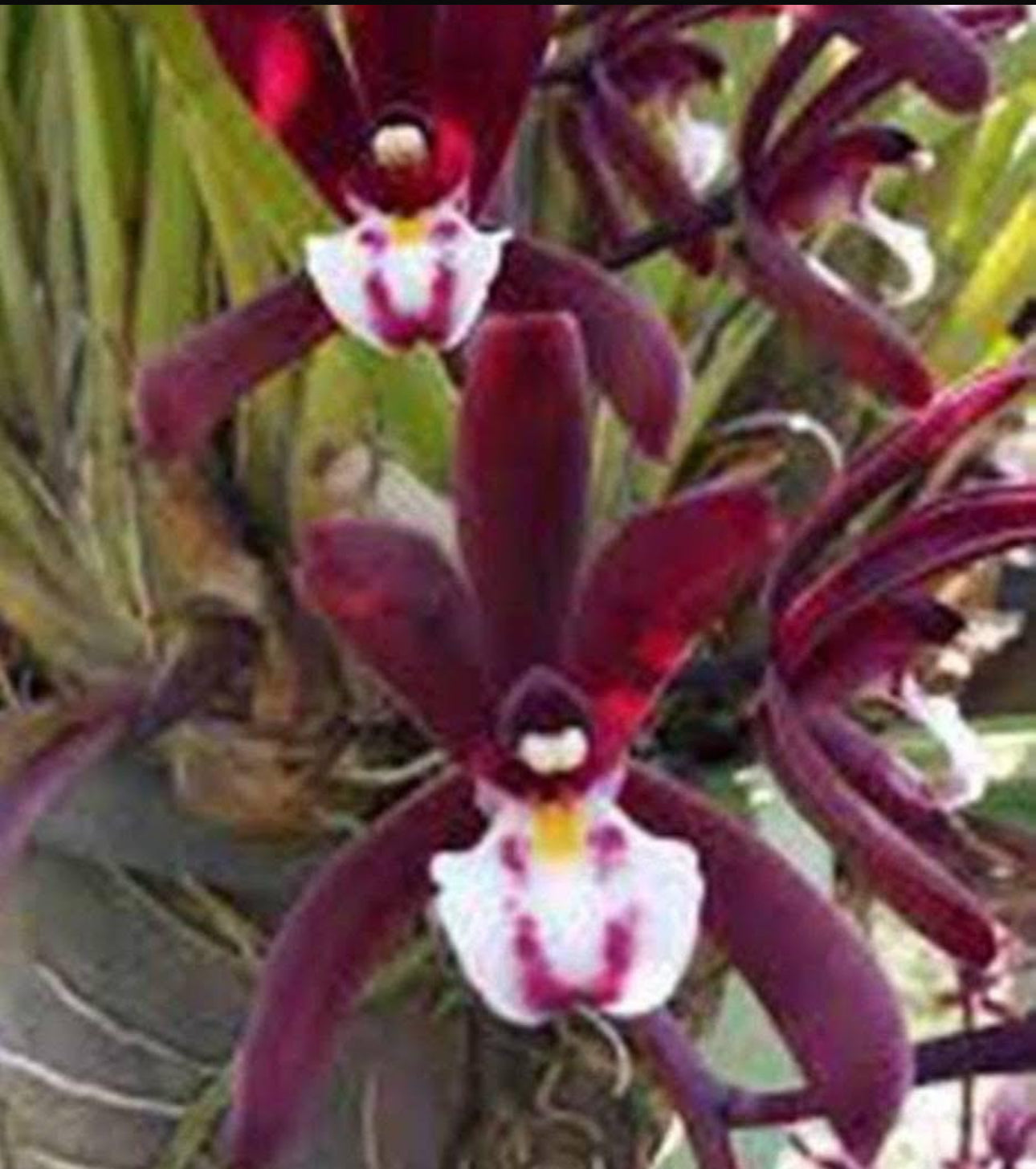
Not every Cymbidium requires very cool nights and large pots. Cymbidium atropurpureum is a warm-loving species with an elegant, almost tropical look. As the flowering stems work their way out between the leaves, slender flowers appear in deep maroon to almost purple hues, with a light lip that is finely striped. The whole looks refined and slender; a species just a little different from the familiar, large-flowered potted Cymbidiums.
Origin
Native to Southeast Asia, where the species grows as an epiphyte or lithophyte in light-shaded, warm conditions with high humidity and constant air movement. That background explains the preference for plenty of light without bright midday sun, fast-drying roots and a growing regime that is less cool than most Cymbidiums.
Characteristics
The plant builds compact, cylindrical pseudobulbs with narrow, arching leaves that give an airy silhouette. In season, multiple, relatively slender flowering stems appear with a series of medium-sized flowers that are not as massive as in the hybrids, but do show a striking depth of color: from maroon to dark purple, often with a contrasting, light-colored lip in which fine stripes or flames become visible. In good light, a subtle, spicy fragrance is perceptible. Flowering lasts for weeks under stable conditions and allows the plant to play beautifully through the planting, elegant rather than bombastic.
Care
Light
Lots of bright, filtered light. Morning and late afternoon sun are welcome; bright afternoon sun preferably filtered. Too little light quickly translates into sparse stems and faded colors.
Temperature
Moderate to warm. 20-28°C during the day, 16-20°C at night. A mild day/night difference helps bud establishment, but really cool is not necessary.
Substrate
Choose an airy, fast-draining mixture based on coarse bark, possibly with some live, fibrous material for short-term moisture buffering. Pot preferably slightly tighter so that the mixture dries out predictably and the roots remain active.
Humidity
Aim for 60-80% with constant ventilation. In drier air, brief misting may be used, but always allow leaves and growing tips to dry smoothly.
Nutrition
During active growth feed regularly but lightly, for example once every 1-2 weeks with diluted orchid nutrition. In the darker months and after the shoots have finished, reduce the frequency.
Watering.
Use demineralized water or clean rainwater. In the growing season, water regularly and let dry slightly in between; more sparingly in cooler or shorter days. Avoid prolonged soaking of roots-the species likes rhythm and air.
Flowering
Plenty of light during the budding stage and a stable, warm regime encourage flowering. Leave the plant alone during the bud phase and protect open flowers from harsh midday sun and dry, hot air currents so that color and shape are nicely preserved.