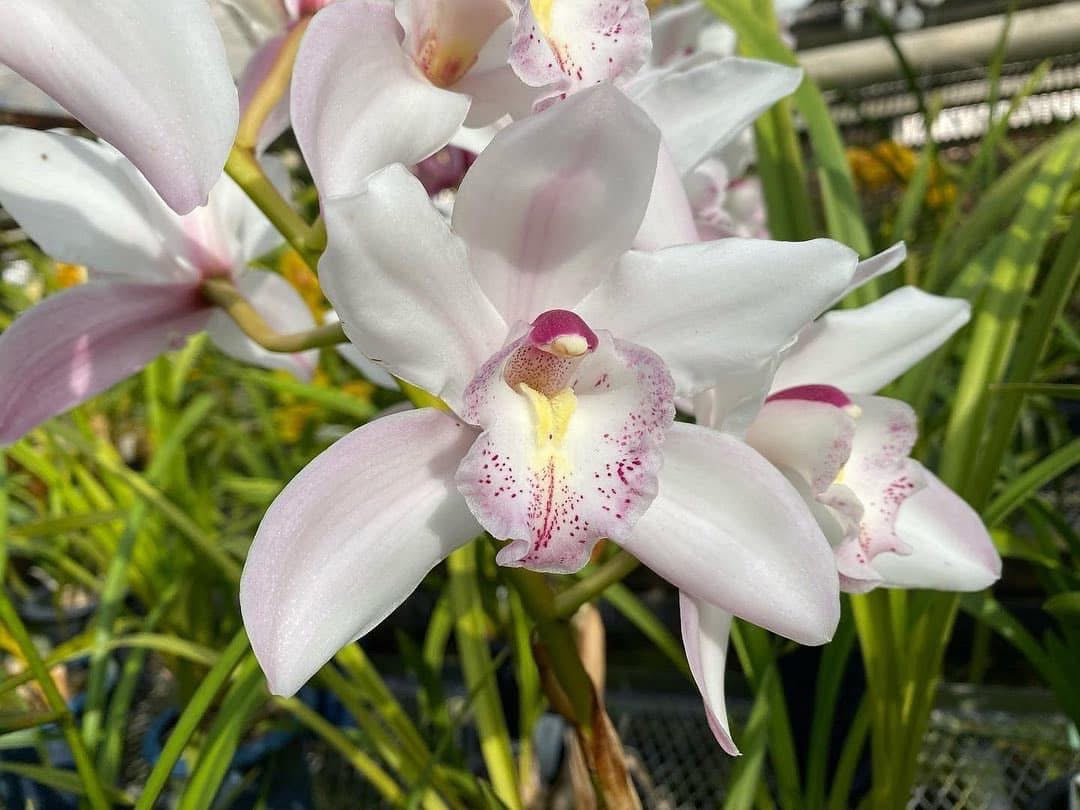
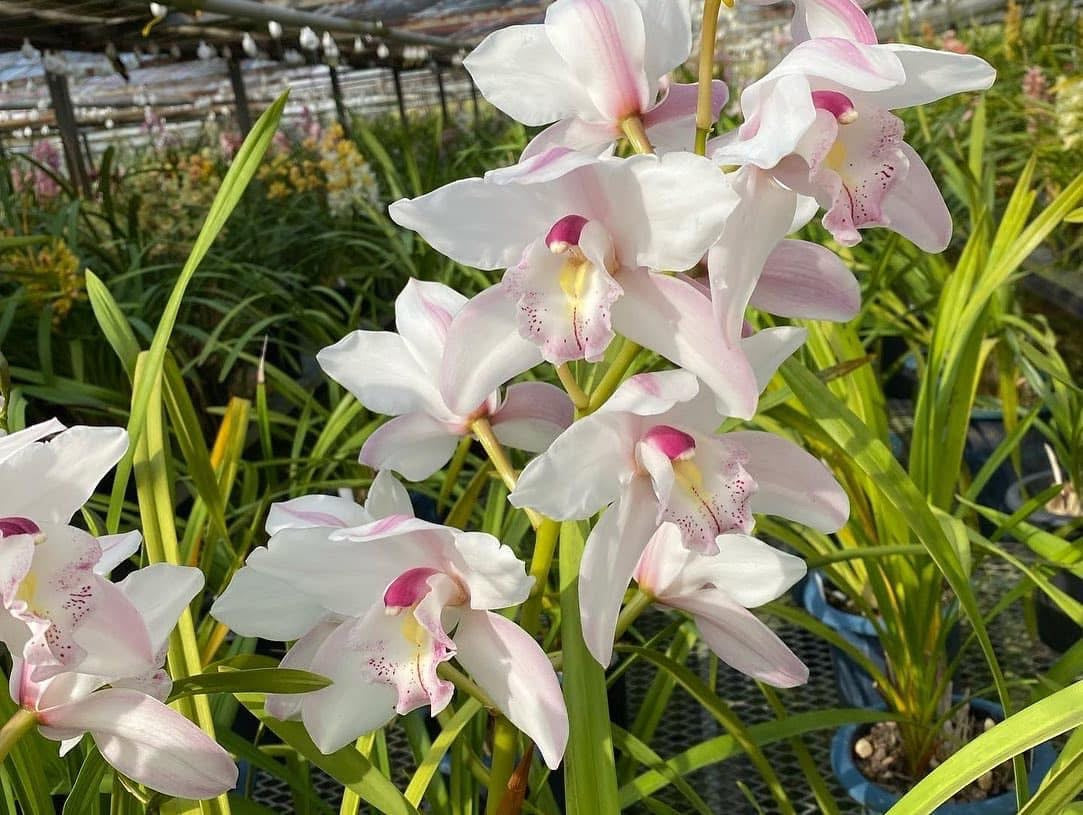
De Cymbidium White Surprise is a strong, richly flowering Cymbidium that is mainly chosen for its long, graceful flower branches and good flower life. This type of orchid feels comfortable in a bright room where it is allowed to be just a little cooler in the fall and winter than many other houseplants, as this clearly supports flowering. We supply this plant in Potsize 13 cm and depending on the variety chosen, it can be supplied with or without flowering.
Origin
Cymbidium is originally a genus from tropical and subtropical Asia to Australia. White Surprise is a cultivar within the breeding lines of Cymbidium, so not a natural species from one specific area, but a selection built in cultivation based on traits such as flowering richness and flowering duration.
Characteristics
This Cymbidium forms sturdy clumps with narrow, elongated leaves that grow archingly. Flower stalks emerge from the base, often bearing several flowers at once, giving the plant a full appearance during the flowering season. Cymbidiums are known to bloom in the cooler months and the flowers remain beautiful for a long time, especially when the plant is not placed too warm.
Because plants are living products, variation in size and appearance is normal. The photos on the webshop are sample photos, and the specifications guide what you receive.
Care
Light
Give this Cymbidium plenty of light, preferably bright indirect light. A spot near an east or west window often works well. Protect the plant from bright, direct summer sun behind glass to prevent leaf damage.
Temperature
Cymbidiums appreciate cooler conditions than many other indoor orchids. For flowering, it helps if the plant gets a period of cooler nights in the fall. In winter, a light, cooler spot is often ideal to keep buds and flowers looking nice longer.
Substrate
Use an airy, bark-focused orchid substrate that allows water to pass through but can still stay evenly moist. Roots require a lot of oxygen, so choose textured rather than fine, compact mixtures.
Humidity
Average humidity is usually sufficient, but when the plant is budding, 40 to 60 percent is a good guideline. Above all, provide air movement to keep buds and flowers neat.
Watering
Water as soon as the substrate feels directionally dry, and always drain excess water well so that the roots are not wet for long periods of time. Preferably use demineralized water or clean rainwater, especially if your tap water is hard.
Nutrition
In the growing period, you may feed regularly but gently with orchid nutrition. In the cooler months, when growth is slower, this can be significantly less.
Repot
Repot preferably when the substrate visibly sags or becomes less airy, or when the plant is clearly outgrowing the pot. Cymbidiums often do better when they have some stability and are not moved or repotted unnecessarily often.
Flowering
Cymbidiums often bloom from late fall into spring. A summer period with plenty of light and then a cooler autumn is, in practice, the combination that most often results in flower stems. Place the plant as stable as possible during budding, as sharp fluctuations in temperature and location can cause bud drop.