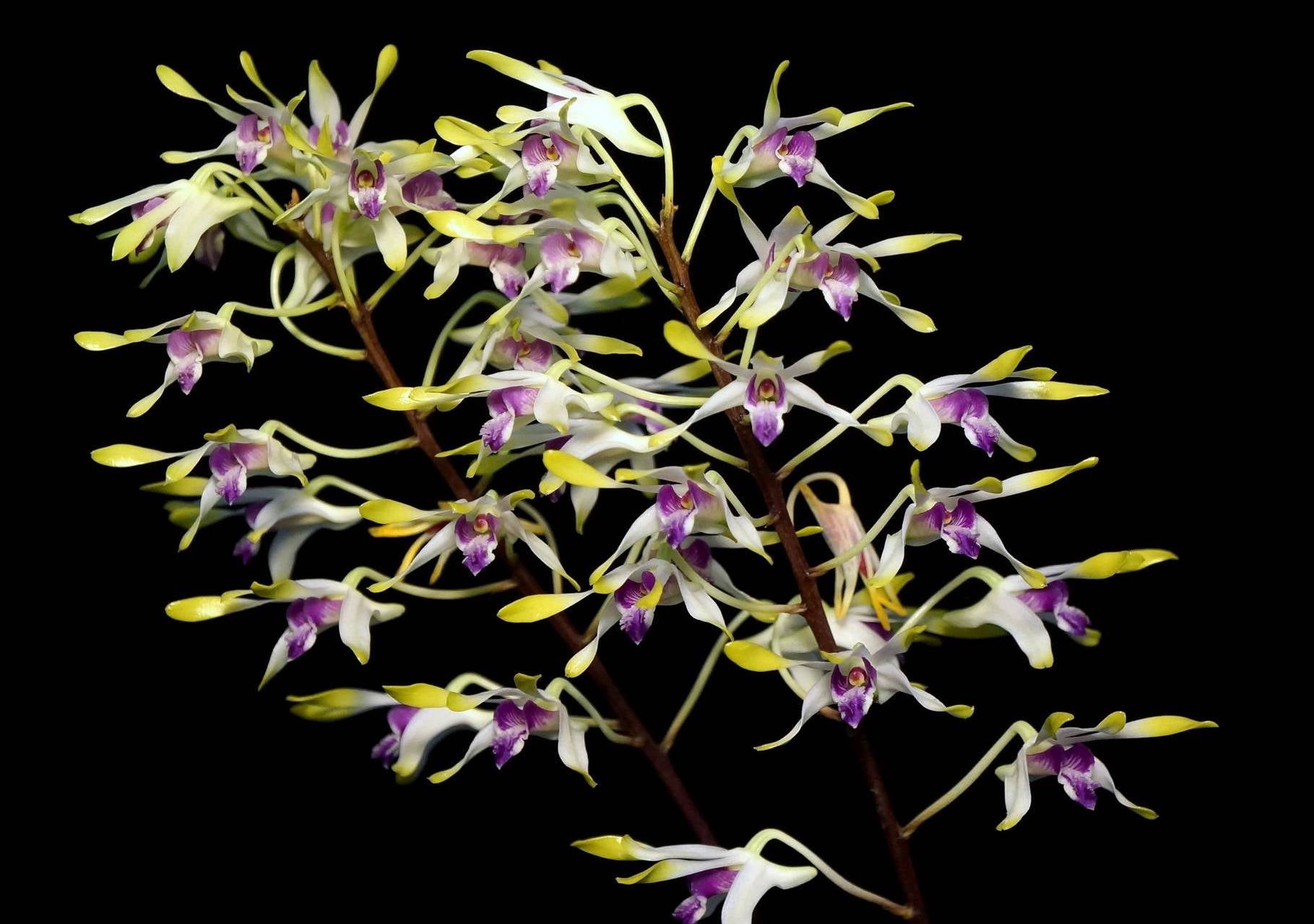
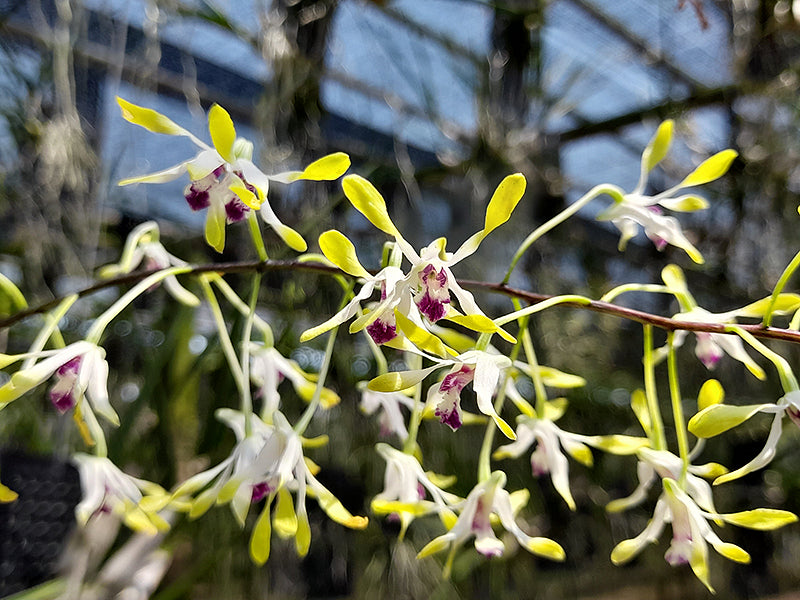
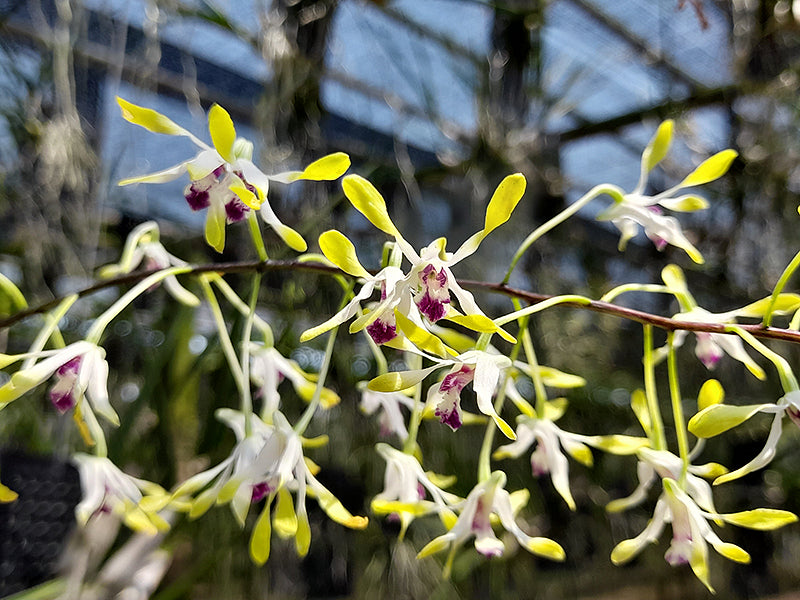
The Dendrobium canaliculatum is one of the more striking species within the large Dendrobium genus. This compact orchid immediately catches the eye with its narrow, grooved leaves and playfully shaped stems. But it is the flowers that make this species truly special: clusters of small, star-shaped blooms with an exotic touch, often in shades of cream, yellow, brown, or purple. This is an orchid for the true enthusiast who loves plants with character and a natural look.
Origin
Dendrobium canaliculatum is native to Northern Australia and New Guinea. There, it grows as an epiphyte on trees in warm, dry forests, often exposed to plenty of sunlight and periodic drought. This origin strongly determines how best to care for it.
Characteristics
This orchid has an irregular growth habit, with slender, often gnarled stems (also called “pseudobulbs”) covered with narrow, channel-shaped leaves. The plant remains fairly compact, but its structure and blooms give it a wild, almost rugged appearance. The flowers usually appear in the spring and often bloom in clusters on a short stem.
Care
Light
Dendrobium canaliculatum loves plenty of light, even direct sunlight in the morning or late afternoon. A south- or west-facing spot is ideal, provided the plant is gradually acclimated to sunlight to prevent leaf burn.
Humidity
Although this species originates from fairly dry regions, it prefers moderate to high humidity (around 60–80%). Ensure adequate ventilation, especially in high humidity, to prevent fungal issues.
Temperature
This Dendrobium is a heat-loving species and thrives best at temperatures between 20 and 35 °C during the day. It can cool down a bit at night, but try to avoid temperatures below 15 °C. It prefers a distinct difference between day and night temperatures.
Watering
During the growing season (spring and summer), the plant should be watered regularly, but always allow the substrate to dry out completely between waterings. During the dormant period (fall and winter), this species requires significantly less water. Water only sparingly at that time, so the stems do not completely shrivel.
Fertilizing
During active growth, you can apply orchid fertilizer once a month, diluted to half strength. During the dormant period, fertilizing is unnecessary, as the plant is storing energy for the next bloom.
Potting mix
Use a very airy, coarse mixture, such as coarse bark, charcoal, and a little perlite. This species prefers rapid drainage and a root environment with plenty of air circulation. You can also mount it on cork bark or a tree branch, as in its natural habitat.
Flowering
Dendrobium canaliculatum usually blooms in the spring, often after a dry, cooler period. The flowers are small but numerous and often have a delicate, herbaceous scent. Leave spent flower stalks in place until they dry out on their own.
Dormancy
After flowering and during the cooler months, this species goes dormant. Drastically reduce watering and stop fertilizing. The leaves may die back partially, but this is normal. As soon as new shoots appear, you can resume regular care.