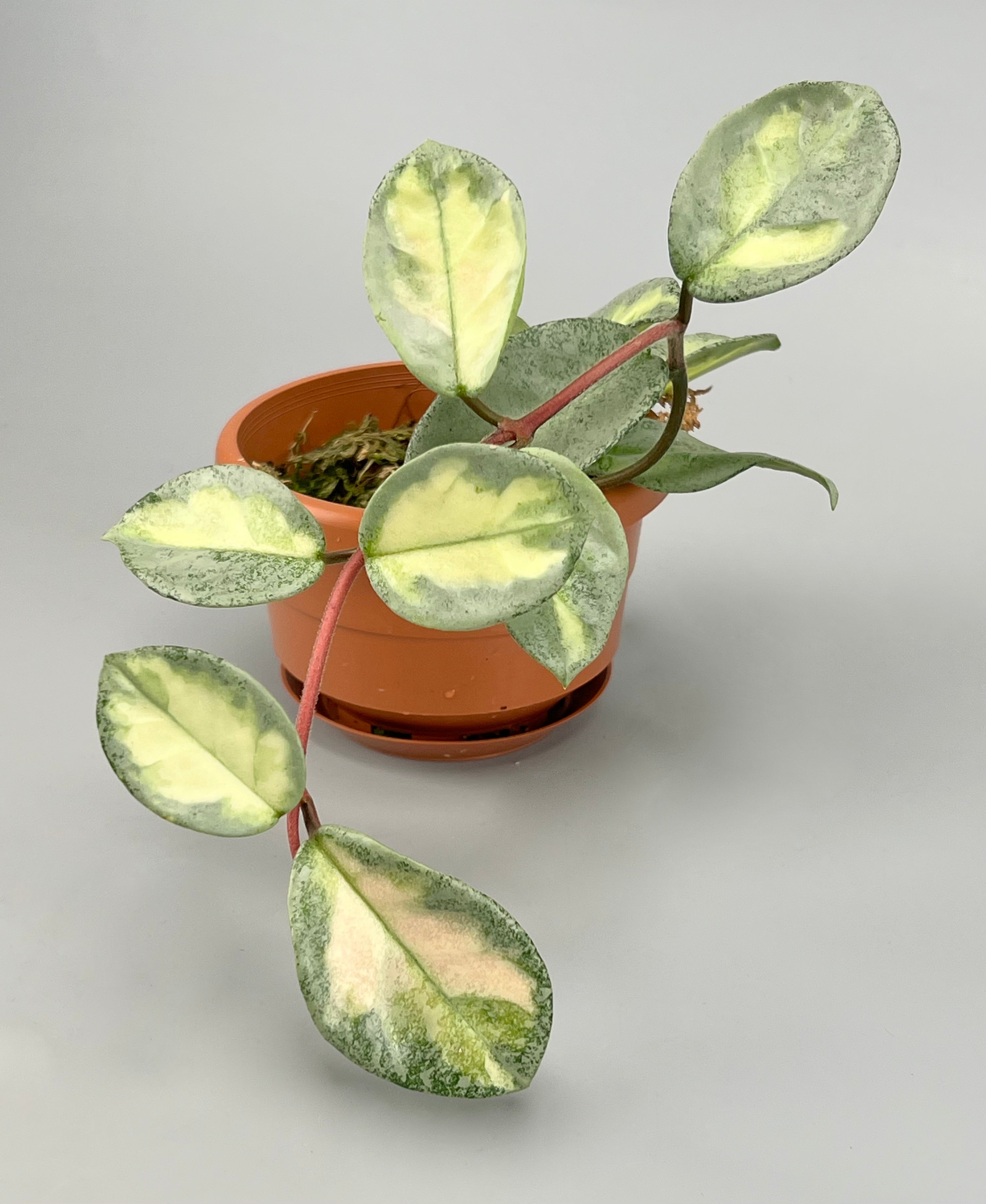
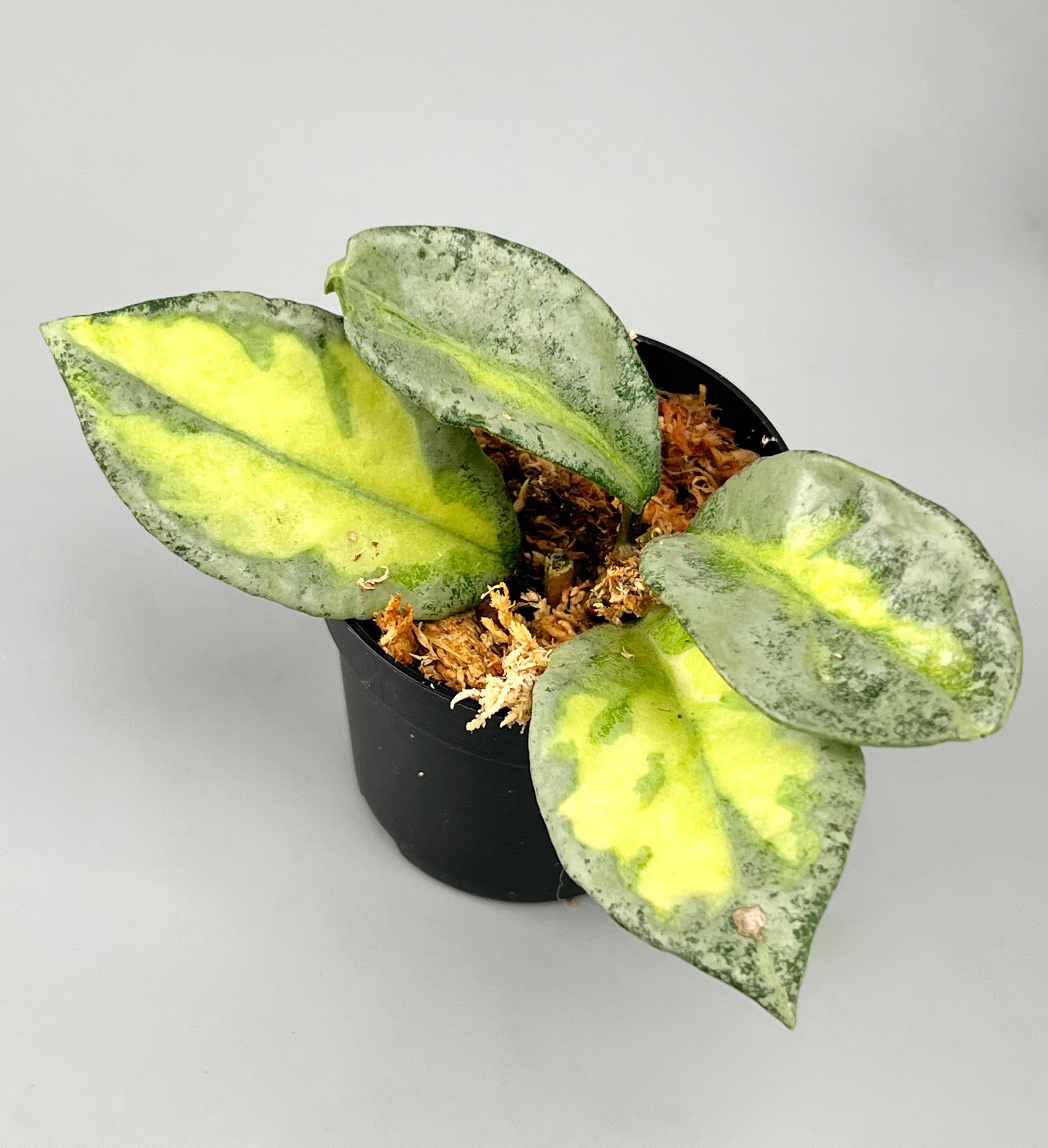
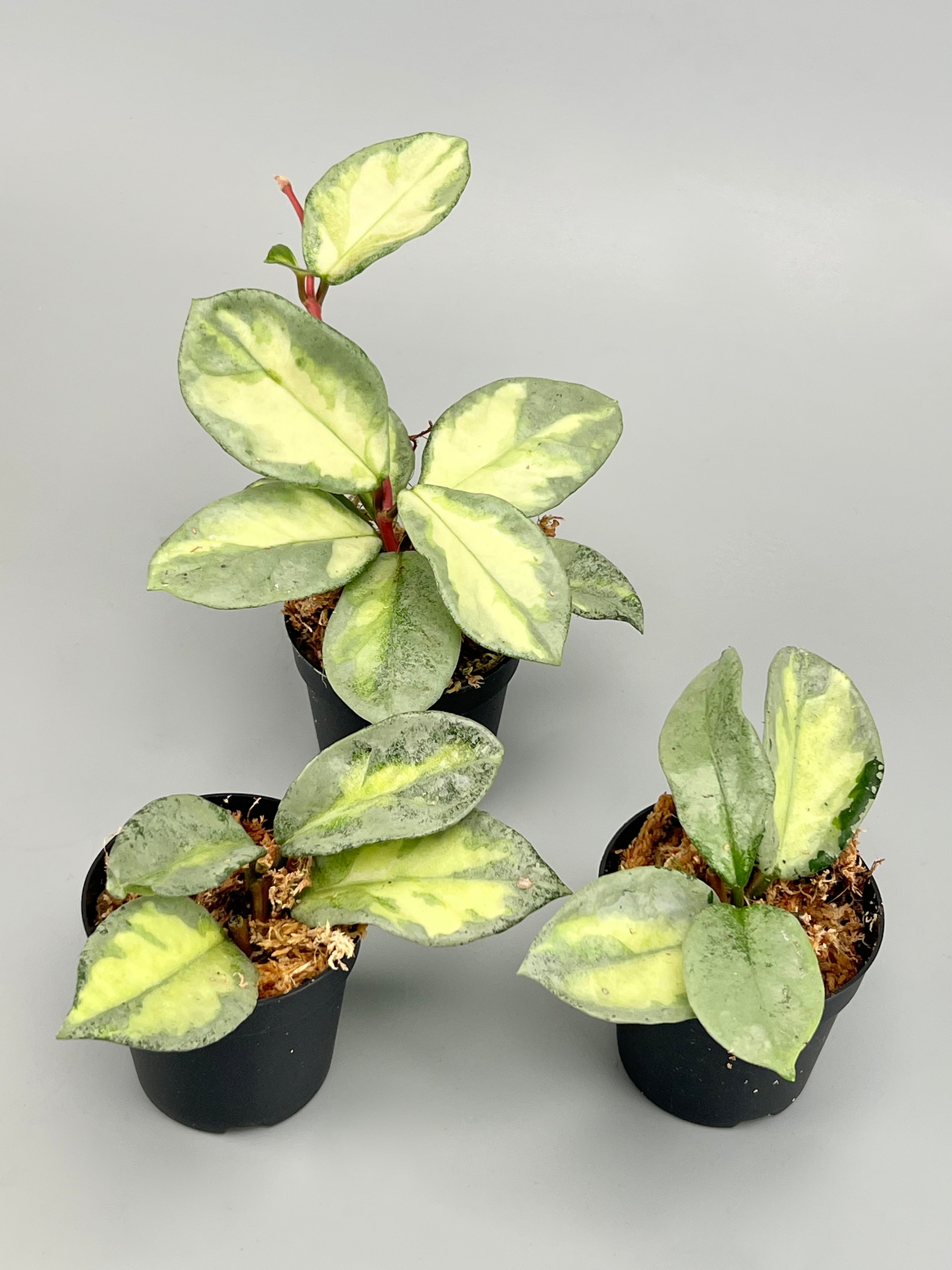
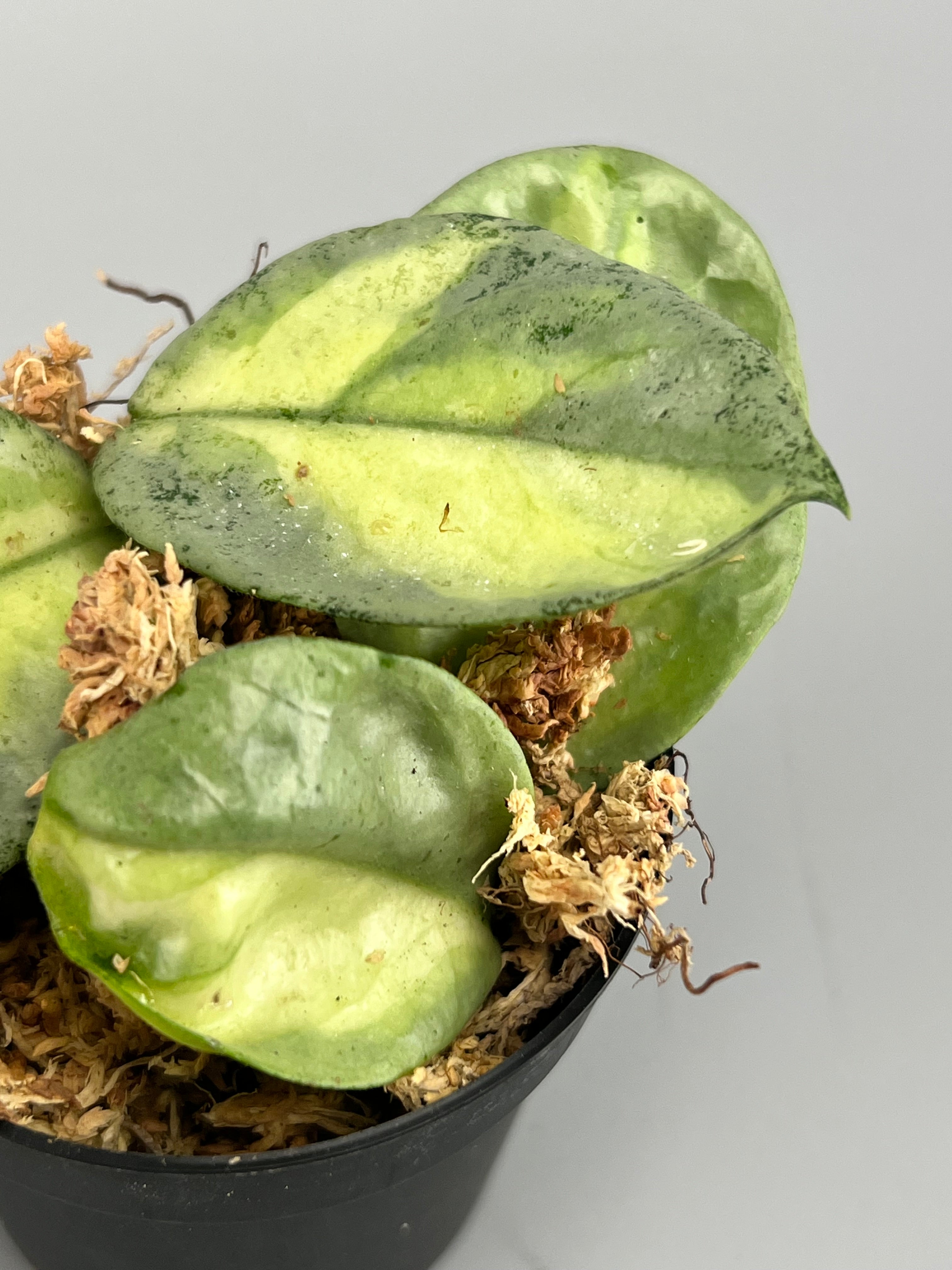
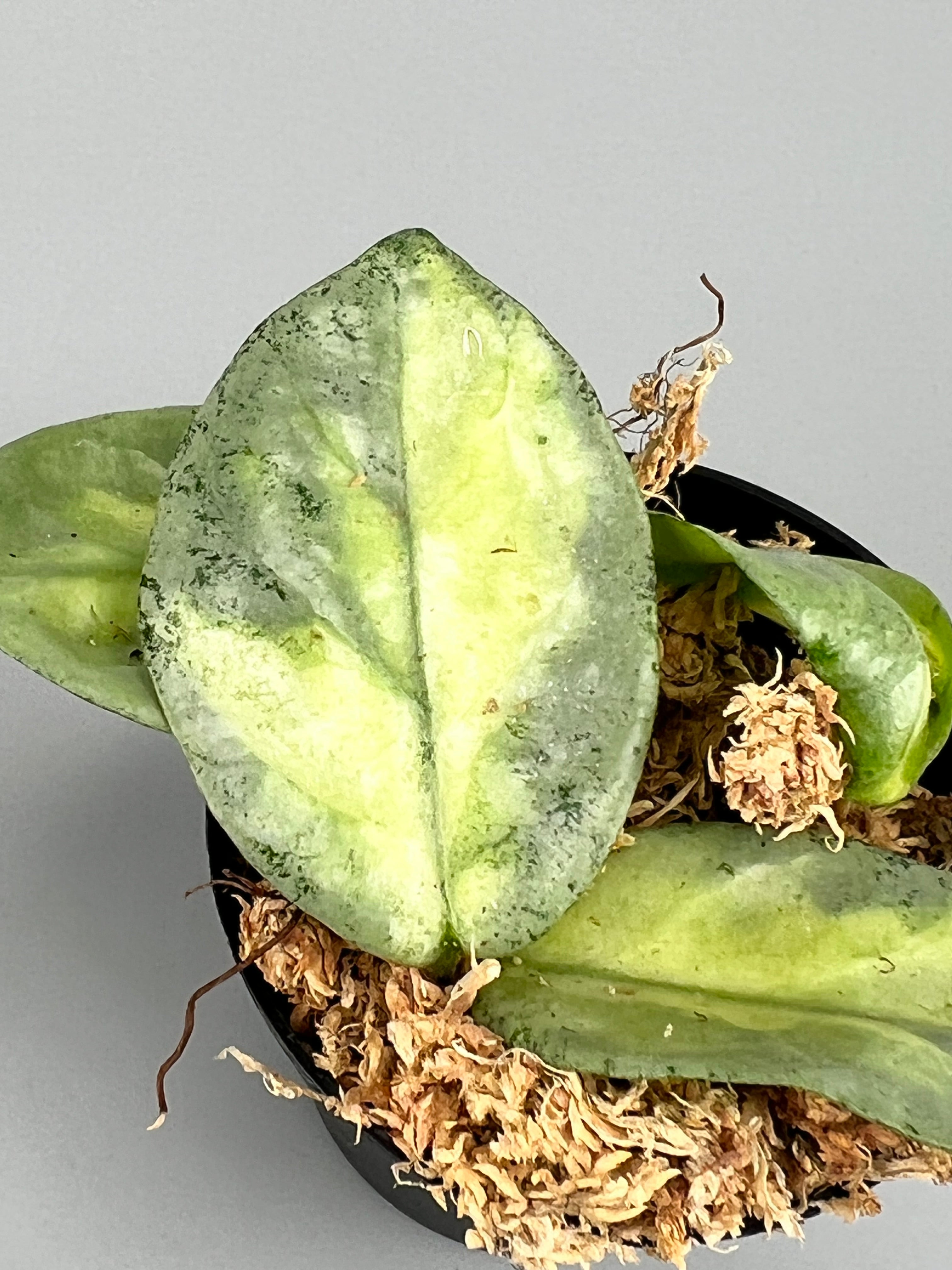
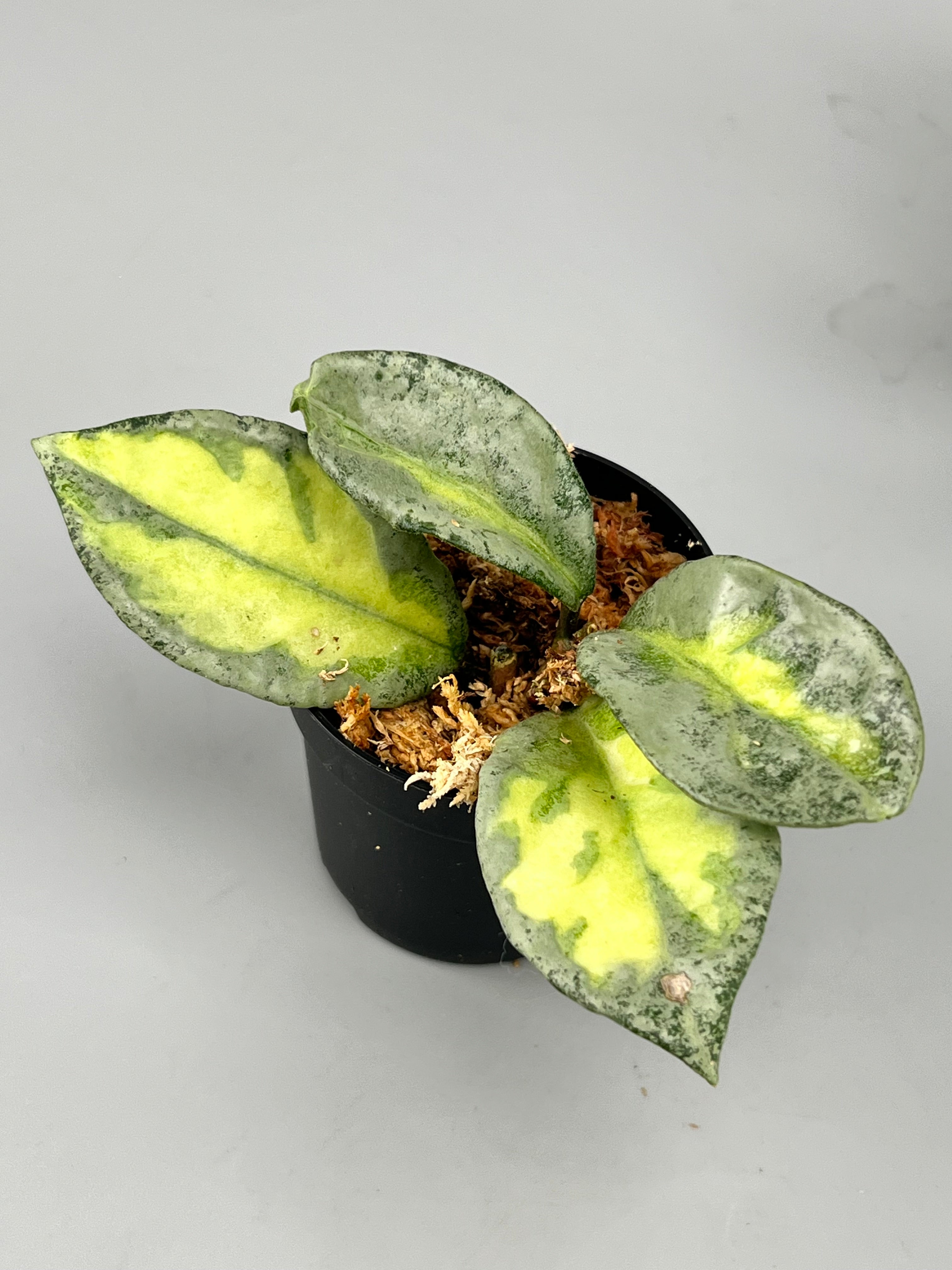
Hoya carnosa ‘Argentea Princess’ is a unique variegated waxflower that stands out primarily for its cool, silvery leaf pattern. The sturdy, waxy leaves combine green with gray-silver to light cream-colored sections, giving the plant a softer appearance than the more familiar yellow- or white-variegated Hoya’s. Growth is slow at first, but once the plant is well-rooted, it forms long tendrils that you can let hang or train along a trellis.
This variety is sometimes simply marketed as Hoya Argentea Princess. The full name is Hoya carnosa “Argentea Princess”: a cultivar of Hoya carnosa, not a separate botanical species.
Origin
The botanical species Hoya carnosa is native to parts of East and Southeast Asia, where it grows as a climbing epiphyte or lithophyte. It attaches itself to trees or rocks with its tendrils, while its thick leaves retain moisture during drier periods.
‘Argentea Princess’ is a selected variegated form. The silvery leaf pattern is not consistent: some leaves develop broad light-colored zones, while others remain more finely speckled or greener. This makes each plant unique, but also means that new growth does not always repeat the exact same pattern.
Characteristics
The leaves are oval, thick, and glossy, with a firm texture characteristic of Hoyas. With ‘Argentea Princess’, the emphasis is not on bright, variegated edges, but on a cool, almost frosty effect created by silver-green and lighter-colored leaf sections.
In practice, we see that this Hoya sometimes spends a long time primarily producing roots and tendrils before much new foliage appears. This is normal. Once a vine starts growing actively, the leaves often follow more quickly. Bright light helps keep the pattern visible, but the plant does not need to be in full sun.
A mature plant can form round umbels of small, star-shaped flowers. These are usually white to light pink with a darker center and may give off a sweet scent, especially later in the day. Leave old flower stalks in place after blooming: Hoyas can bloom again from the same flower stalk.
Care
Light
Provide plenty of bright, indirect light. A spot near a window with filtered light usually works well. If there is too little light, the plant will grow more slowly and new leaves may turn greener. Bright midday sun through a window can damage the lighter parts of the leaves.
Temperature
Hoya carnosa ‘Argentea Princess’ grows best at temperatures between 18 and 28 °C. Avoid cold drafts and prolonged periods at temperatures below approximately 15 °C.
Potting mix
:
Use a light, well-draining potting mix. A mix designed for Hoya or other epiphytic houseplants works well, as long as excess water can drain away quickly. Potting soil that is too compact retains moisture around the roots for too long.
Humidity
Normal indoor humidity is usually sufficient. Slightly higher humidity supports growth, but good air circulation remains more important than constantly misting the plant.
Watering
Allow the substrate to dry out noticeably between waterings dry out. The thick leaves can temporarily store moisture, while roots that remain wet for long periods actually cause problems. With Hoyas, we see damage caused by overwatering more often than by a brief dry spell.
Preferably use demineralized water.
Fertilizer
: During the active growth period, apply a regularly diluted houseplant fertilizer. When the plant develops flower stalks, a low dose of fertilizer for flowering houseplants can be helpful.
Flowering
Flowering does not occur until the plant is sufficiently mature and well-established. Therefore, avoid moving the plant unnecessarily once flower stalks are visible. Old flower stalks may be left in place after flowering, as new flower clusters may form there.