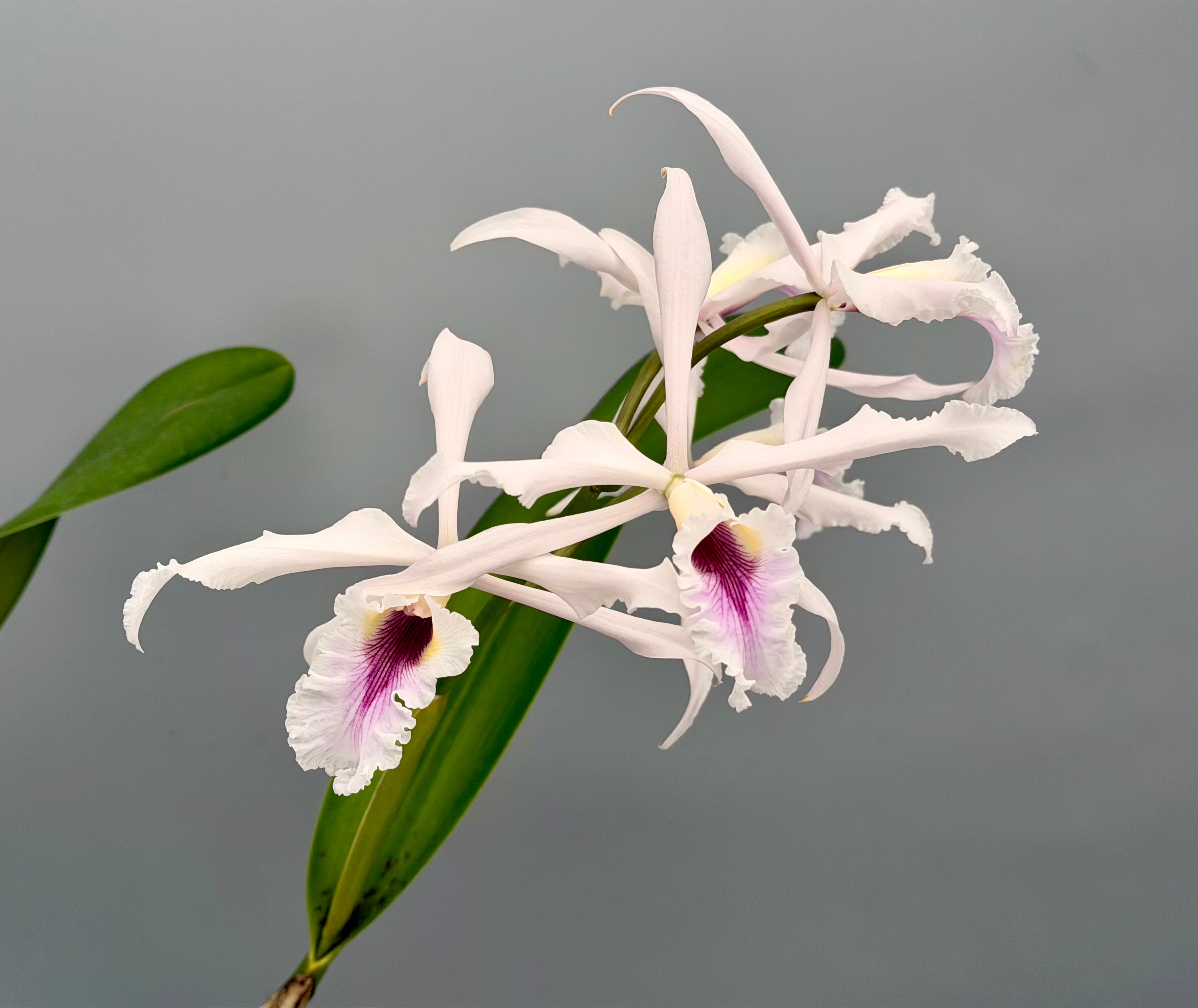
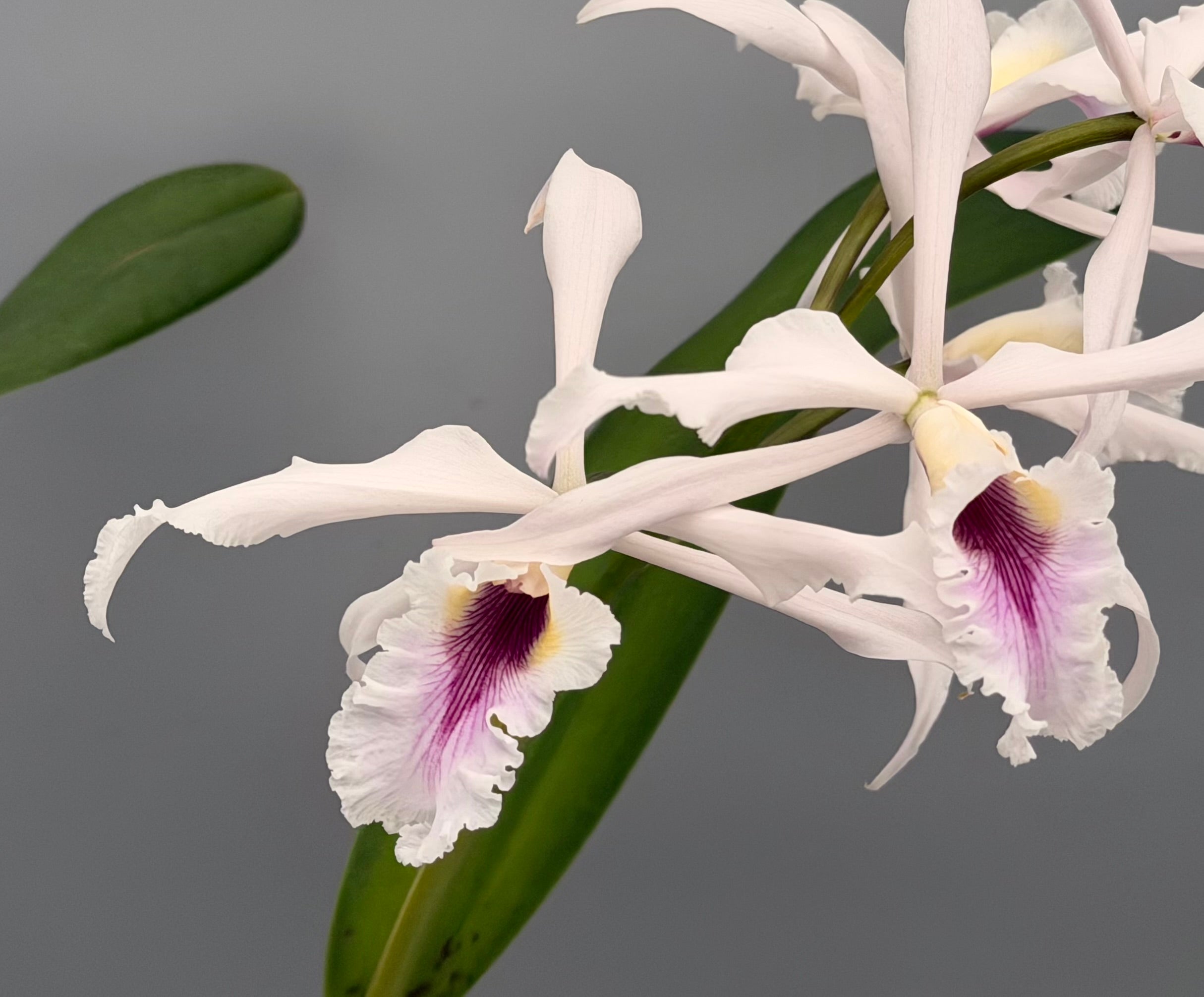
Laelia crispa semi alba is a stately Brazilian orchid with a distinctive botanical flower form. The long, almost white petals curl gracefully around a strongly wavy lip, in which magenta veins and a soft yellow throat create a refined color contrast. It is precisely this combination of an airy flower form, pleasant fragrance, and bright semi-albino coloring that makes the plant appealing to enthusiasts of unusual Cattleya species.
The plant is traditionally marketed as Laelia crispa, but the currently accepted botanical name is Cattleya crispa. The old name remains widely used within the orchid community and is still the best known among collectors.
Origin
Laelia crispa is native to southeastern Brazil, particularly in the states of Rio de Janeiro and Minas Gerais. There, the species grows primarily as an epiphyte on high tree branches and occasionally on rocky outcrops.
Its natural habitats are light and airy. During the active growth period, moisture is readily available, while the plants experience a cooler and drier period after the new pseudobulbs have matured. This seasonal rhythm is important for healthy growth and reliable flowering.
Characteristics
The plant forms elongated, somewhat flattened pseudobulbs with a single sturdy, leathery leaf at the top. Mature specimens can grow quite tall and are therefore less compact than many modern Cattleya hybrids.
A mature pseudobulb can produce a flower spike with multiple flowers. The flowers typically reach a width of about 10 to 12 centimeters and have narrow, slightly twisted sepals and petals. In this semi-albino form, the petals are white to very pale pink, while the lip remains mostly white with intense magenta veins and a yellowish throat.
The name “crispa” refers to the crimped and wavy edges of the lip. The flowers may also emit a pleasant fragrance, which is particularly noticeable during the day.
Care
Laelia crispa semi alba grows best when provided with plenty of light, a well-aerated root environment, and a clear distinction between the growing and dormant periods. During the formation of new shoots and roots, the plant should be watered generously. Once the new pseudobulb is fully mature, watering should be gradually reduced.
Light
Place this orchid in a very bright location. A few hours of direct morning or evening sun are beneficial, but on hot summer days, protect the leaves from intense midday sun through a window.
Healthy leaves are medium green in color. Dark green leaves and long, limp growth usually indicate insufficient light. With insufficient light, the plant may continue to grow well, but flowering often fails to occur.
Temperature
This species thrives in a moderately warm to intermediate growing environment.
During the day, a temperature of about 20 to 28 °C is suitable. At night, the temperature may drop to 14 to 18 °C. In winter, established plants can tolerate slightly cooler nights, provided the growing medium is kept drier and there is sufficient air circulation.
Prolonged exposure to cold and wet roots should be avoided.
Substrate and Cultivation Method
Use a coarse, well-draining orchid growing medium, such as a mixture of coarse bark with pumice, charcoal, or another airy mineral component. A relatively small pot or open basket helps prevent the growing medium from remaining wet for too long.
Place the rhizome near the surface and ensure there is sufficient space for future new growth. Mounting on cork or wood is also possible, but requires significantly more frequent watering under warm conditions.
It is best to repot when the plant begins to form new root tips. Laelia crispa does not like it when old, active roots are disturbed unnecessarily.
Humidity
A humidity level of approximately 55 to 75 percent is usually sufficient. Higher humidity is possible in a greenhouse, as long as there is a constant, gentle air current.
Good ventilation helps prevent mold growth and ensures that leaves, young shoots, and flower sheaths can dry quickly after watering.
Watering
Water generously during the active growth phase, wetting the entire growing medium. Allow it to dry out mostly before watering again. Green root tips indicate that the plant is actively growing and can utilize more water at that time.
Once the new pseudobulb has matured and the days begin to shorten, the plant can be kept drier. However, do not allow the pseudobulbs to shrivel severely for extended periods. The dormant period means less water, not months of complete drought.
Preferably use rainwater or other water with low levels of dissolved salts.
Fertilizer
During active growth, apply a low dose of orchid fertilizer every one to two weeks. A quarter to half the recommended dose is usually sufficient. Rinse the substrate regularly with clean water to prevent fertilizer buildup.
Reduce fertilization as soon as the new pseudobulb has matured. During the cooler, drier period, little to no fertilization is needed.
Flowering
The flowers emerge from a floral sheath at the top of a mature pseudobulb, usually from late spring through summer. The exact flowering time depends on light, temperature, and when new growth has finished.
Do not cut away a dry or seemingly empty flower sheath too early. In Cattleya species, flower buds may still develop later within an existing sheath. Old green pseudobulbs should also be left in place, as they store water and nutrients for new growth and flowering.
Sufficient light and a slightly drier period after the pseudobulb has matured increase the likelihood of flowering.
Care Level
Laelia crispa semi alba has a moderate to advanced care level. The species is not exceptionally difficult when basic conditions are good, but it requires more light and a more distinct seasonal rhythm than the average living room orchid.
For absolute beginners, the combination of strong lighting, a well-aerated substrate, and adjusted winter watering can be particularly challenging. Once well-rooted, however, it is a vigorous species that, with proper care, can become more beautiful over the years.
Who is this plant suitable for?
This orchid is particularly well-suited for collectors of botanical Cattleya and Laelia species. Its semi-albino coloration, wavy lip, fragrance, and multi-flowered spike give the plant distinct collector’s value.
It is an attractive choice for enthusiasts who have space for a taller orchid and who enjoy watching new roots, pseudobulbs, and flower spikes develop. This species is less suitable for a dark windowsill or a care regimen in which the substrate remains constantly moist.
Experience growing at home or in a greenhouse
Laelia crispa semi alba thrives best in a greenhouse, conservatory, or well-lit orchid room. There, it is easier to combine ample light, temperature fluctuations, and air circulation.
Indoors, it can be grown near a very bright east-, south-, or west-facing window. In the summer, provide protection from the scorching midday sun and prevent stagnant warm air. Keep in mind the upright pseudobulbs and the flower spike, which may grow above the foliage.
This species is not suitable for a closed terrarium. The plant requires too much light, space, and air circulation for that.
Additional care tip
When repotting, pay close attention to the appearance of new root tips. This is the best time to place the plant in fresh substrate, as new roots can then establish themselves quickly. Remove old pseudobulbs only when they are completely brown and dead.
Short product description
Laelia crispa semi alba, now botanically classified as Cattleya crispa, is a rare Brazilian orchid with airy white flowers, a strongly wavy lip, and striking magenta veins. A fragrant collector’s plant for a bright, airy location in the home, conservatory, or greenhouse.