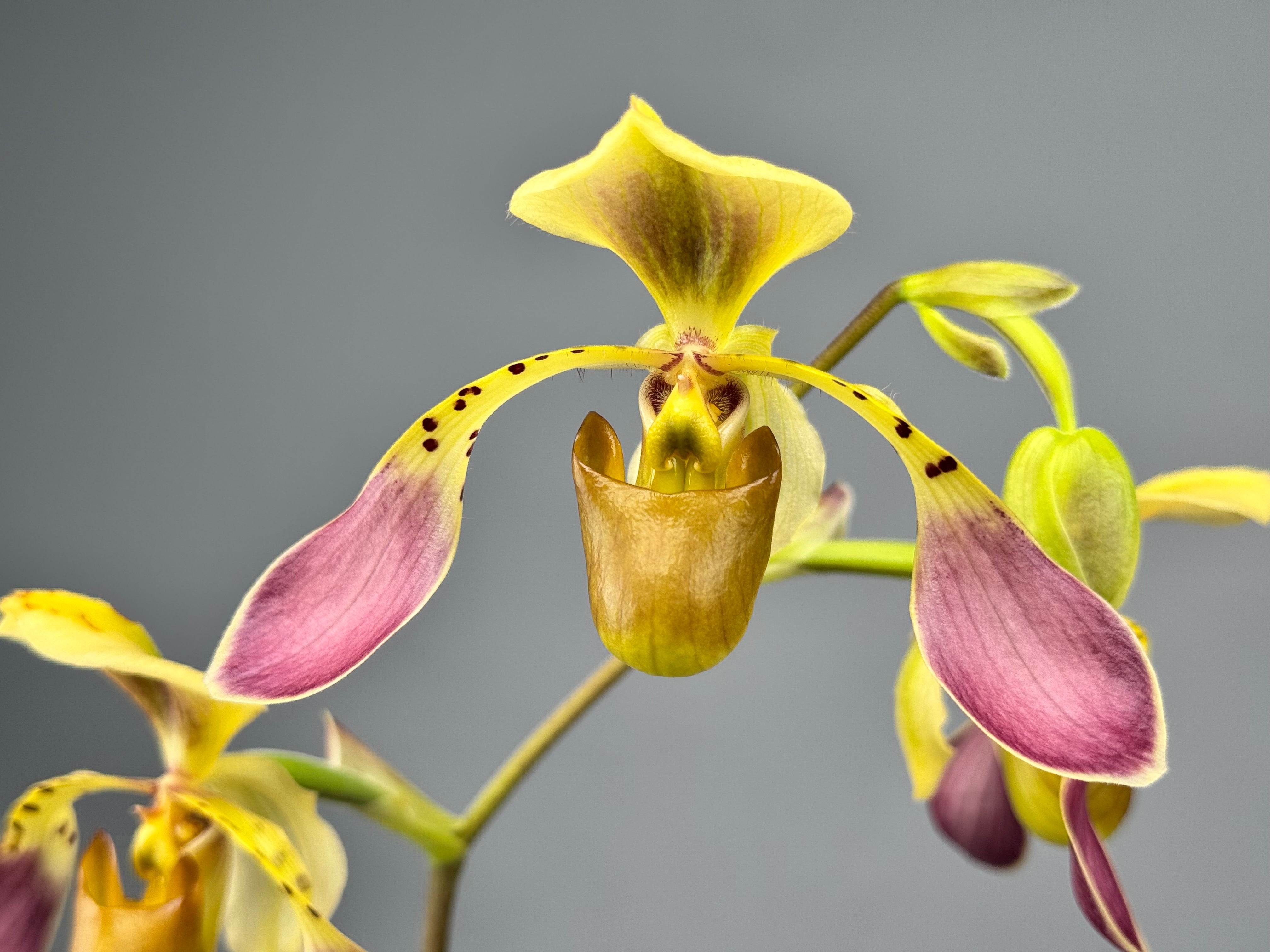
For the lover of botanical orchids with a subtle, sophisticated beauty is Paphiopedilum lowii var. semi-alba is a real find. This rare variety of the classic lowii is rarely offered and appeals especially to connoisseurs who have an eye for natural elegance and nuance in color. The flowers of these semi-alba forms are distinguished by their soft, almost ethereal coloring, with the usual purple tones replaced by pale green, ivory white and yellowish accents. This gives the plant a serene, almost dreamy appearance that contrasts beautifully with the dark green, marbled foliage. The combination of rarity, refinement and a relatively long flowering period make this a species that stands out in any specialized collection without being showy.
Origin
Paphiopedilum lowii is native to the mountainous rainforests of Southeast Asia, including Borneo, Sumatra and Malaysia. The semi-alba form is a natural color variety that occurs only sporadically, and is selectively propagated within specialized nurseries. In the wild, this species grows both epiphytically on mossy tree branches and lithophytically on rock walls, always in sheltered locations with high humidity and filtered light.
Characteristics
What makes this semi-alba variety so special is the absence of anthocyanin pigments in the petals. This lacks the purple markings typical of the species, and instead brings out soft hues such as pale green, white and soft yellow. The flower stem bears multiple buds that open one after another, spreading the bloom over several weeks. The inflorescence is rich and vertical, with characteristic, elongated side petals that gracefully curl downward or sideways. The leaves are dark green and finely marbled, with a leathery texture and a slightly glossy surface.
Care
Light
Give this orchid a light location with bright, indirect light. Avoid direct sunlight in the middle of the day, especially in summer. A location near an east or west window is ideal.
Temperature
Paphiopedilum lowii var. semi-alba appreciates a moderately warm climate. The ideal temperature during the day is between 18 and 26°C, with a slight drop to 15 to 17°C at night. Cold drafts should be avoided.
Substrate
Use a fine to medium aerated mixture, based mainly on pine or finely cut orchid bark, possibly with some sphagnum or charcoal for additional moisture control. The substrate should drain quickly and never remain wet for long periods of time.
Humidity
This species likes high humidity, ideally between 60 and 80%. A humidifier or the use of an airy room with good ventilation can help keep these values stable. Daily air movement is essential to prevent mold growth.
Nutrition
During the growing season (spring and summer) feed weekly with a highly diluted orchid fertilizer (1/4 of the standard dose). In fall and winter, once a month is sufficient. Preferably use a fertilizer without urea and flush regularly with demineralized water to avoid salt accumulation.
Watering
Keep the substrate slightly moist, but do not allow it to become soggy. Allow the top layer to dry briefly between waterings. Use only demineralized water or clean rainwater with a low mineral load.
Bloom
Flowering usually occurs in spring to early summer, but under stable conditions, later flowering may also occur. The plant develops a long, ascending flower cluster with usually three to six flowers that open staggered. Thanks to its semi-alba color pattern, flowering is even more pronounced in cooler temperatures and bright light.