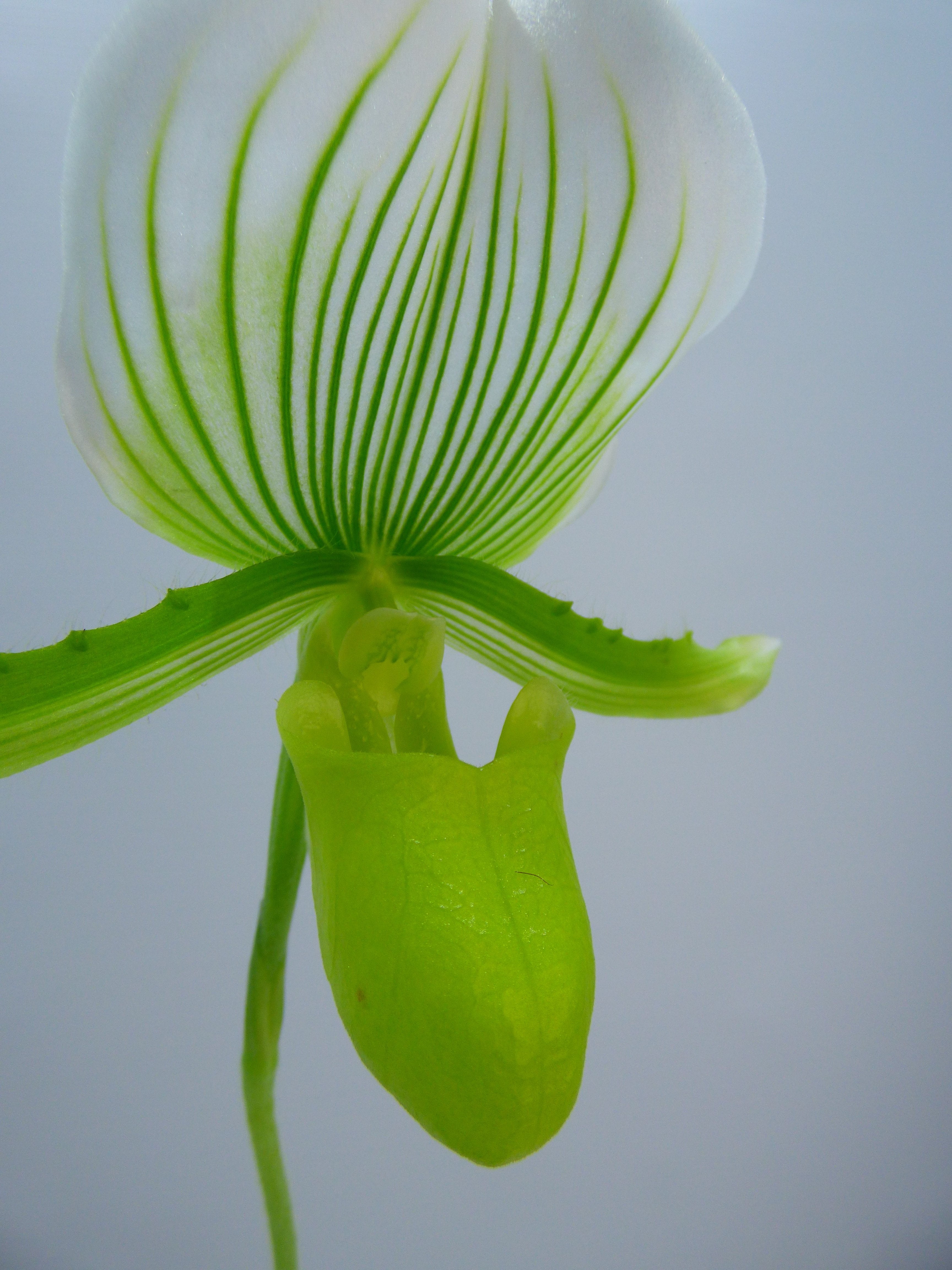
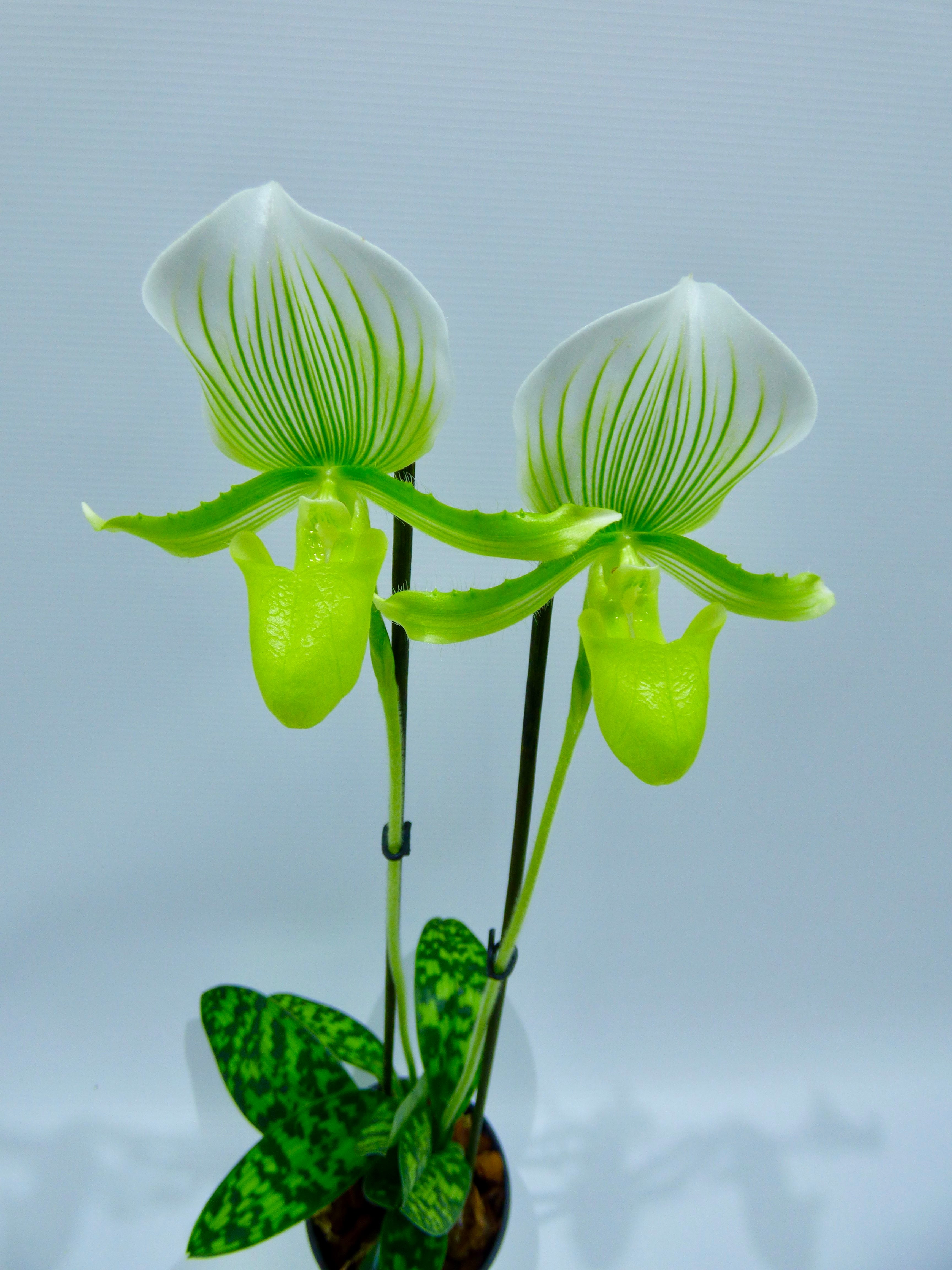
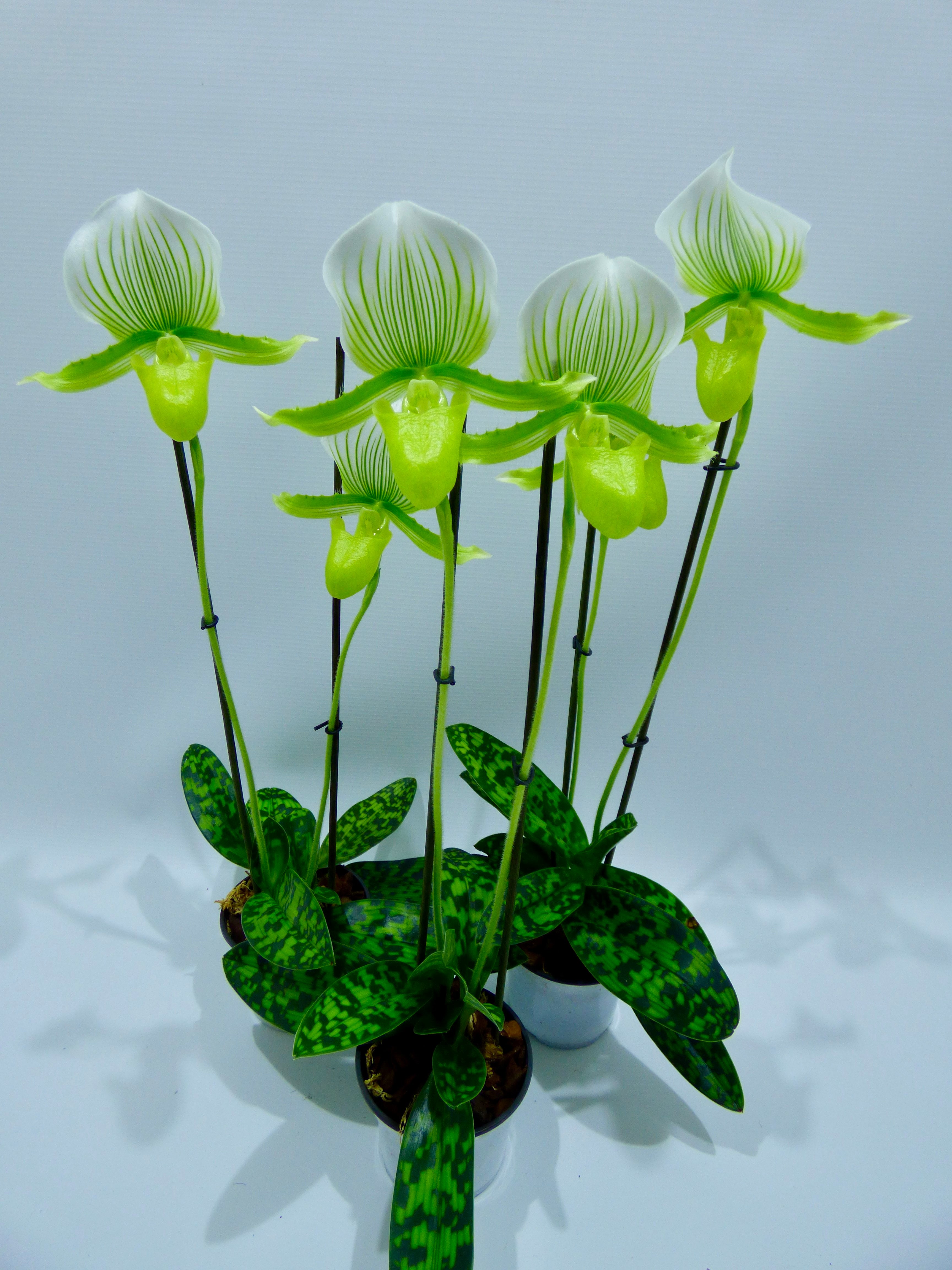
Paphiopedilum Maudiae is a classic "Maudiae-type" slipper orchid with a combination of graceful marbled foliage and a relatively large, long-lasting flower. This is a registered hybrid that has been in culture for a long time, precisely because this type often grows stably indoors when light, water and substrate are balanced.
Origin
This hybrid does not occur in the wild. Paphiopedilum Maudiae is registered as a grex with Paphiopedilum callosum × Paphiopedilum lawrenceanum as parents.
The two parent species originate from humid tropical forest regions in Southeast Asia, which explains well why an airy substrate and even humidity remain important in the home.
Characteristics
The plant grows pole-shaped with sturdy leaves that often show a distinct marbled pattern. Those leaves remain decorative throughout the year, even outside of flowering. Flowering usually consists of one flower per stem with the typical slip-shaped lip and broadly expanded flower parts, often in green, white and burgundy highlights, depending on the exact clone. Flowers can remain beautiful for several weeks under stable conditions. Minor differences in leaf markings, flower color and flower shape are normal, as Maudiae types are often offered as selections or clones in practice.
Care
Light
Bright, indirect light suits well, with protection from bright afternoon sun behind glass. Too dark light usually gives quieter growth and less chance of bud formation.
Temperature
Maudiae types usually fall into the warmer, marbled-leaved group. A practical range is nights around 13 to 22°C and days around 21 to 29°C, with a slight nightly drop for a stable growth rate.
Substrate
An airy, fine but textured orchid substrate works most predictably. A base of fine bark texture with a moisture retaining component such as sphagnum keeps the root zone evenly moist while still allowing oxygen to reach the roots.
Humidity
Average to slightly higher humidity helps keep leaves and buds tidy. A guide value of about 40 to 70 percent is achievable for many indoor spaces, especially with light air movement.
Watering
Even light moisture is the starting point, without leaving water at the bottom. Because Paphiopedilums do not have pseudobulbs, they do not respond as well to prolonged drought. Regular flushing prevents salt build-up in the substrate.
Preferably use demineralized water.
Nutrition
In the growing period, a low dose of orchid nutrition works well. A mild, regular approach is usually better than occasional heavy fertilization, especially since salts can build up faster in this type of substrate.
Repot
Repotting makes sense when the substrate sags or becomes less aerated, usually once every 1 to 2 years depending on growth and watering. Stability after repotting helps, so preferably move as little as possible with positioning.
Flowering
Flowering often occurs in the cooler half of the year. Sufficient light, even watering and a slight drop in night temperature support bud formation and help keep the flowers beautiful longer.