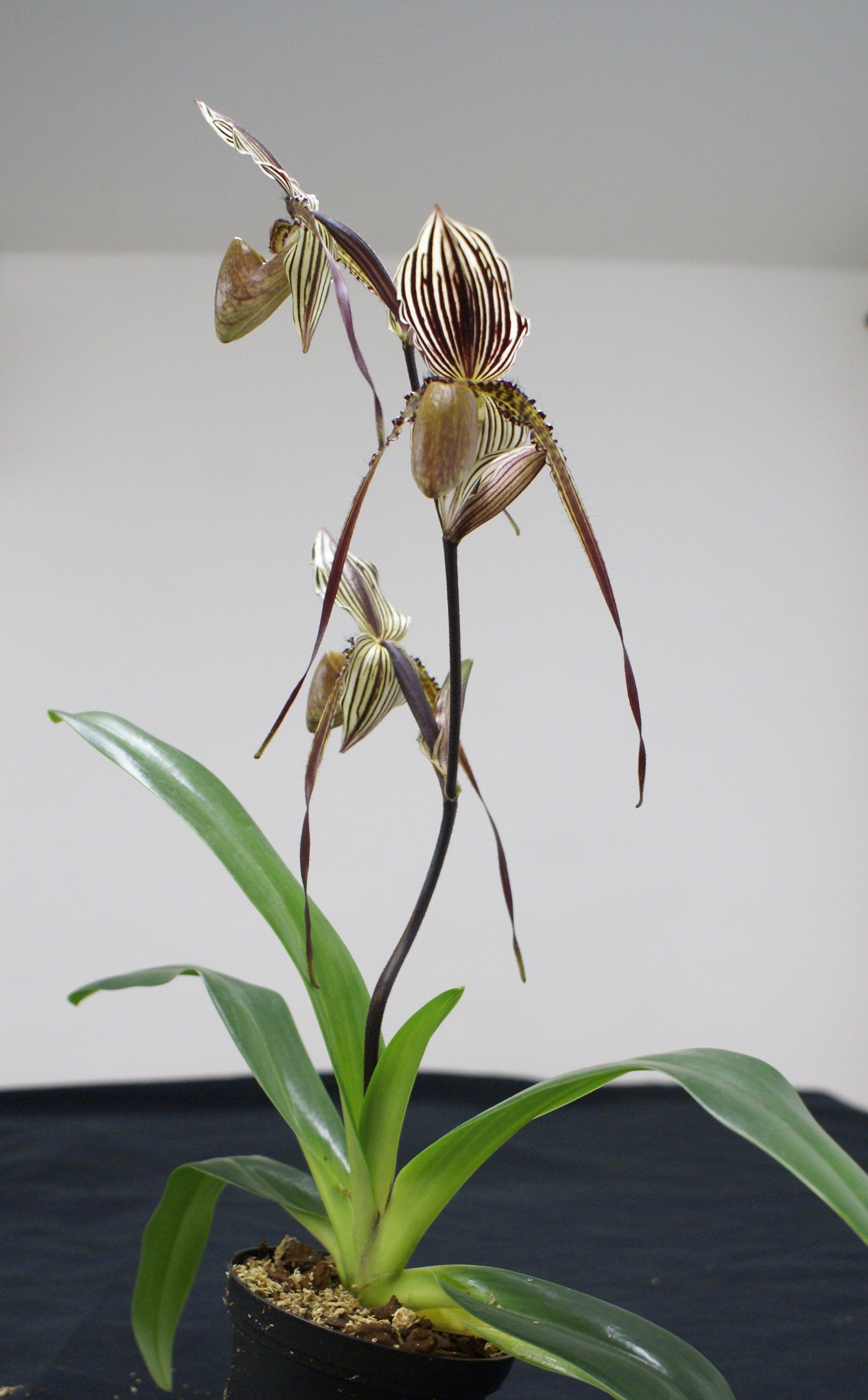
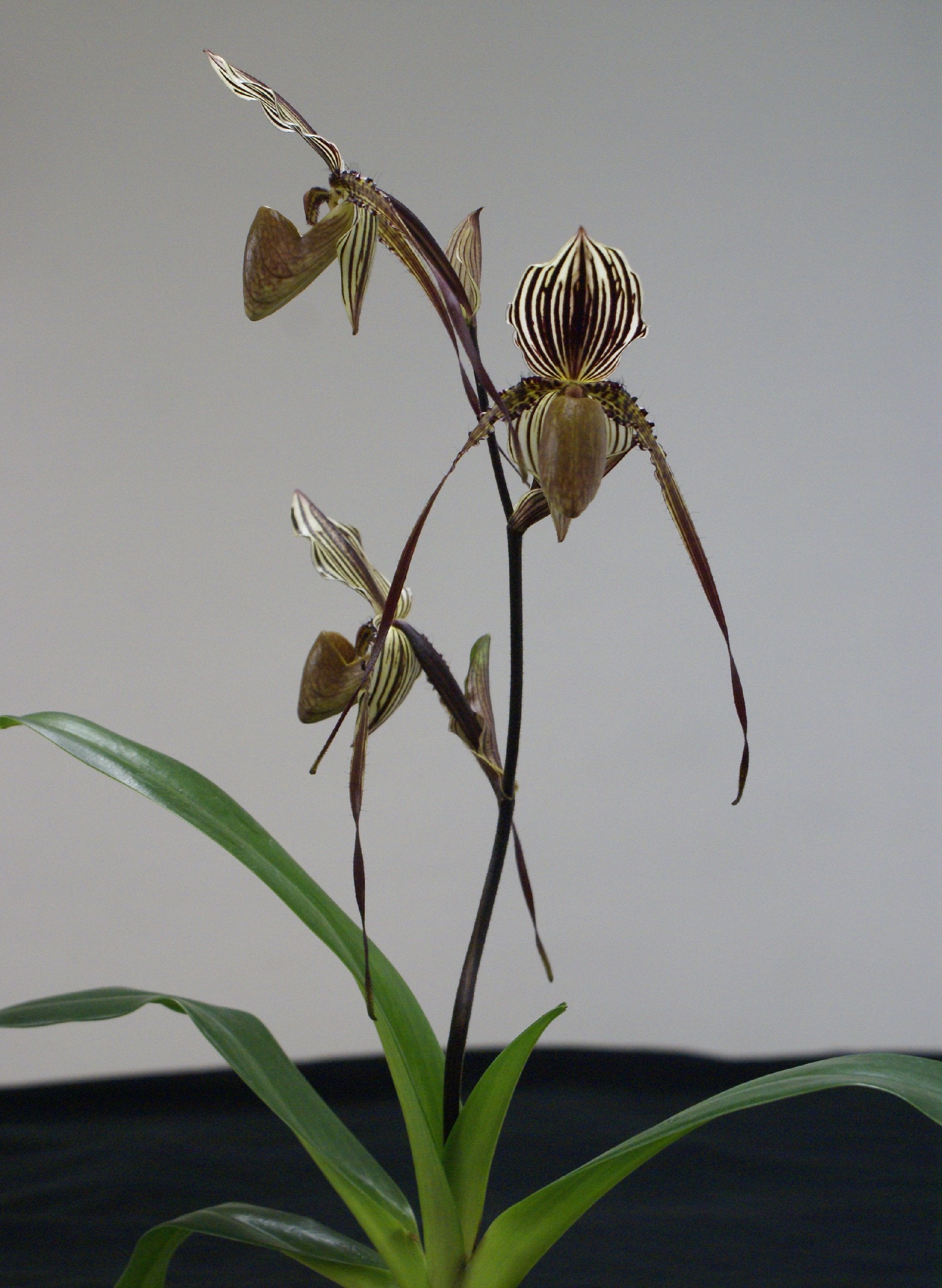
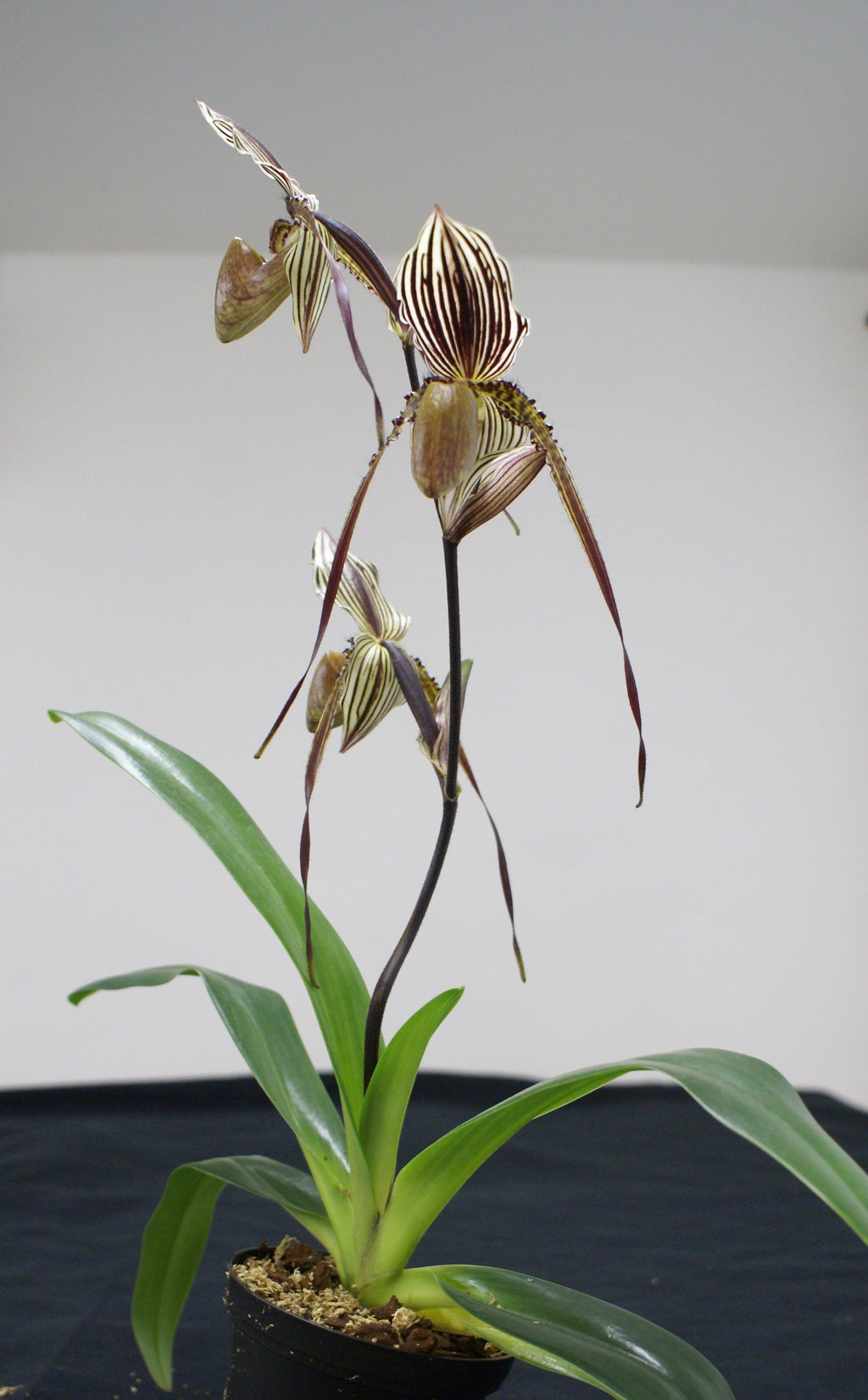
Paphiopedilum Saint Swithin is a classic primary hybrid within the multifloral Paphiopedilums. The cross combines the impressive, striped flower form of the polyantha group with an inflorescence that can bear multiple flowers simultaneously on mature plants. Due to its growth habit with longer, strap-shaped leaves, the plant develops over time into a distinct, sturdy clump, where stability in light, moisture, and temperature makes all the difference.
Origin
This hybrid does not occur in the wild and is registered as a hybrid. The parent plants are Paphiopedilum rothschildianum and Paphiopedilum philippinense.
According to Kew, Paphiopedilum rothschildianum has a natural range in Borneo and Sabah and grows in a humid tropical climate.
Paphiopedilum According to Kew, philippinense occurs from North Borneo to the Philippines and is also native to a humid tropical climate.
This combination explains why, in cultivation, Saint Swithin often responds most predictably to bright, filtered light and a consistently moist substrate, without remaining waterlogged for long periods.
Characteristics
The plant develops a growth habit with longer, green leaves and builds up multiple growth points over the years. In mature specimens, a sturdy flower stalk appears that can typically bear multiple flowers, with the flower segments often distinctly striped and the bloom having a pronounced polyantha appearance. Because Saint Swithin is usually sold as seedlings, there may be variation in color intensity, pattern, and flower posture, while the general character of a large-flowered, multifloral Paphiopedilum remains recognizable.
Care
Light
Bright, indirect light or partial shade is best. Multifloral Paphiopedilums generally tolerate more light than many variegated leaf types, but direct sunlight through glass remains a risk for leaf damage.
Temperature
A range from moderate to warm temperatures usually provides the most stable conditions. During the growing season, it can be warmer, while in the cooler months, a slightly cooler location often results in more moderate growth without weakening the plant.
Substrate
An airy, bark-based Paphiopedilum mix with an organic moisture buffer generally works reliably, as long as the substrate does not become compacted and the roots retain sufficient oxygen. Regular refreshing helps to limit loss of structure and salt accumulation.
Humidity
Increased humidity during the growing season supports even leaf development and bud formation, especially when combined with light air movement. In a living space, maintaining a stable baseline humidity usually works better than temporary misting.
Fertilization
Mild, regular fertilization during the growing season results in the most even growth. A practical approach is to use a low dose and not with every watering, flushing the substrate in between to keep it clean.
Watering
The substrate should remain evenly moist, without water pooling at the bottom. Paphiopedilums lack pseudobulbs to withstand prolonged drought, so allowing the plant to dry out completely is generally counterproductive.
Preferably use demineralized water or rainwater, and flush thoroughly every so often to limit salt buildup.
Flowering
The flowering period varies with the growth stage and conditions, but Saint Swithin often flowers from spring through fall. The flowers generally remain beautiful for a long time at stable temperatures, with a mature plant producing the most impressive blooms.