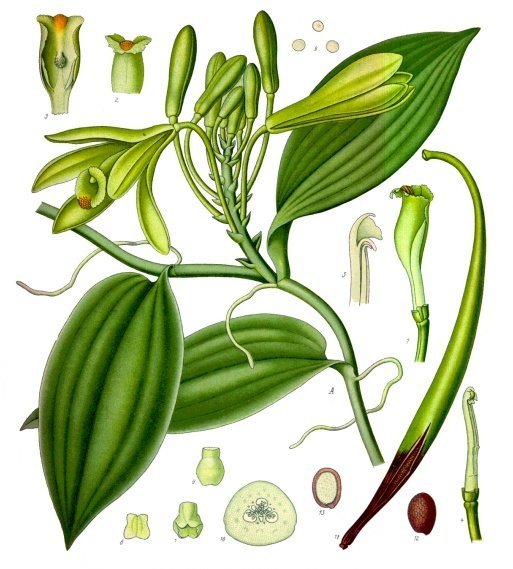
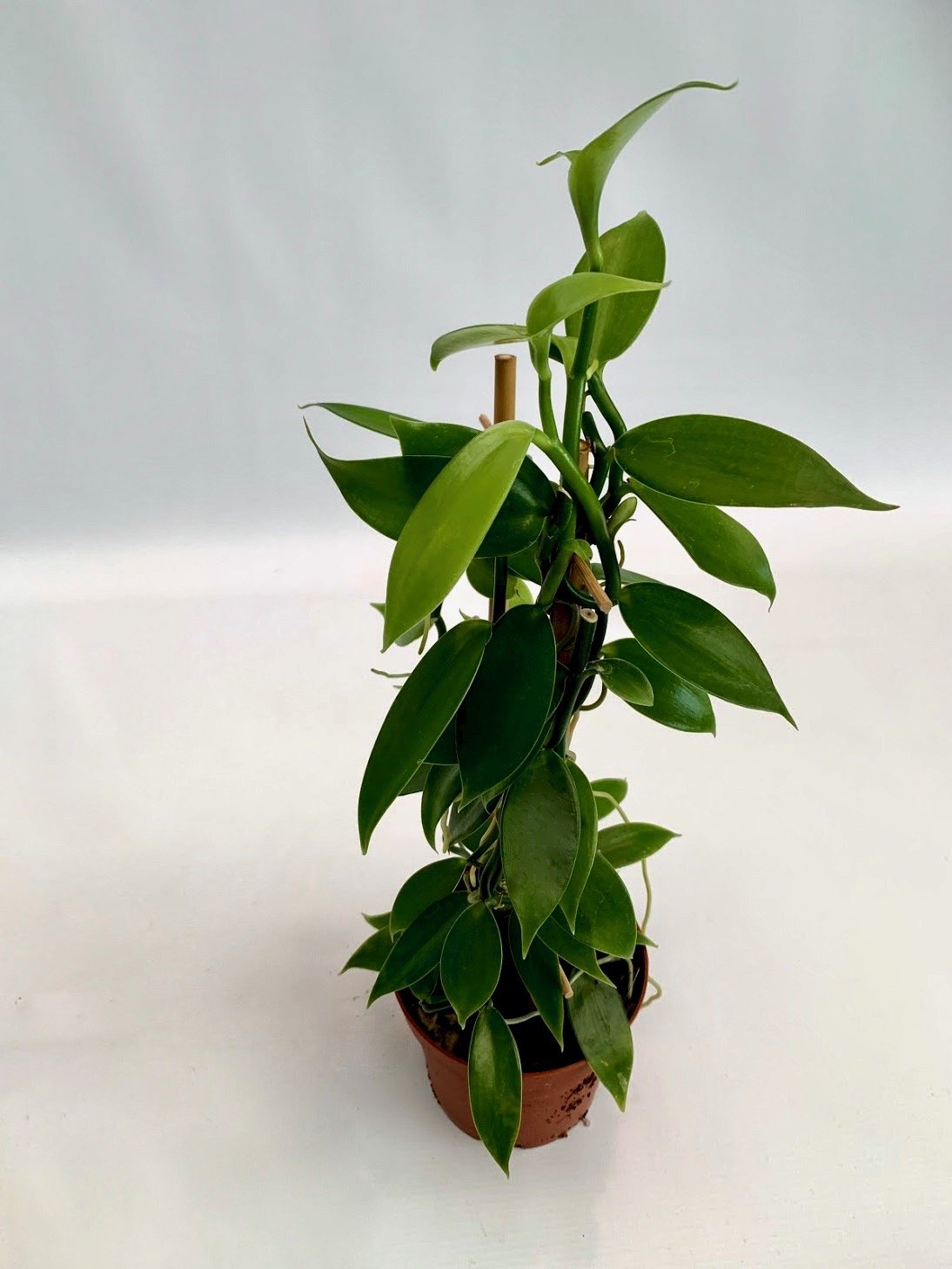
Vanilla planifolia 'Green Leaves' is an unusual botanical orchid known worldwide as the source of true vanilla. This variety with uniform green leaves is especially prized for its vigorous growth and decorative, climbing habit. Unlike many orchids, this species grows as a vine, giving it a distinctly tropical look. For lovers of unusual orchids, Vanilla planifolia 'Green Leaves' is a unique combination of botanical value and cultural significance.
Origin
Vanilla planifolia is native to Central America, specifically Mexico, where it grows in warm, humid rain forests.
In its natural habitat, the plant grows as a climbing epiphyte or terrestrial vine, attaching to trees with aerial roots and growing upward toward the light.
The species later spread worldwide to tropical areas such as Madagascar and Reunion, where it is grown commercially for vanilla production.
Characteristics
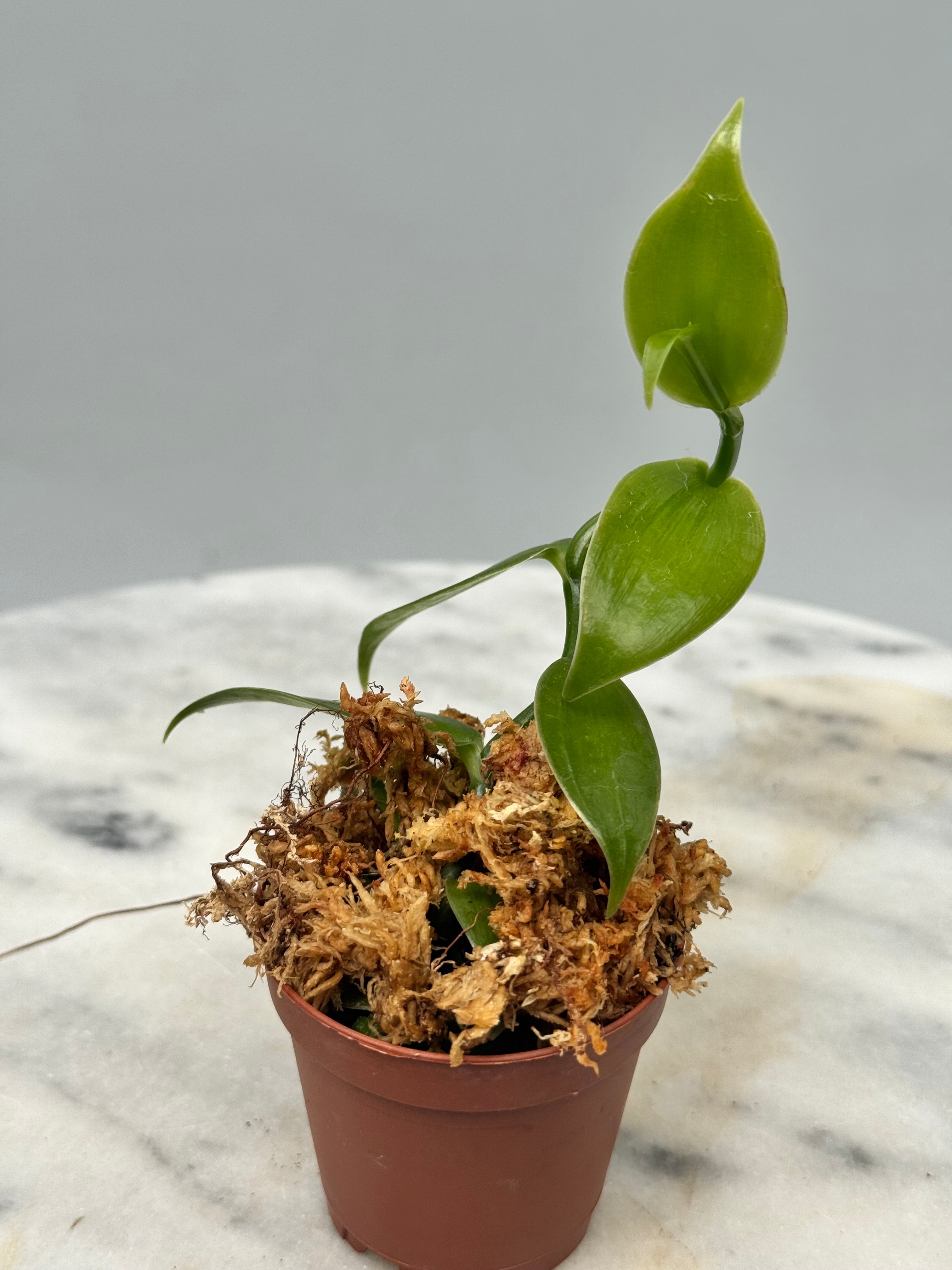
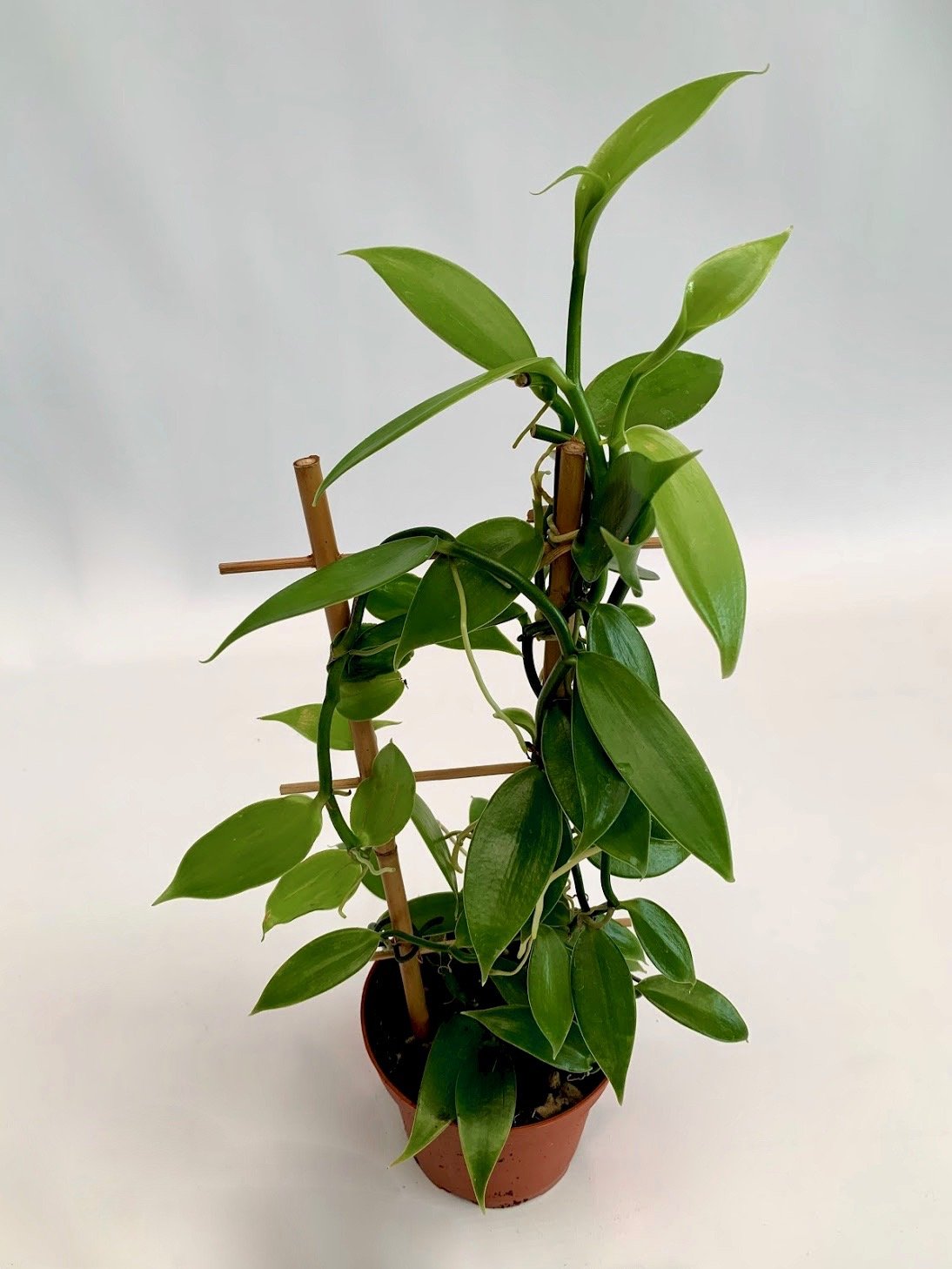
Vanilla planifolia 'Green Leaves' forms long, fleshy shoots with firm, leathery leaves growing along the stem. The plant can grow several feet tall in ideal conditions and develops aerial roots at each node.
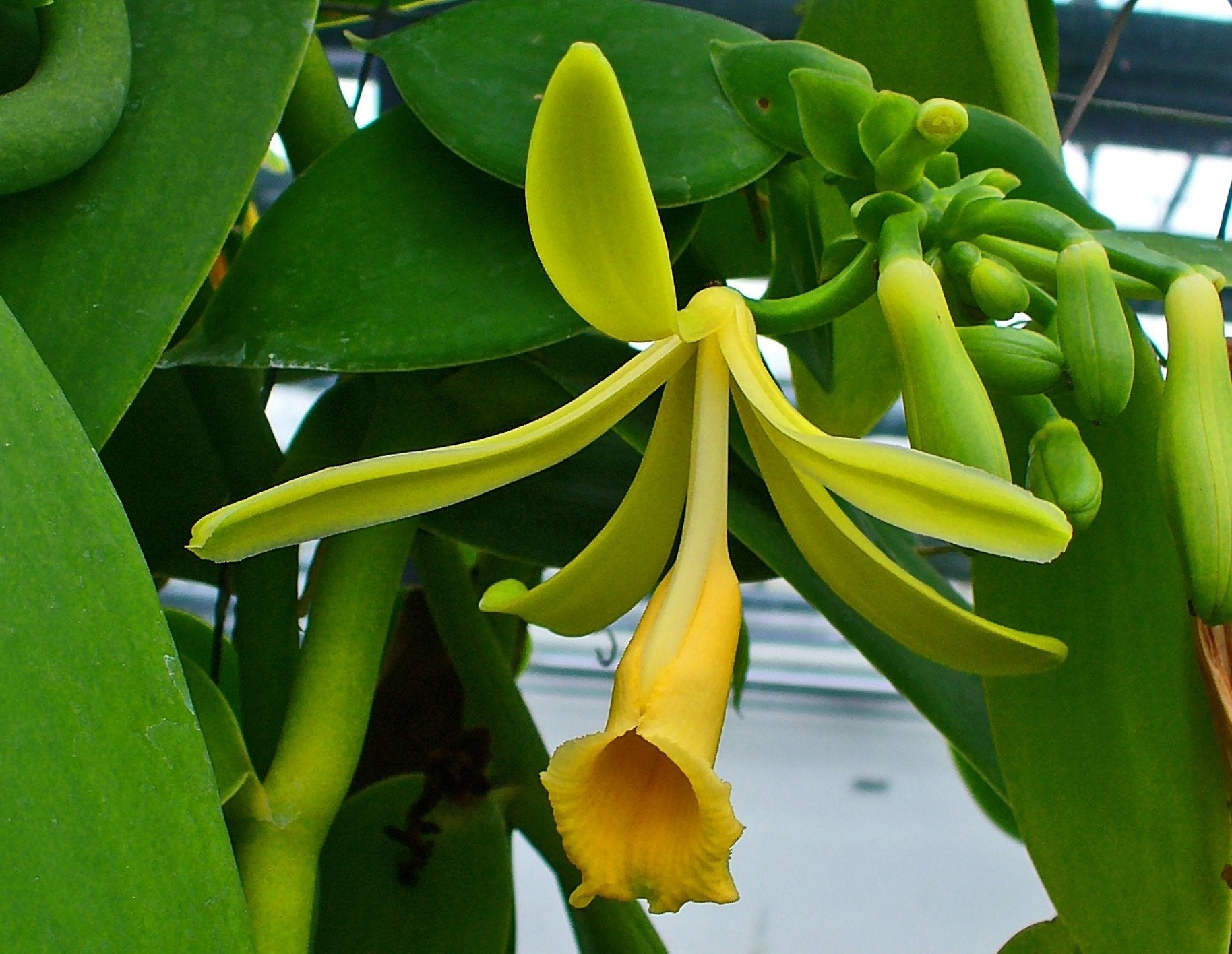
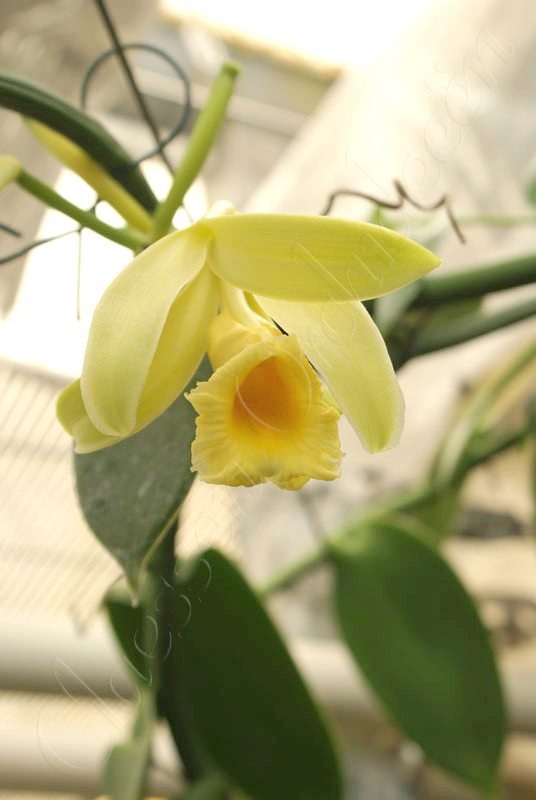
The flowers are relatively subtle for an orchid and are a greenish yellow color. They usually bloom for about a day, which is characteristic of this species.
When pollination is successful, the plant develops long pods that eventually contain the familiar vanilla. This makes Vanilla planifolia unique within the orchid world.
The special pollination
What makes Vanilla planifolia botanically exceptional is the way pollination occurs in nature.
In its native habitat, the plant depends on very specific pollinators, presumably certain species of orchid bees (such as Euglossa). Interestingly, this pollination has very rarely been directly observed in nature, and the exact pollinator has still not been determined with complete certainty.
The flower structure is so specialized that natural pollination can only occur by insects of exactly the right size and behavior. Outside of this natural ecosystem, these pollinators are completely absent.
Therefore, Vanilla planifolia is almost always manually pollinated worldwide. This must be done within hours of opening the flower, as it is only viable for one day.
This unique dependence on specific pollinators and the need for hand pollination make the species botanically and historically special.
Care
Light
Vanilla planifolia grows best in lots of bright, indirect light. Direct bright sunlight can cause leaf damage.
Temperature
This tropical species needs warmth and grows optimally at temperatures between 20 and 30 °C.
Substrate
Use an airy, moist substrate or allow the plant to climb along a support, such as a moss stick or rack.
Humidity
High humidity of 60 to 80 percent is essential for healthy growth.
Watering.
Keep the substrate slightly moist, but avoid keeping the roots wet for long periods of time. Preferably use demineralized water.
Feeding
During the growing period, a slightly diluted orchid food can be given regularly.
Flowering
The plant usually flowers after a few years from seedling. The flowers open briefly and must be pollinated quickly to get pod formation, making it a fun challenge.