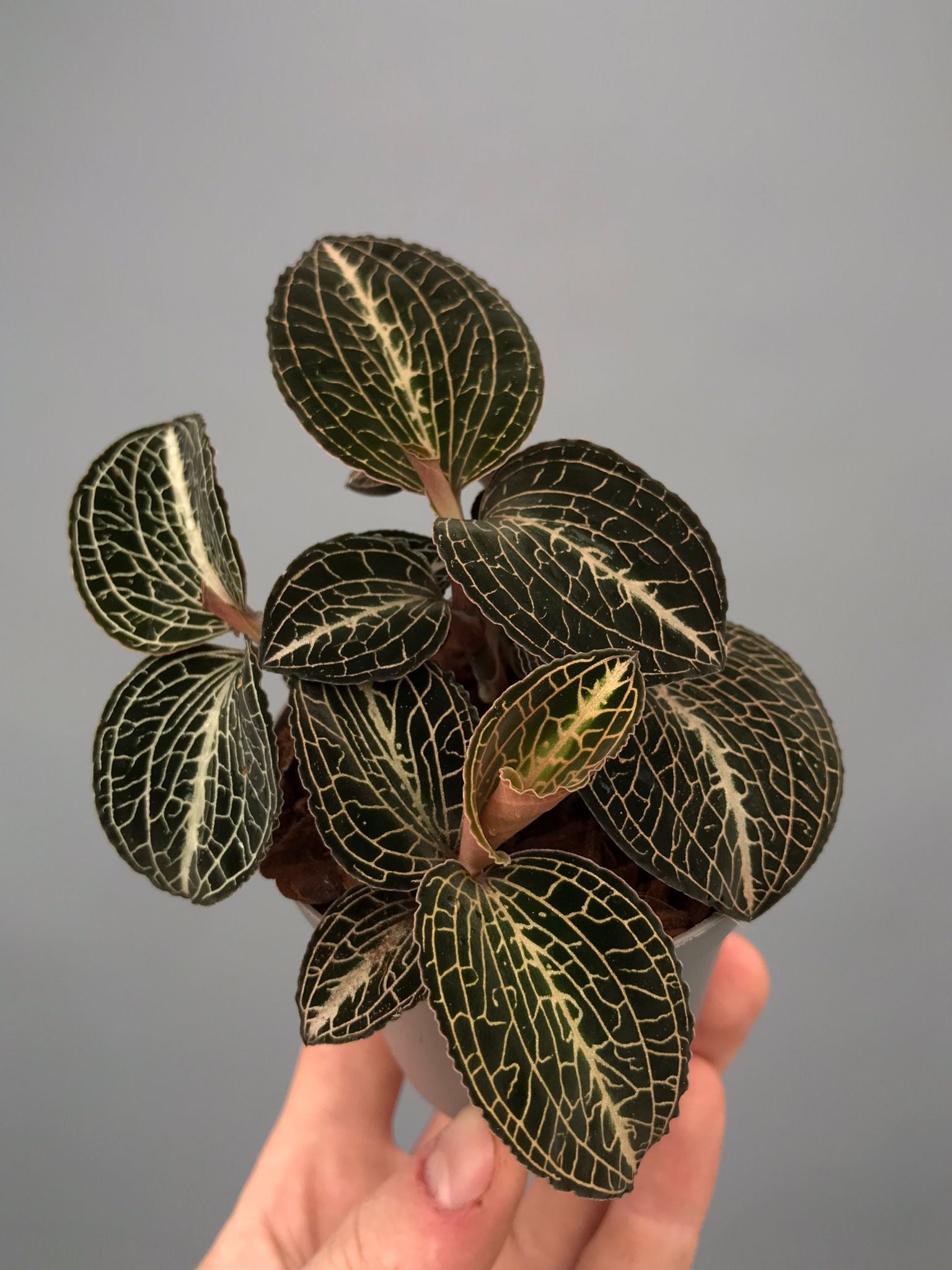
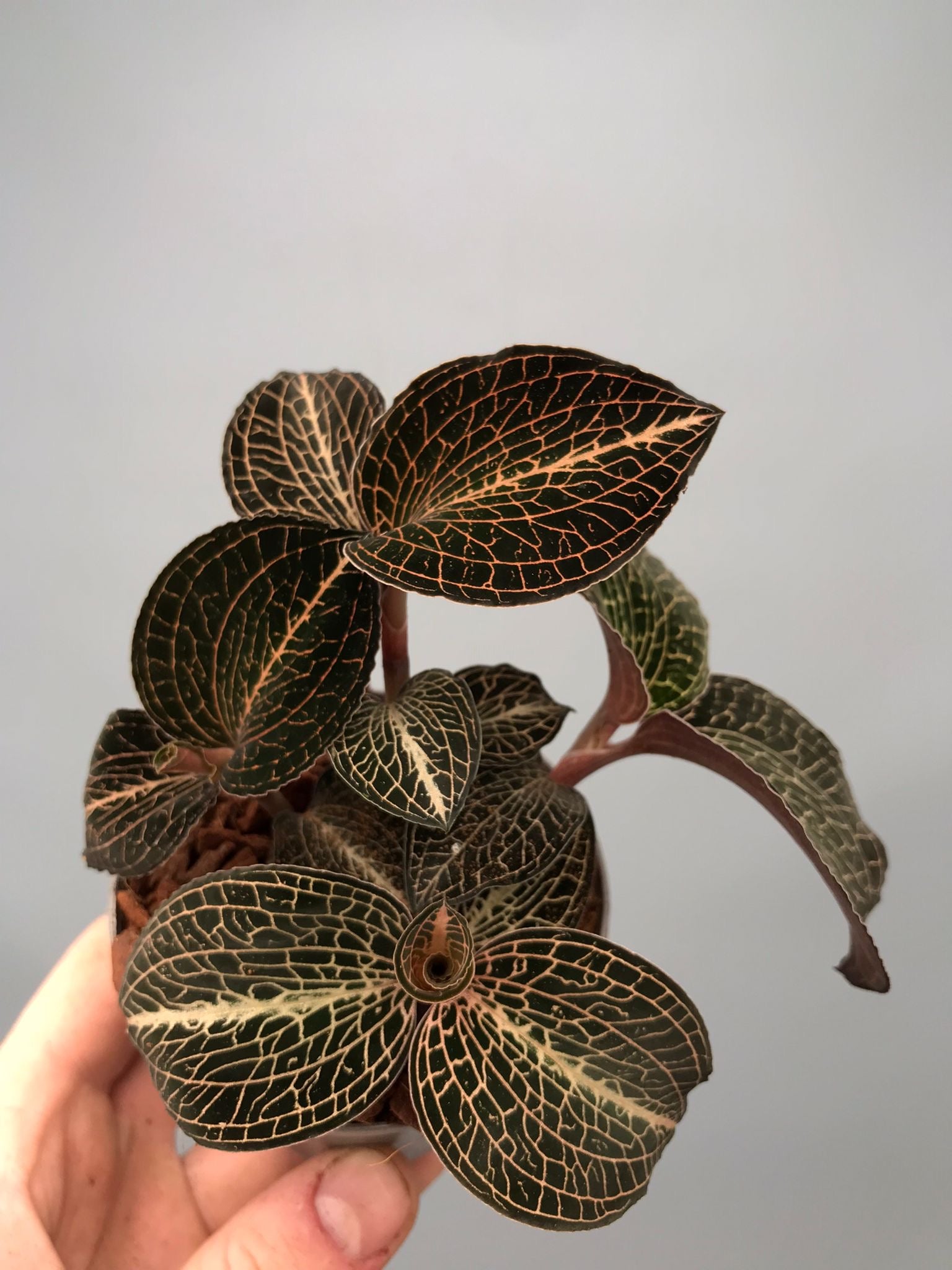
Anoectochilus formosanus × burmannicus 'Red' is a hybrid jewel orchid selected for leaf color and veining. In this selection, the emphasis is usually on warmer tones in the leaves and veins, with copper, reddish-bronze and deeper chestnut brown being more common. In a stable environment with high humidity, the velvety leaf texture usually remains most consistent.
Origin
This cross does not occur in the wild and was created from breeding work with two natural species. Anoectochilus formosanus has a natural distribution from Vietnam and Hong Kong through the southern Nansei Islands to Taiwan, according to Kew.
Anoectochilus burmannicus is indigenous from southern Yunnan to Peninsular Malaysia, according to Kew.
Jewel orchids are typically forest floor plants that grow among humus, moss and leaf litter in sheltered light, which well explains why a controlled microclimate in the home or terrarium often gives the most predictable results.
Characteristics
The plant remains compact and over time forms a group of rosettes. The leaves are firm and velvety and can range from dark green to deep chestnut brown, with 'Red' usually showing more warm undertones. The vein pattern is finely branched and can appear coppery to reddish-bronze depending on light intensity, temperature and growth stage. The underside frequently has a subtle crimson glow. Because they are living plants, slight differences in markings and color are normal, even within the same selection.
Care
Light
Bright, indirect light or semi-shade suits best. Direct sunlight increases the risk of leaf damage and can reduce the velvety appearance.
Temperature
An even temperature works best for stability, roughly around 18 to 24 °C. Prolonged below about 15 °C greatly inhibits growth and makes recovery slower.
Substrate
An airy, humus-rich and moisture-retaining substrate that does not silt up suits the terrestrial growth type well. A base with sphagnum and organic components, supplemented with fine bark structure, helps to keep the substrate loose and root-friendly.
Humidity
Higher humidity supports leaf quality and even growth. In a terrarium or enclosed container, this is often easier to keep constant, with light air movement to keep the leaves tidy. Do provide fresh air at least daily to avoid "dead air. This will prevent bacterial and fungal growth.
Feeding
Feeding sparingly during the growing period is usually sufficient, for example monthly with a low dose of orchid nutrition. Over-fertilization can stress the roots.
Watering
The substrate may remain slightly moist continuously, without leaving water at the bottom. Regular small amounts often work better than occasionally a lot. Preferably use demineralized water to limit salt build-up.
Flowering
Flowering often appears in fall or early winter with a fine bloom spike and small, light-colored flowers. In jewel orchids, the ornamental value remains mainly in the foliage, so the bloom is usually seen as a subtle extra accent.