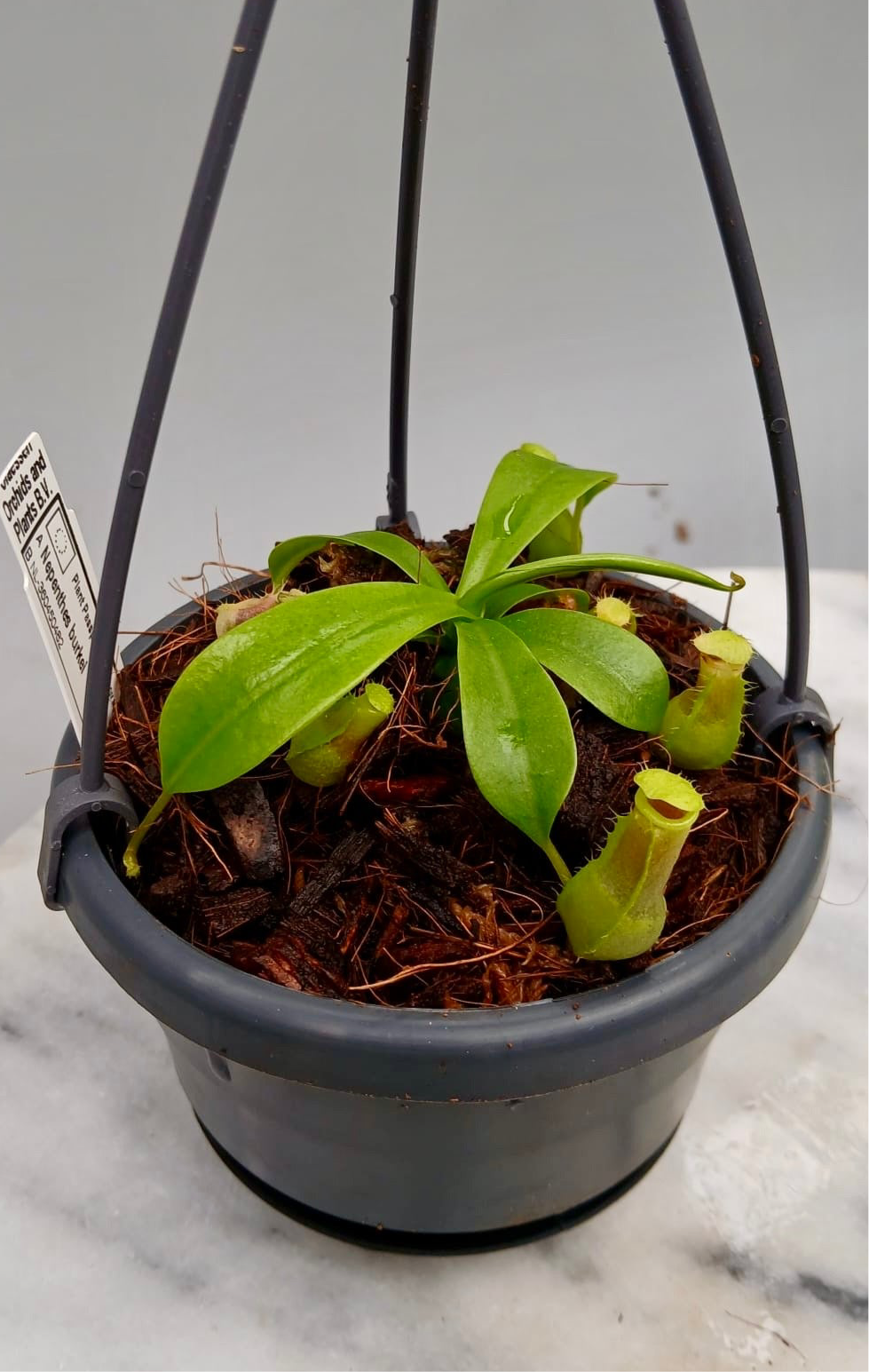
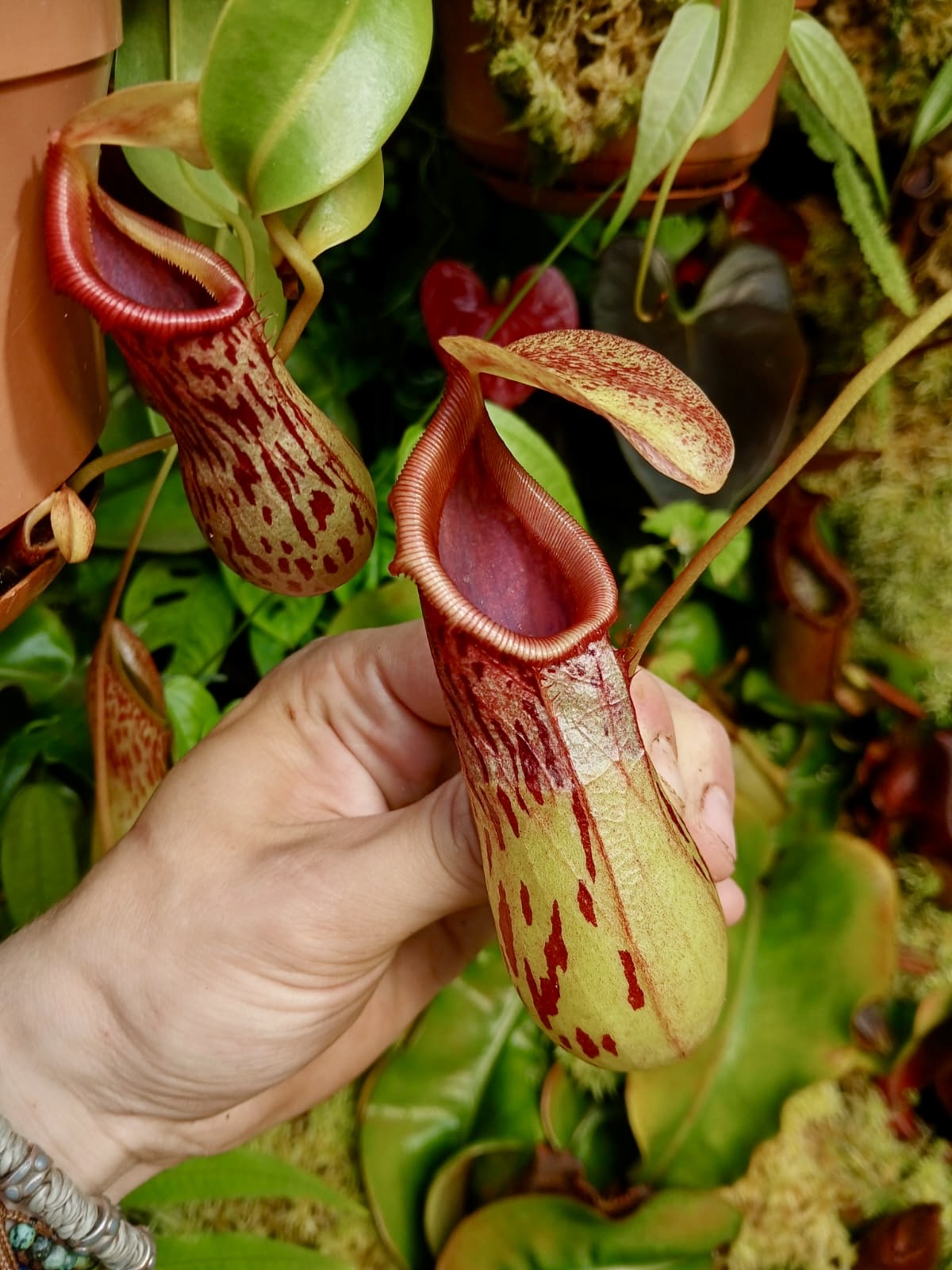
The Nepenthes burkei is a fascinating and unique carnivorous plant that lends itself well to both novice and advanced plant keepers. This particular species from the Nepenthes-family, also known as the "tropical pitcher plant," is known for its impressive, pitcher-like traps with which it catches and consumes insects. The Nepenthes burkei is an ideal choice for lovers of exotic plants looking for something unique and intriguing.
Origin
The Nepenthes burkei is native to the tropical rainforests of Borneo and Sumatra, where it develops in shady, moist environments. Like other Nepenthes-species, N. burkei is an epiphyte, meaning it grows in nature on trees or rocks, where it feeds itself with the moisture coming from the air. This plant is found in areas with high humidity, low temperatures and sufficient light.
Characteristics
The Nepenthes burkei has a distinctive appearance due to the long, slender stems and distinctive traps it produces. The traps are long and narrow, with an elegant, cylindrical shape and a color that ranges from green to brown with a red glow. The trap has a distinctive raised rim and a lid that falls over the opening, giving the trap a "cup" appearance. These traps are filled with a liquid that lures and catches insects. The plant uses these captured insects as a food source to survive in the nutrient-poor, humid environments it finds itself in.
The leaves of the Nepenthes burkei are long, narrow and sturdy, and have a fresh green color that perfectly matches the plant's exotic appearance. The long tendrils growing from the leaves carry the characteristic traps and allow the plant to spread. The plant can grow up to 30-40 cm tall, depending on growing conditions.
Care
The Nepenthes burkei has specific care needs that are important for healthy growth and flowering. Although caring for carnivorous plants such as this one requires some knowledge and attention, the Nepenthes burkei is relatively easy to care for if the right conditions are provided.
Light
This plant likes bright, indirect light. Direct sunlight can burn the leaves, so place the Nepenthes burkei in a bright spot with filtered light. A spot close to a window where the plant receives only partial direct sunlight is ideal.
Temperature
The Nepenthes burkei thrives best in a temperate climate, with temperatures between 20-30°C. It is important to ensure cool night temperatures, which helps promote growth and trap generation.
Substrate
This plant needs a well-drained, acidic substrate. A mixture of peat moss and perlite or a special substrate for carnivorous plants is ideal for the Nepenthes burkei. This provides good air circulation around the roots and prevents waterlogging.
Humidity
Because the Nepenthes burkei comes from a tropical climate, it needs a high humidity of 60-80% to grow well. It may be helpful to increase humidity by misting the plant occasionally or using a humidifier.
Watering
Use demineralized water, rainwater or distilled water to care for this plant. Nepenthes is sensitive to the salts and minerals in tap water, so it is important to use high-quality water. Keep the substrate moist, but not soggy, and avoid using chalky water.
Nutrition
The Nepenthes burkei feeds on insects that end up in the traps. You can also feed it manually with small insects or feeders, but this is usually not necessary if the plant is kept in an environment where it can catch natural insects. Always keep the traps filled with enough liquid to allow insect capture.
Growth and Cups
The Nepenthes burkei is a slow-growing plant, but with proper care it will begin to flower and develop new traps over time. The traps may continue to develop during the growing period, and the plant will stretch its long tendrils to produce new traps. Trap production is a wonderful process to observe, and the plants will continue to improve their characteristic cup-shaped traps over time.
With the Nepenthes burkei you bring into your home a fascinating and exotic plant that is not only visually appealing, but also has functional properties. This carnivorous plant is sure to attract the attention of visitors and offers a unique addition to your plant collection.