
Jewel orchids
52 products
Showing 1 - 24 of 52 products
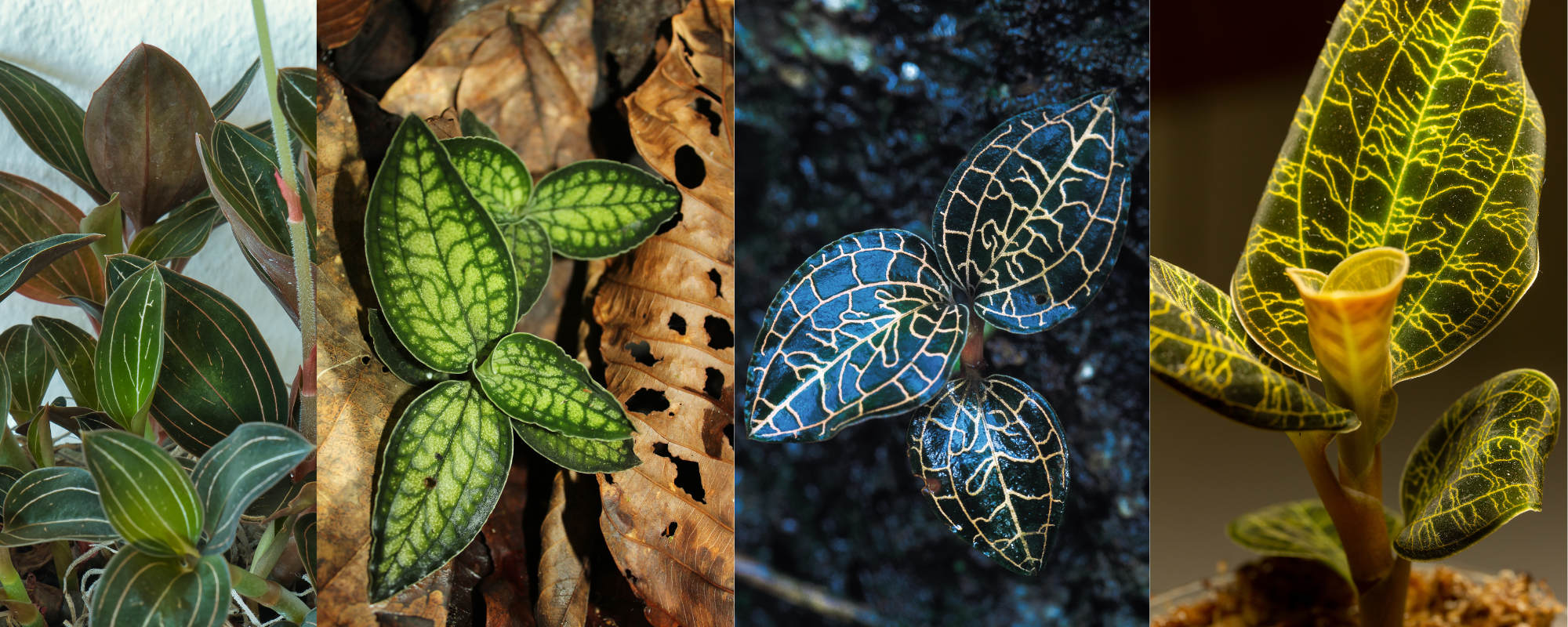
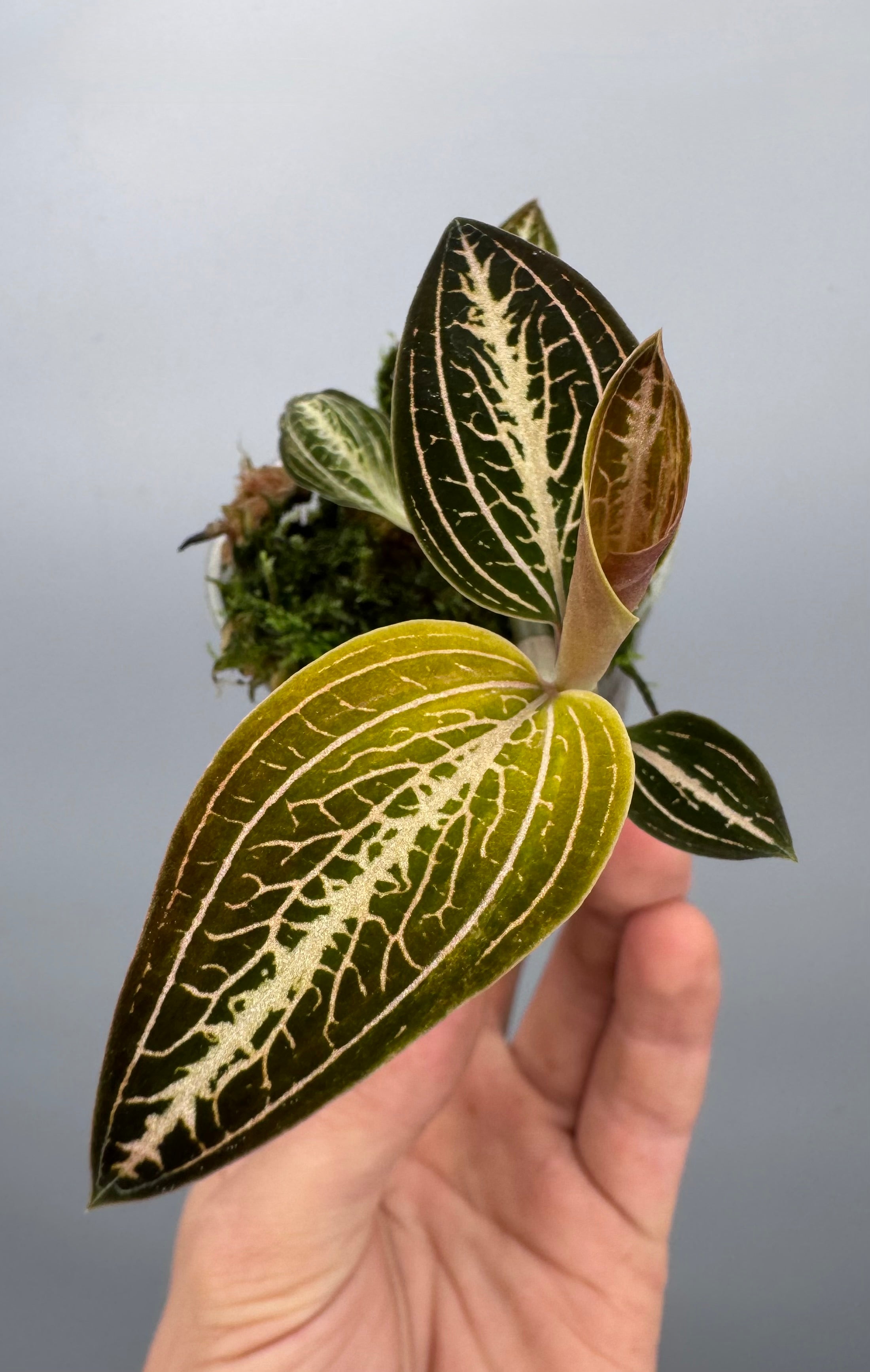
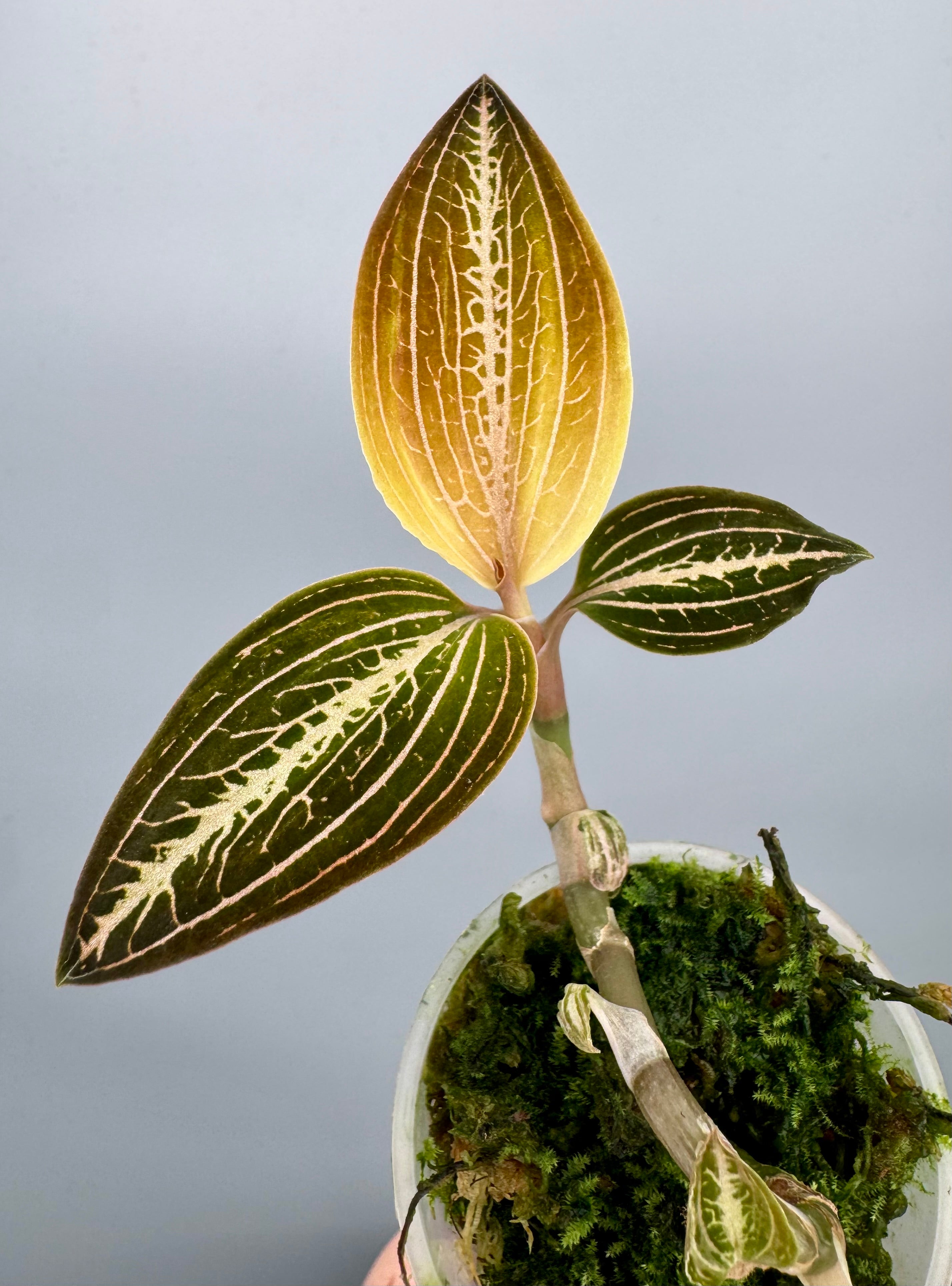
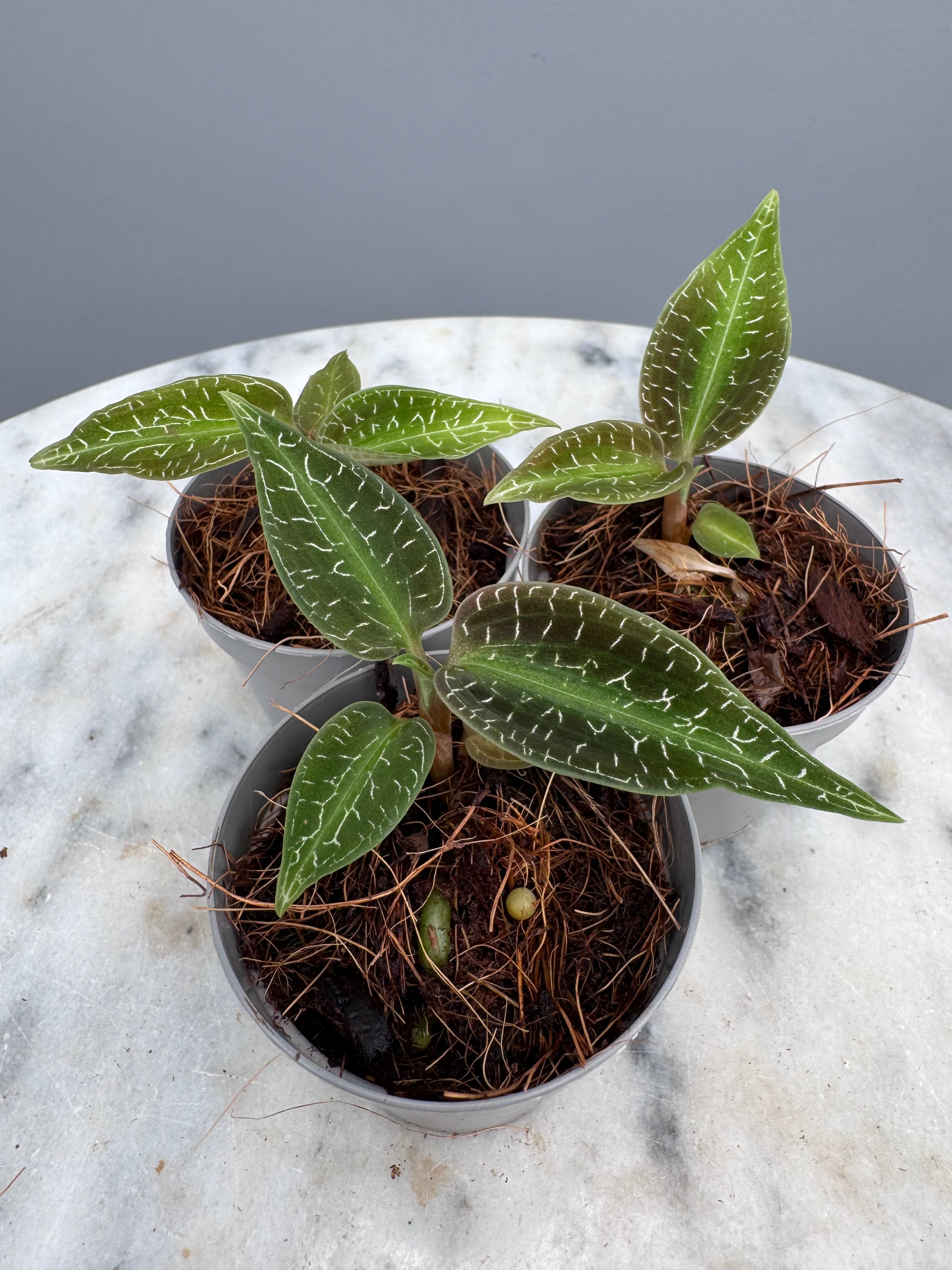
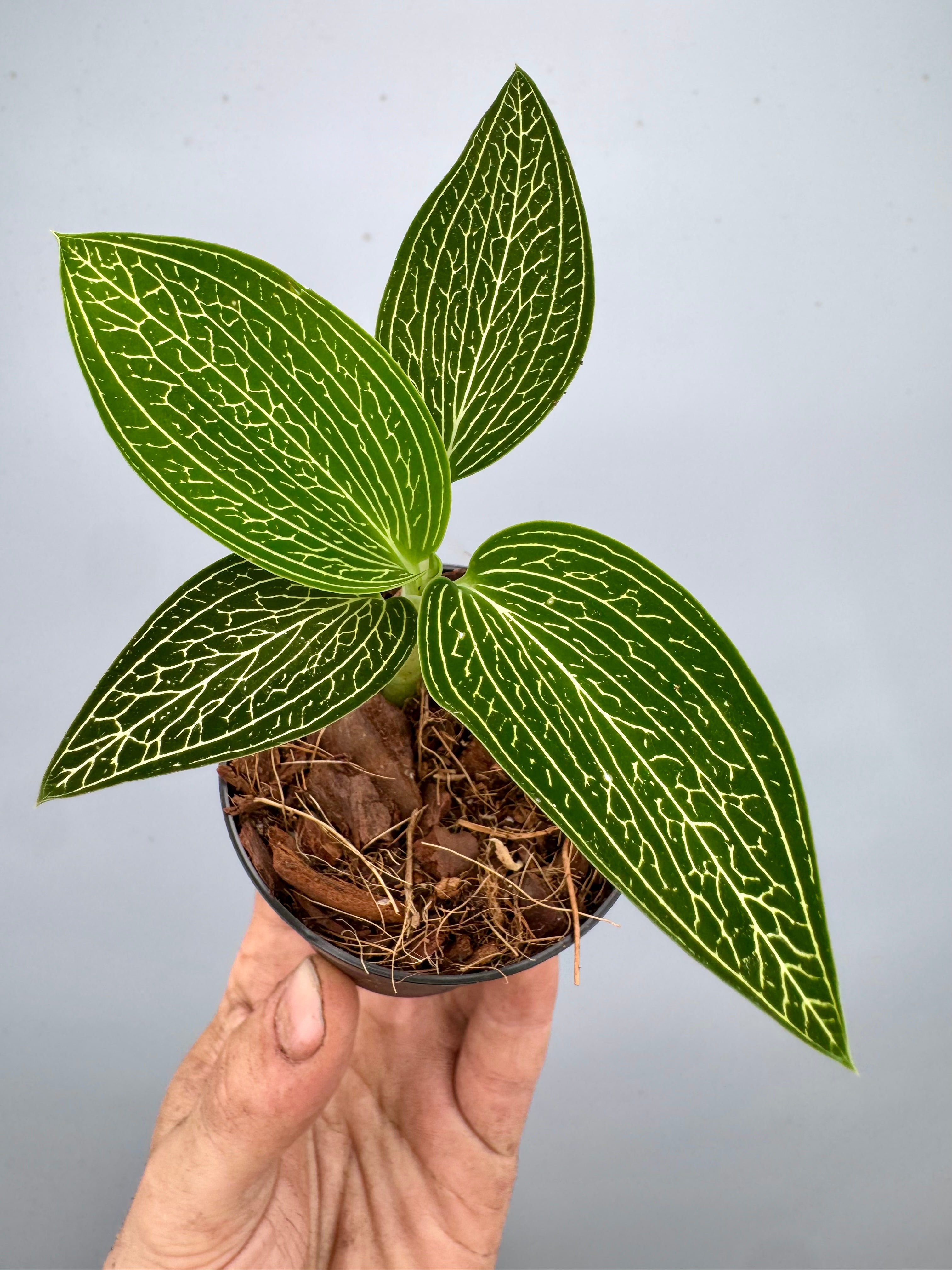
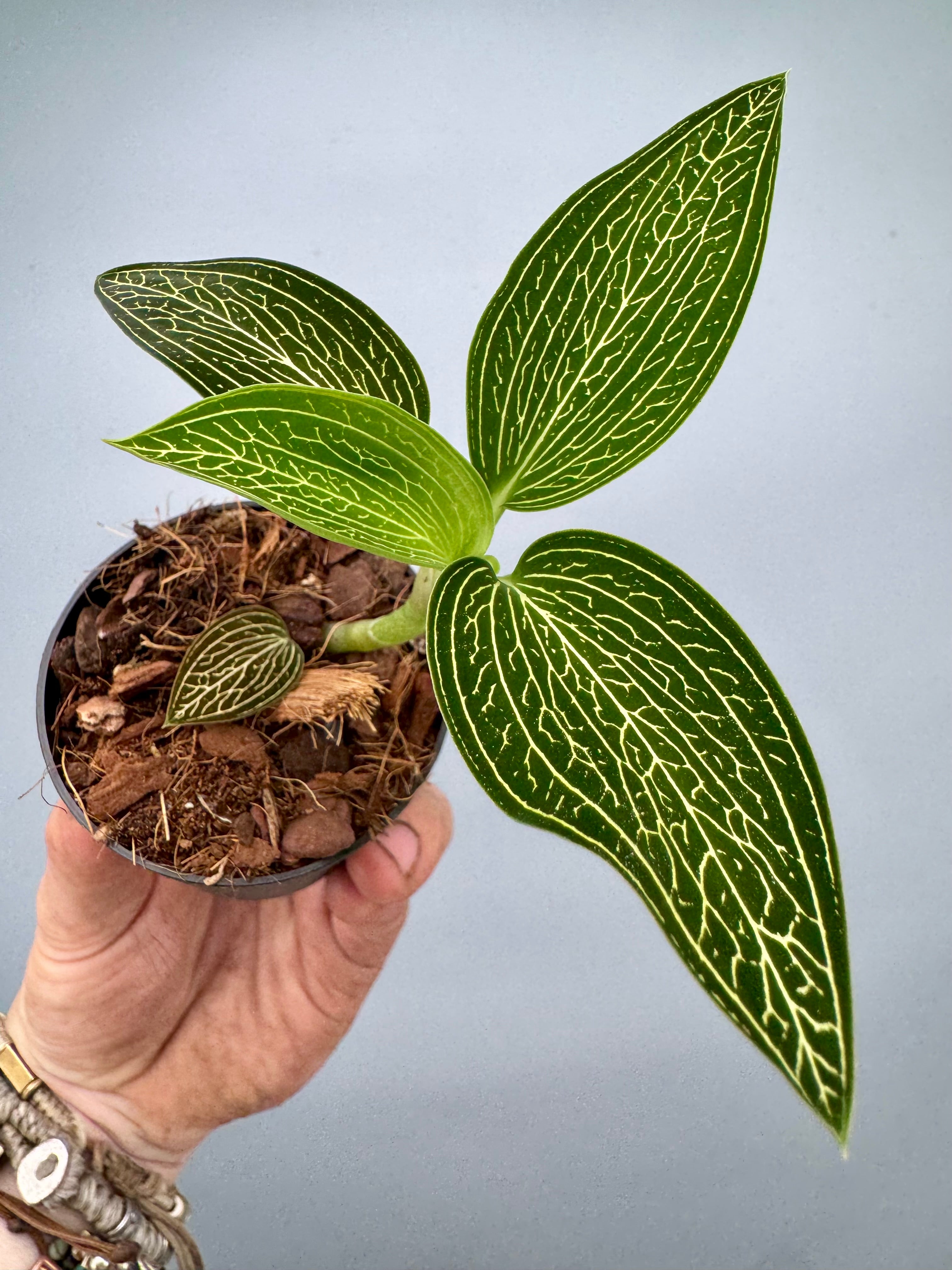
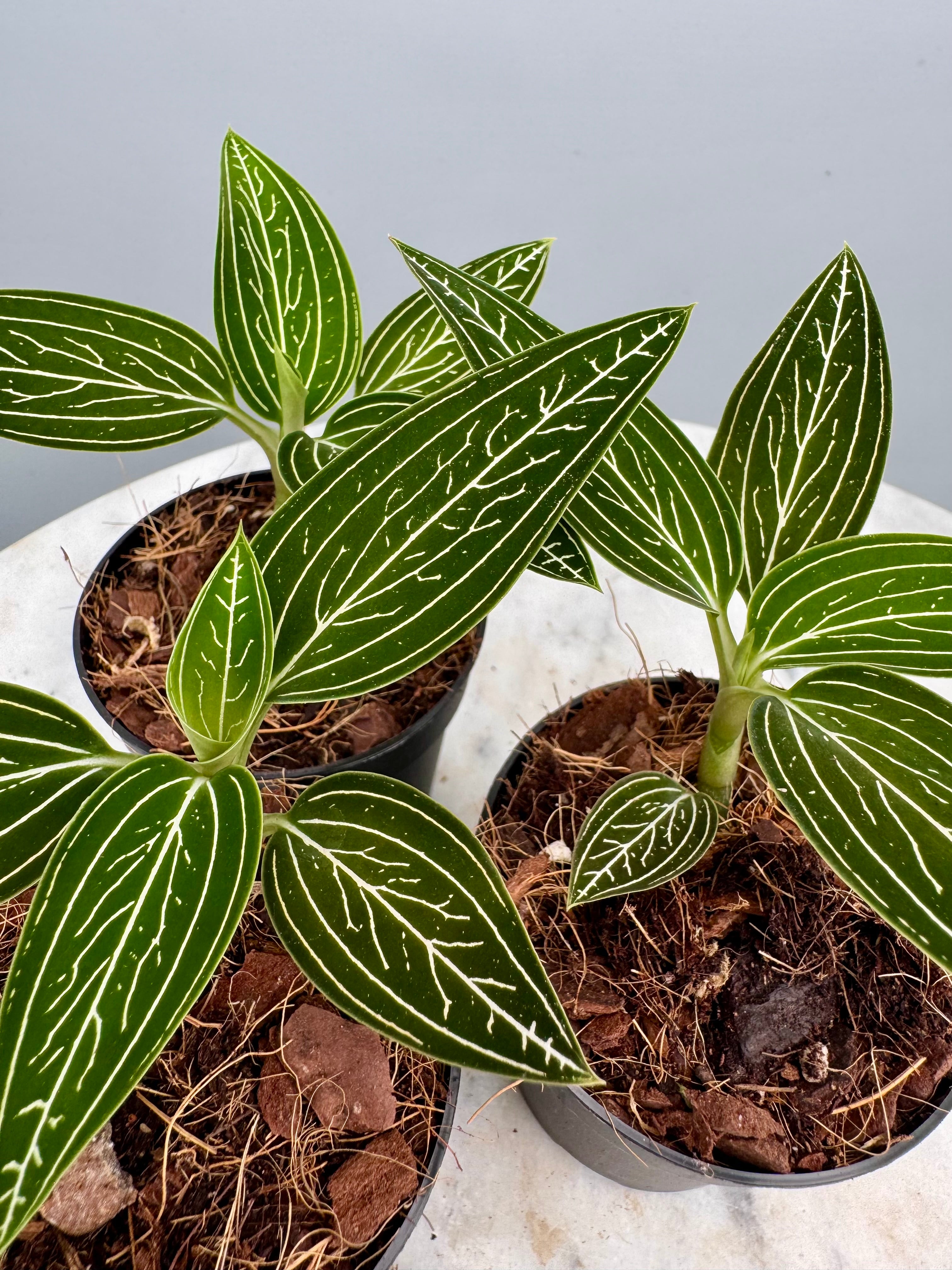
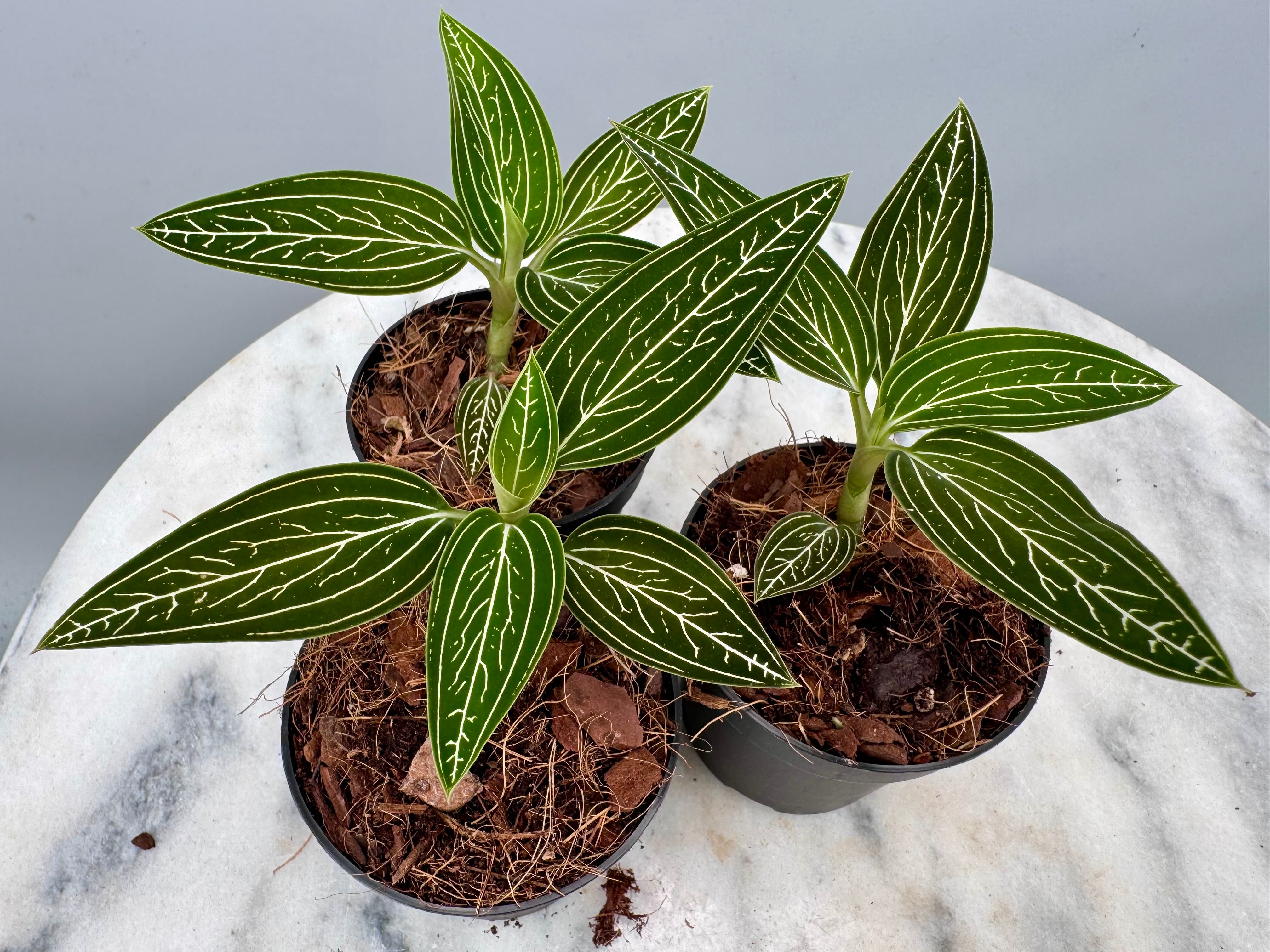
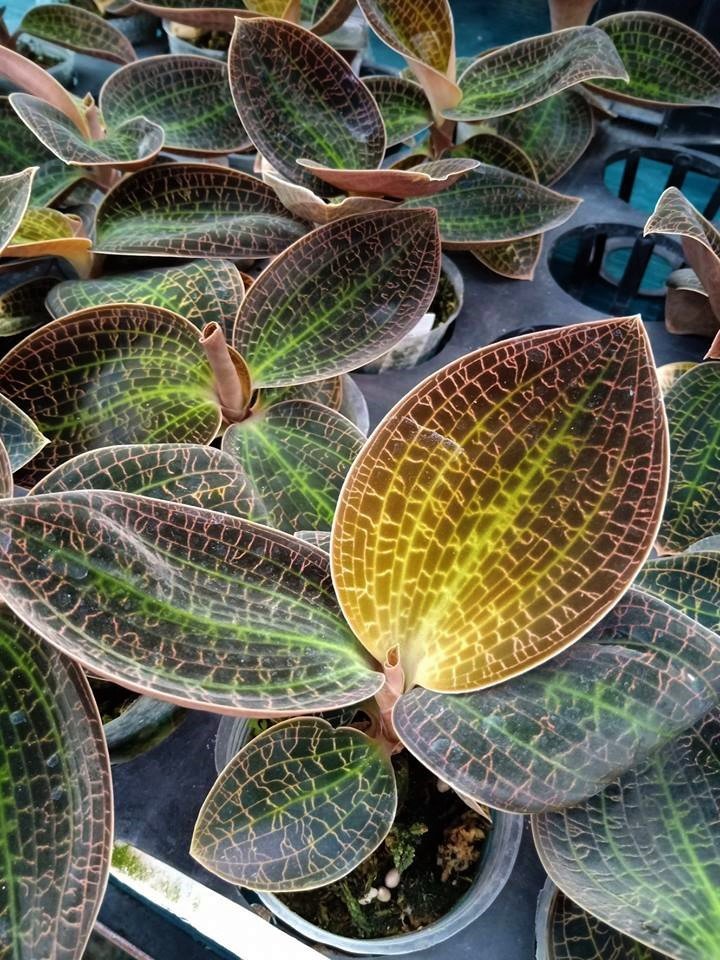
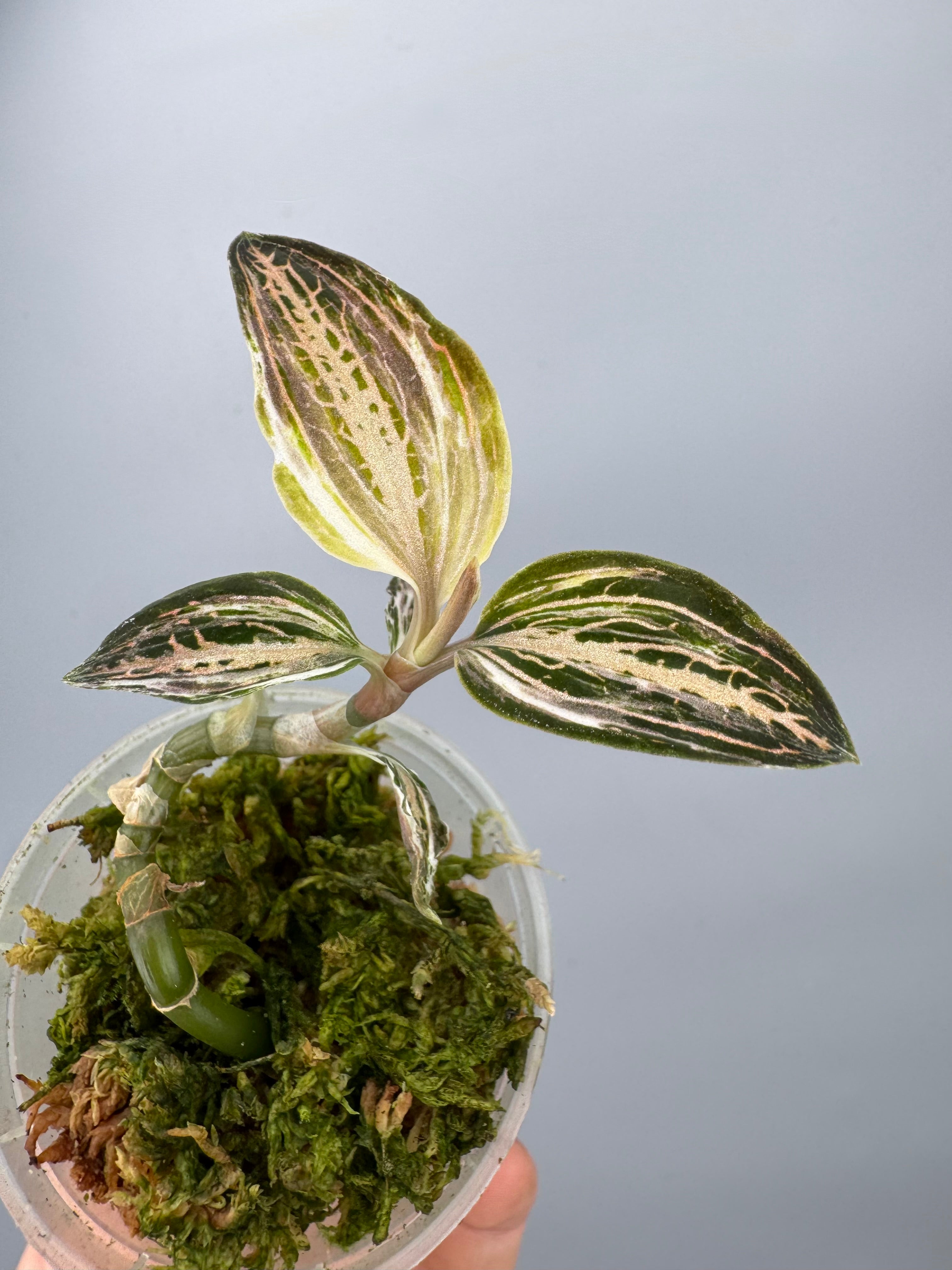
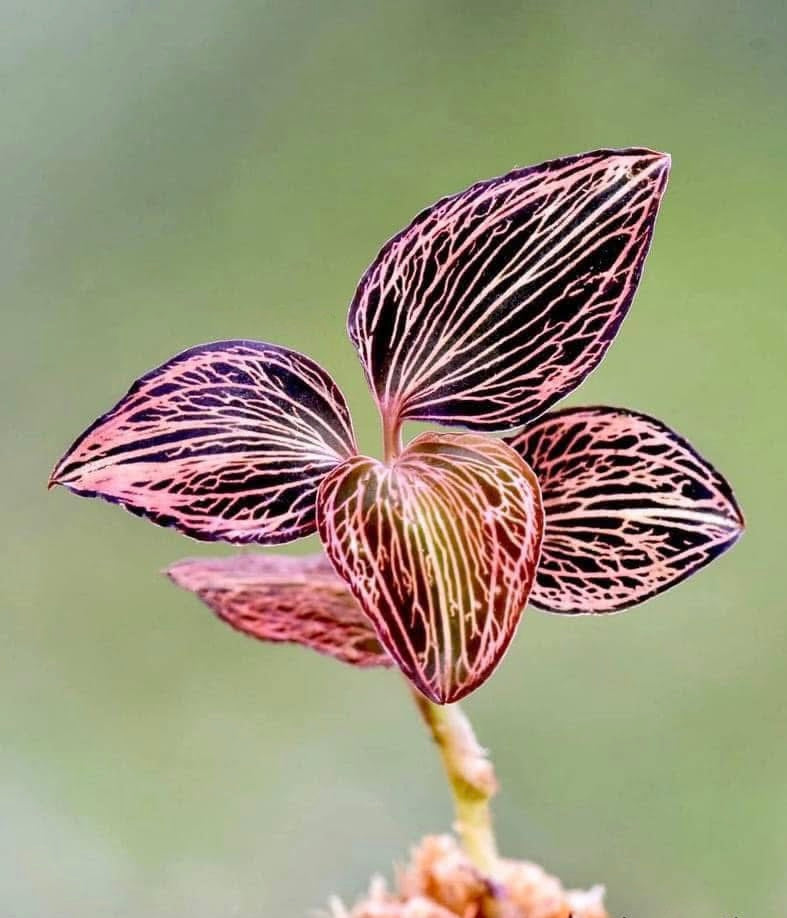
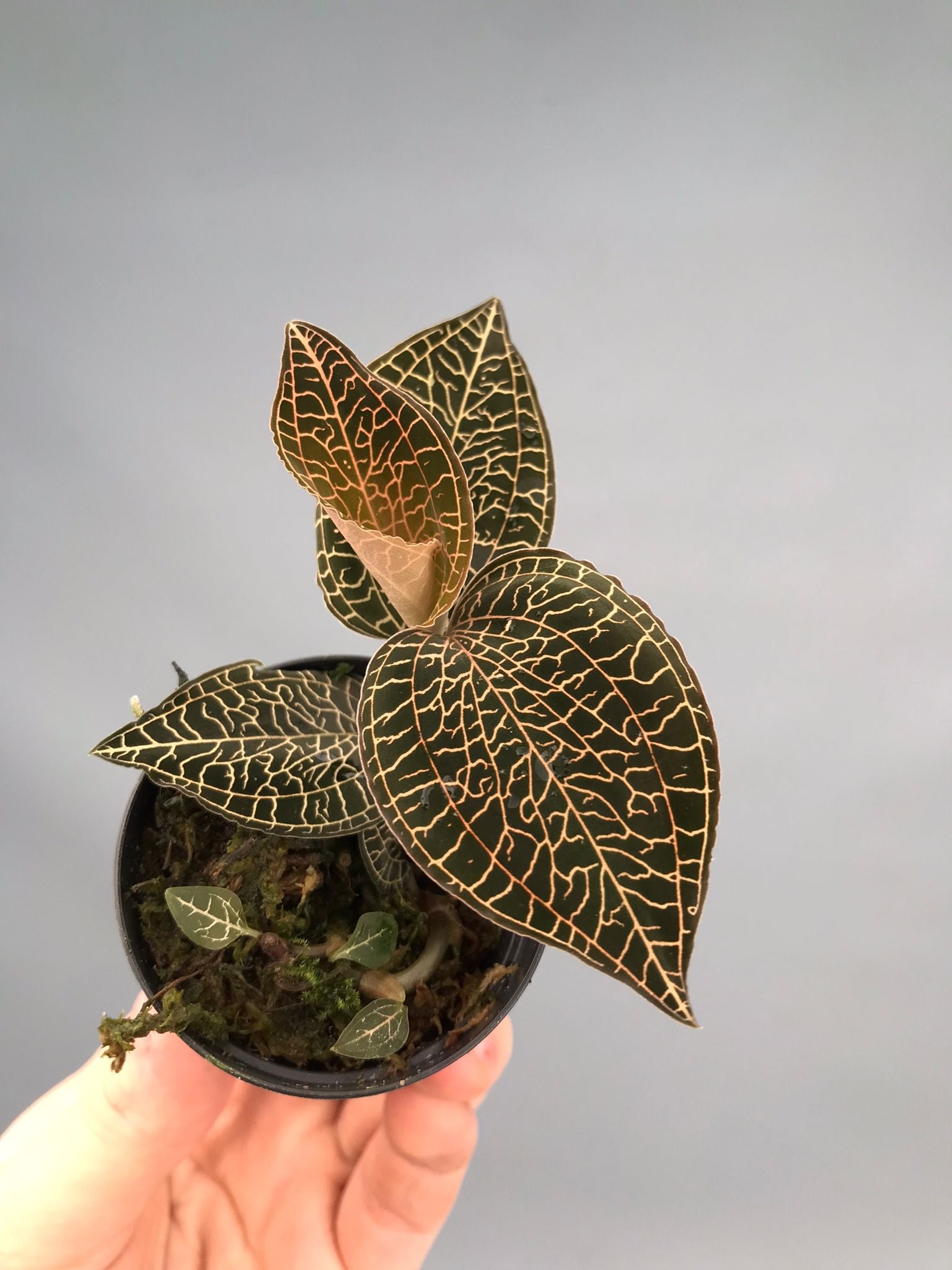
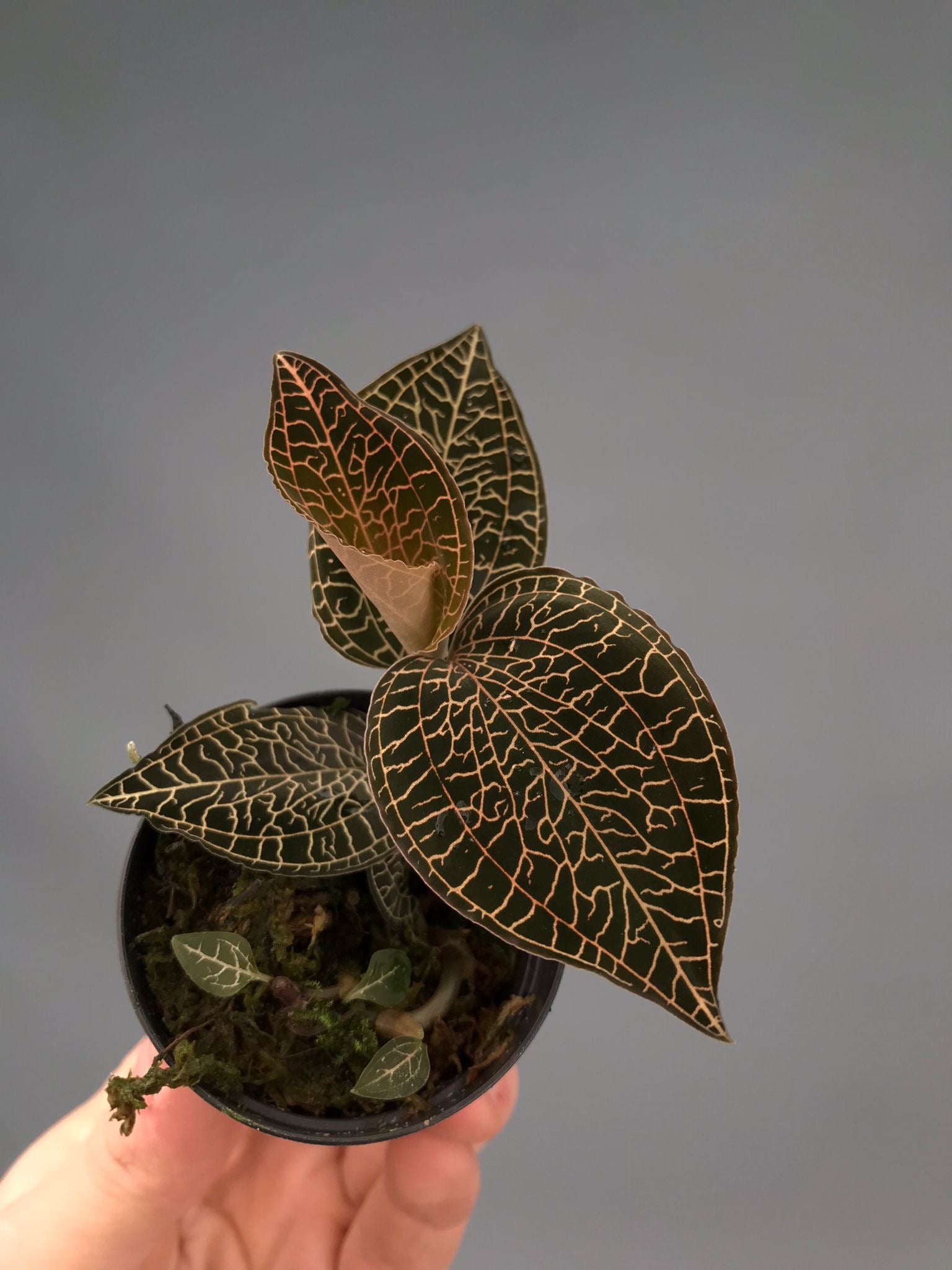
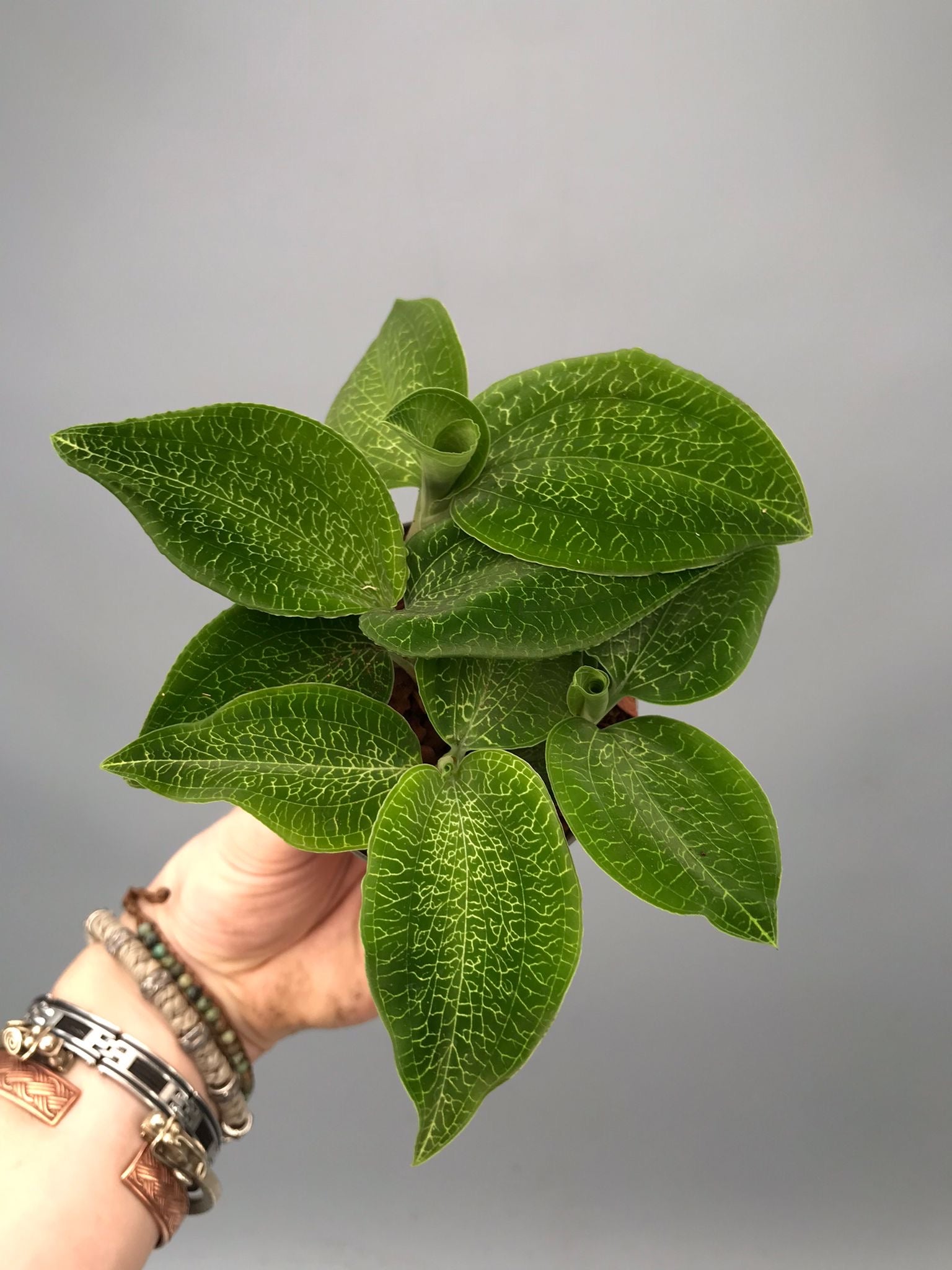
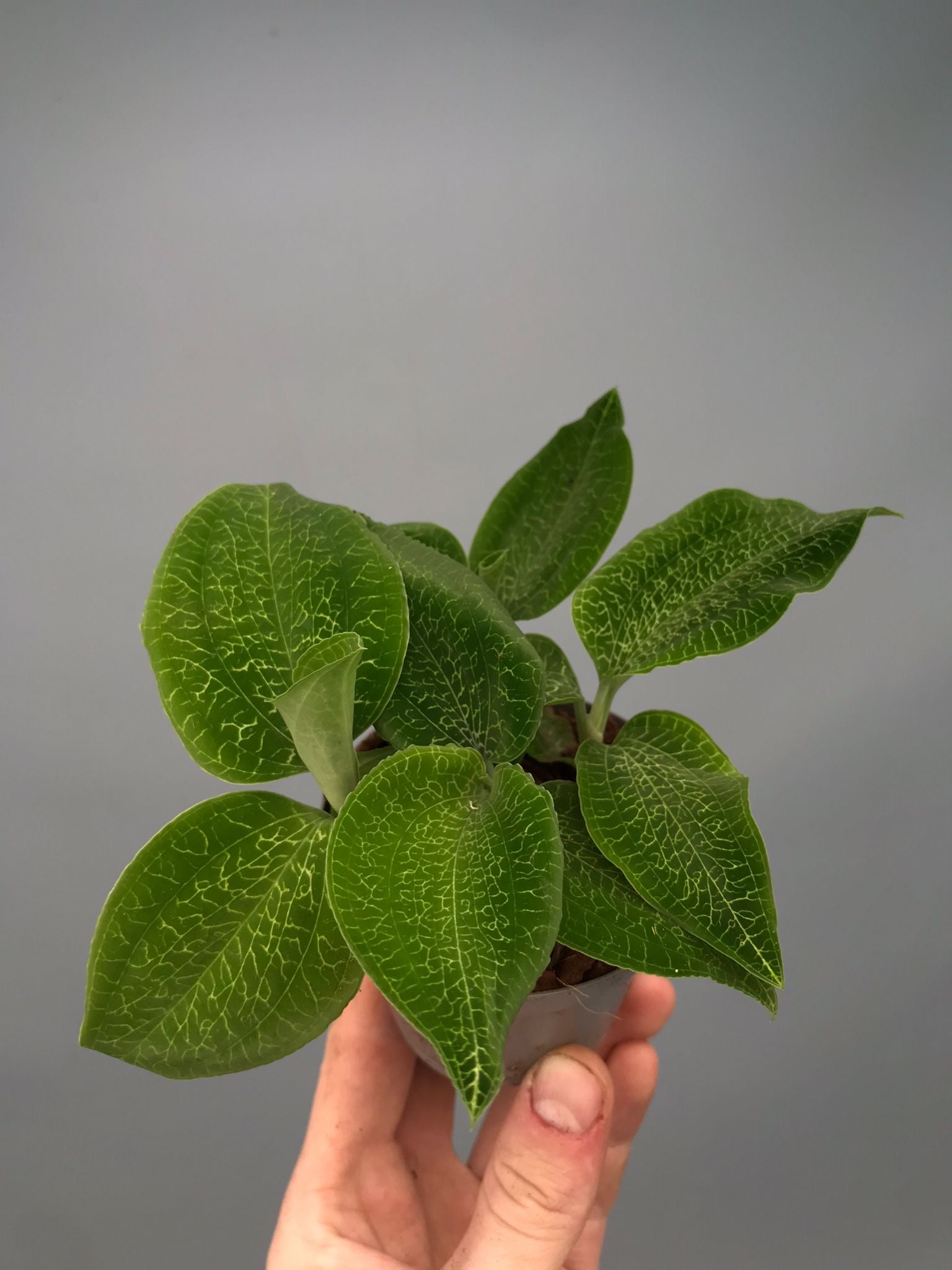
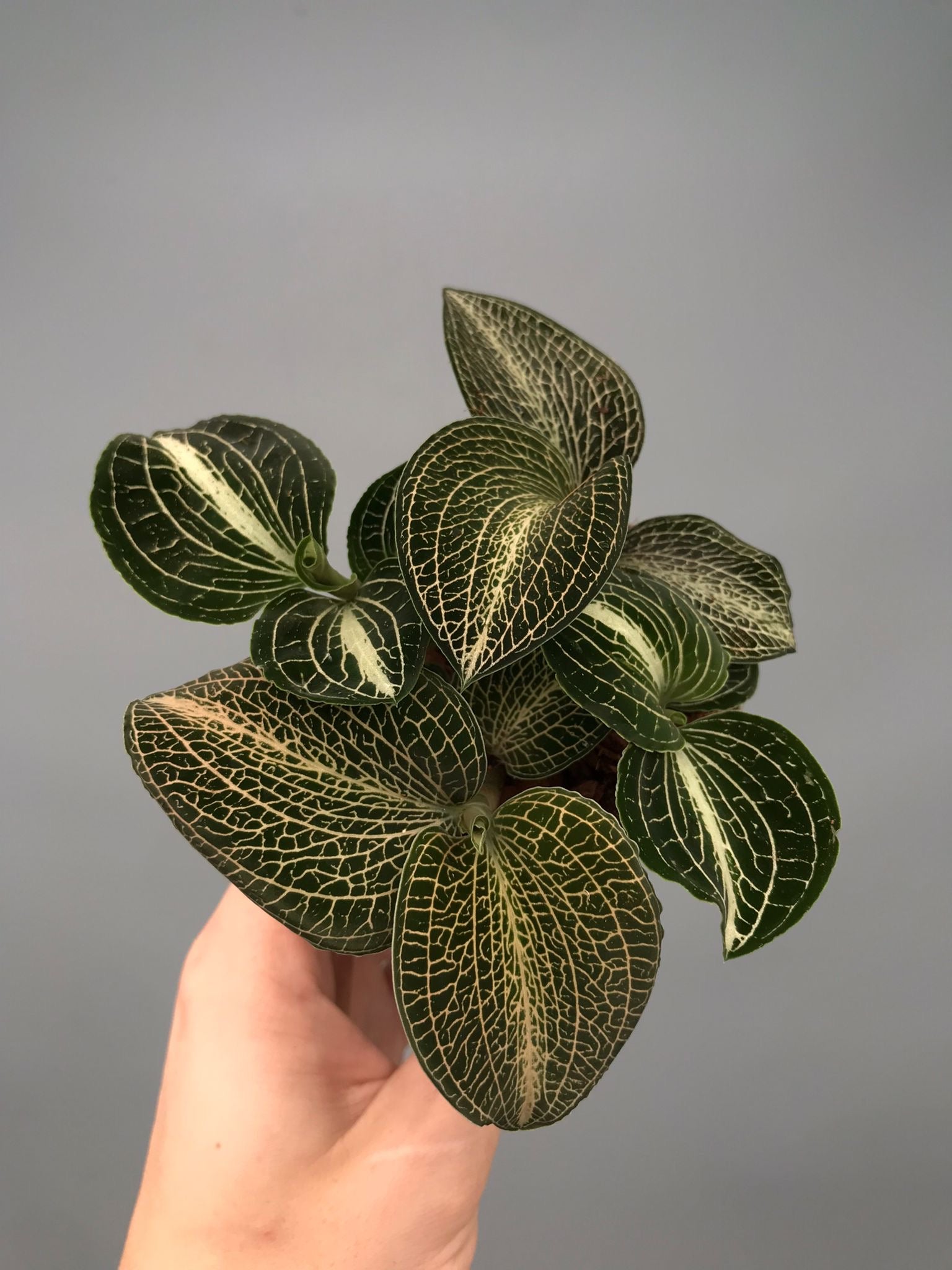
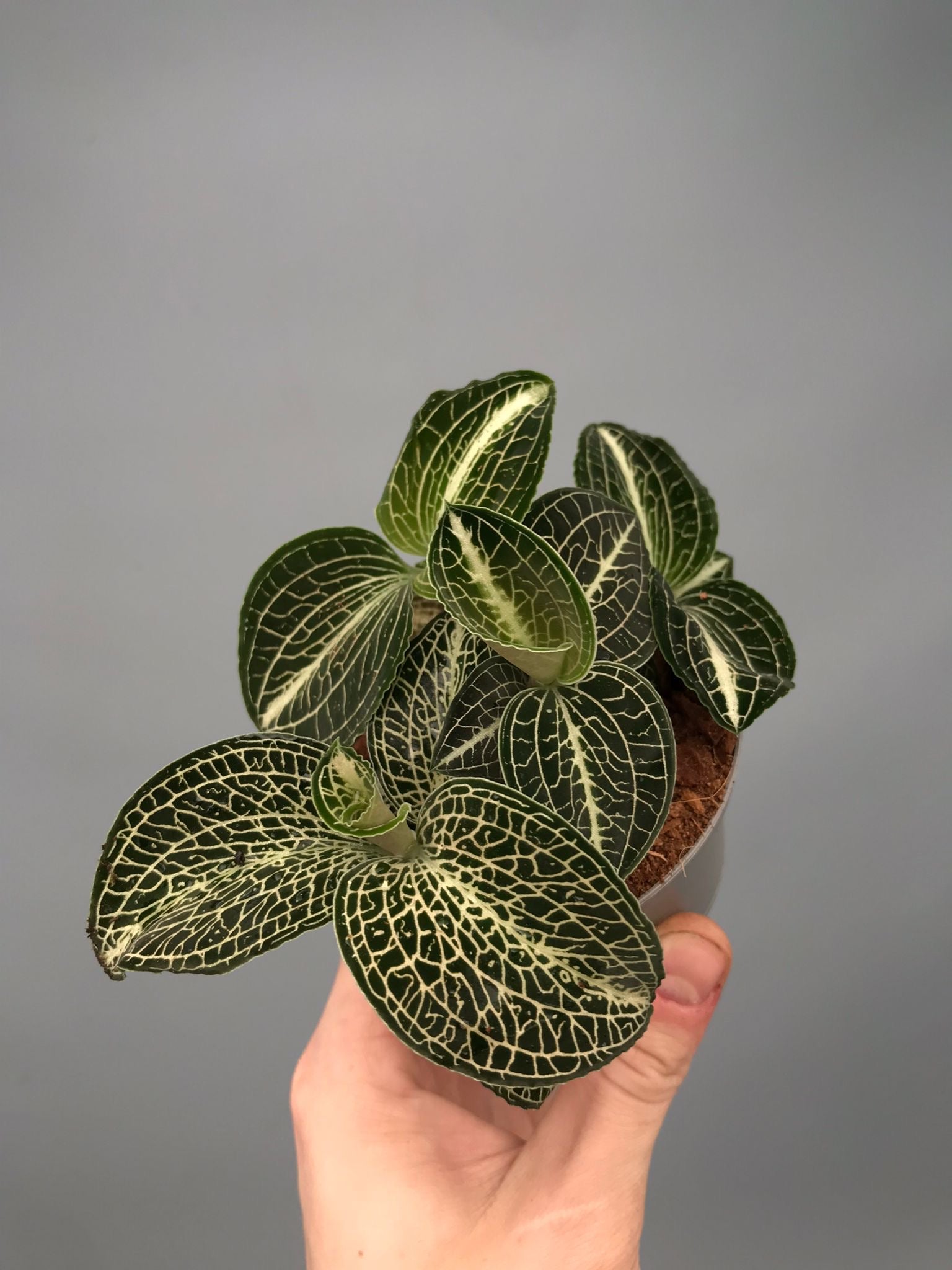
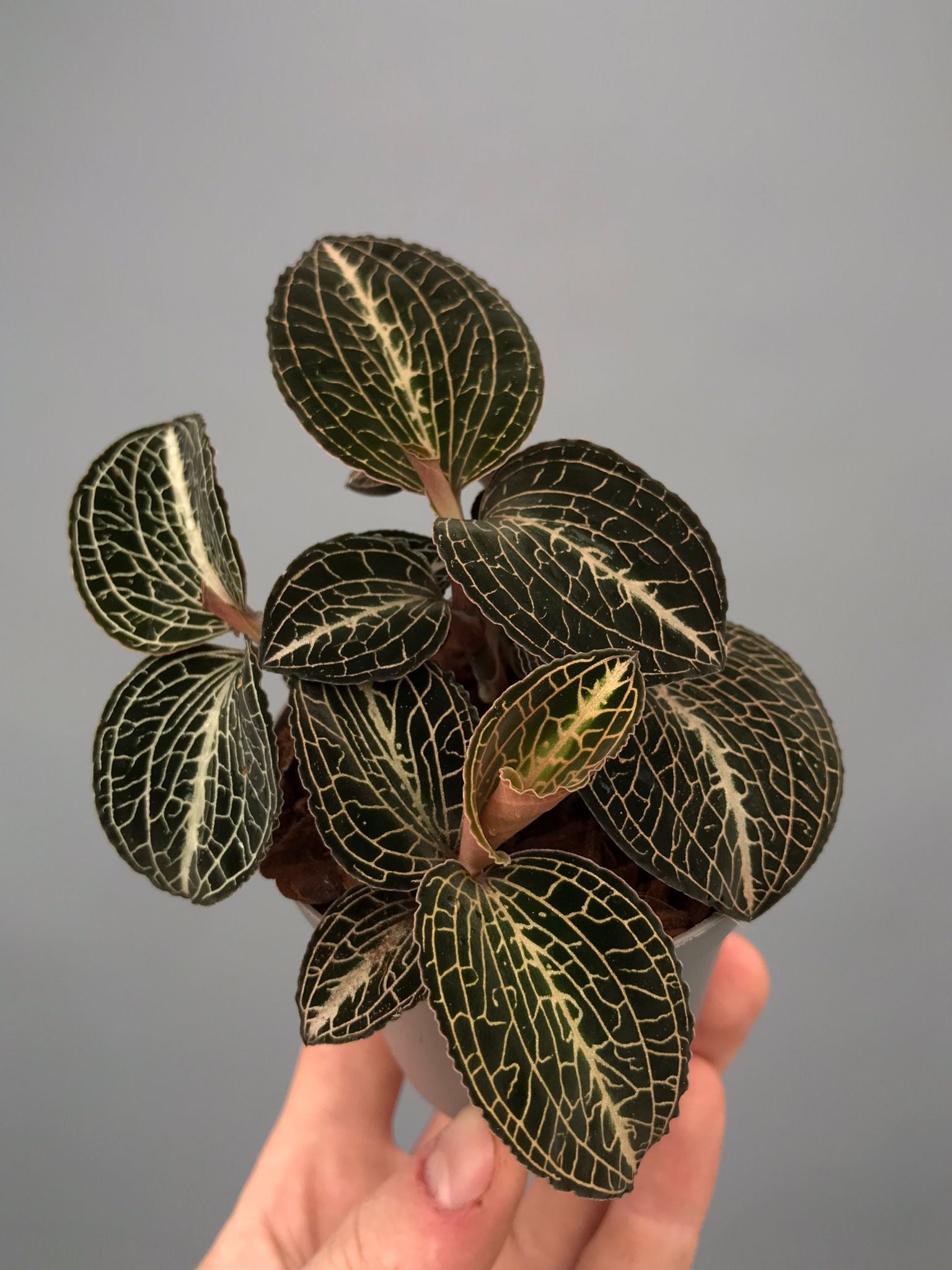
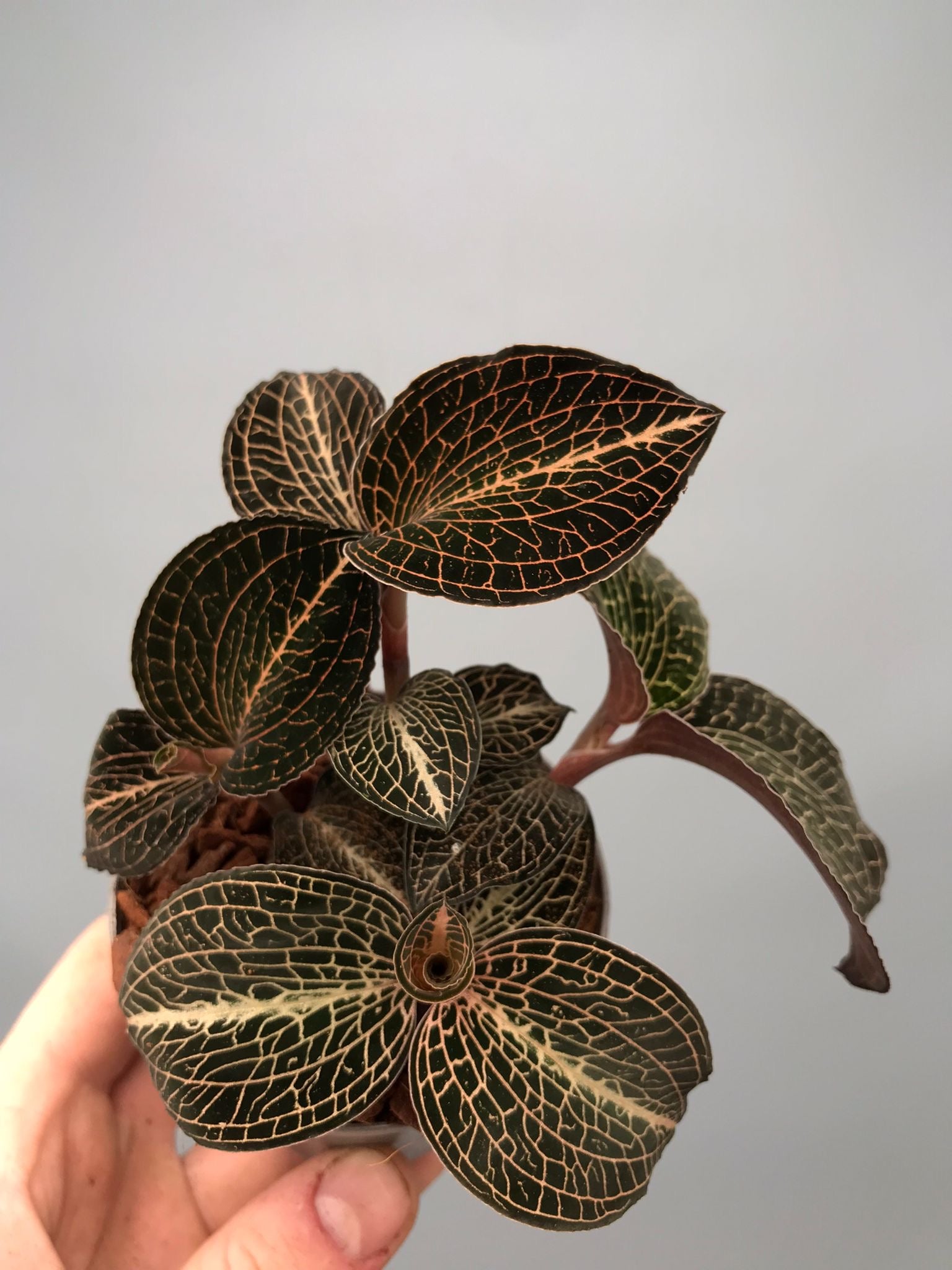
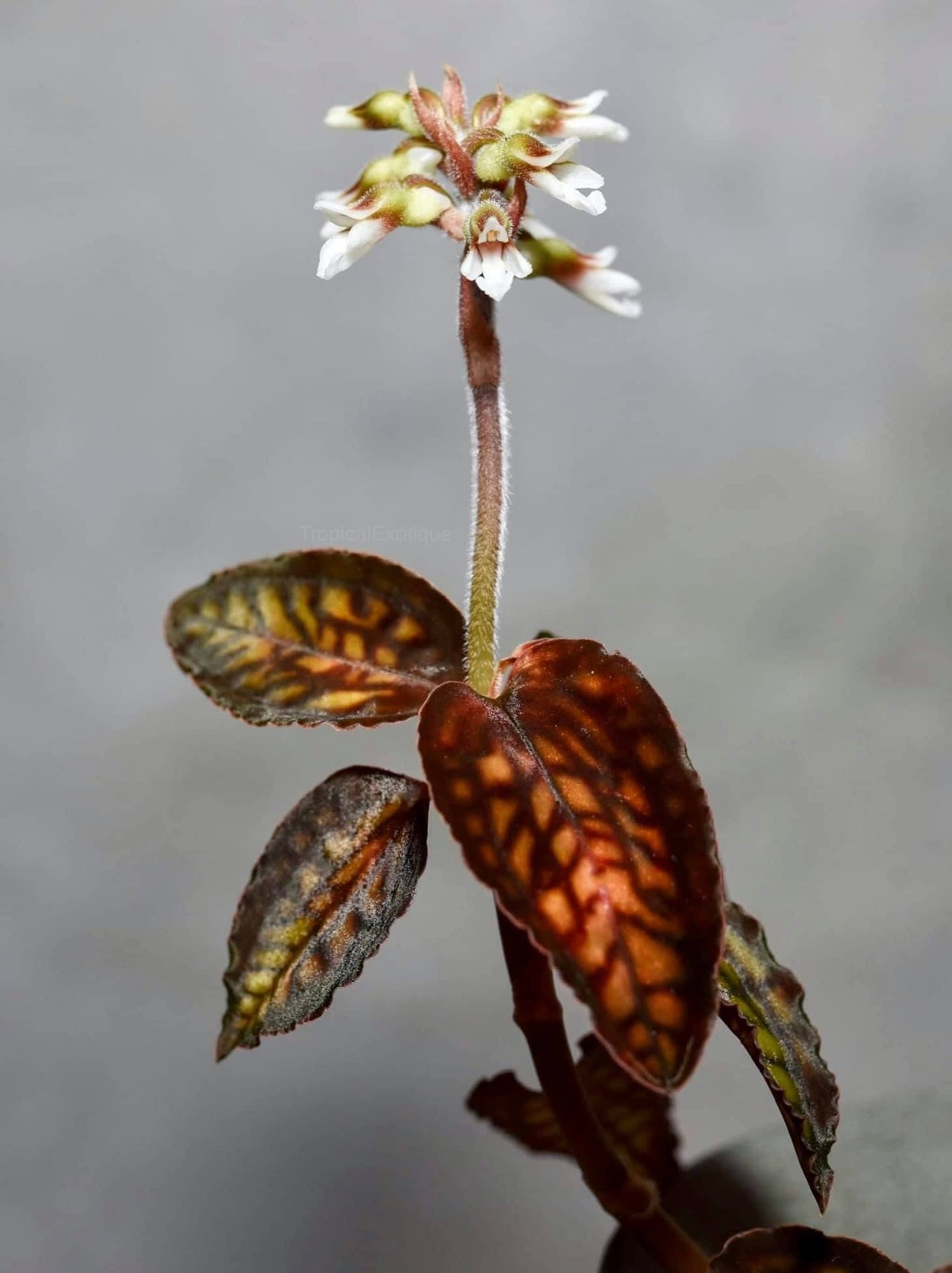
Jewelry orchids are not primarily collected for their large or showy flowers, but for their exceptional leaves. Depending on the species, the leaves can be velvety green, nearly black, copper-colored, or reddish-brown, with fine veins that shimmer silver, gold, pink, or an almost electric green in the light.
In this collection, you’ll find accessible Ludisia orchids for your home, as well as more specialized Macodes, Anoectochilus, Goodyera, Dossinia, and Cystorchis orchids for a display case or a well-designed terrarium. Also, be sure to check out our mini orchids, unusual orchids, and other orchids that are collected primarily for their foliage.








Recent bekeken
What is a jewel orchid?
Jewel orchid is not a separate botanical genus. It is a collective name for various orchid genera of which the leaves are a more important ornamental feature than in most other orchids.
Many jewel orchids grow along the forest floor with creeping stems or rhizomes. So they grow differently than the epiphytic ones Phalaenopsis, Vanda or Cattleya that grow with their roots on trees. Jewel orchids are usually kept in a low pot with a fine, moisture-retentive but airy terrestrial substrate.
The best known genera include:
Ludisia;
Macodes;
Anoectochilus;
Goodyera;
Dossinia;
Cystorchis;
Aspidogyne.
These plants are often sold as one group, but differ considerably in temperature requirements, tolerance for dry air and difficulty.
Metallic veins, leaf markings or variegation?
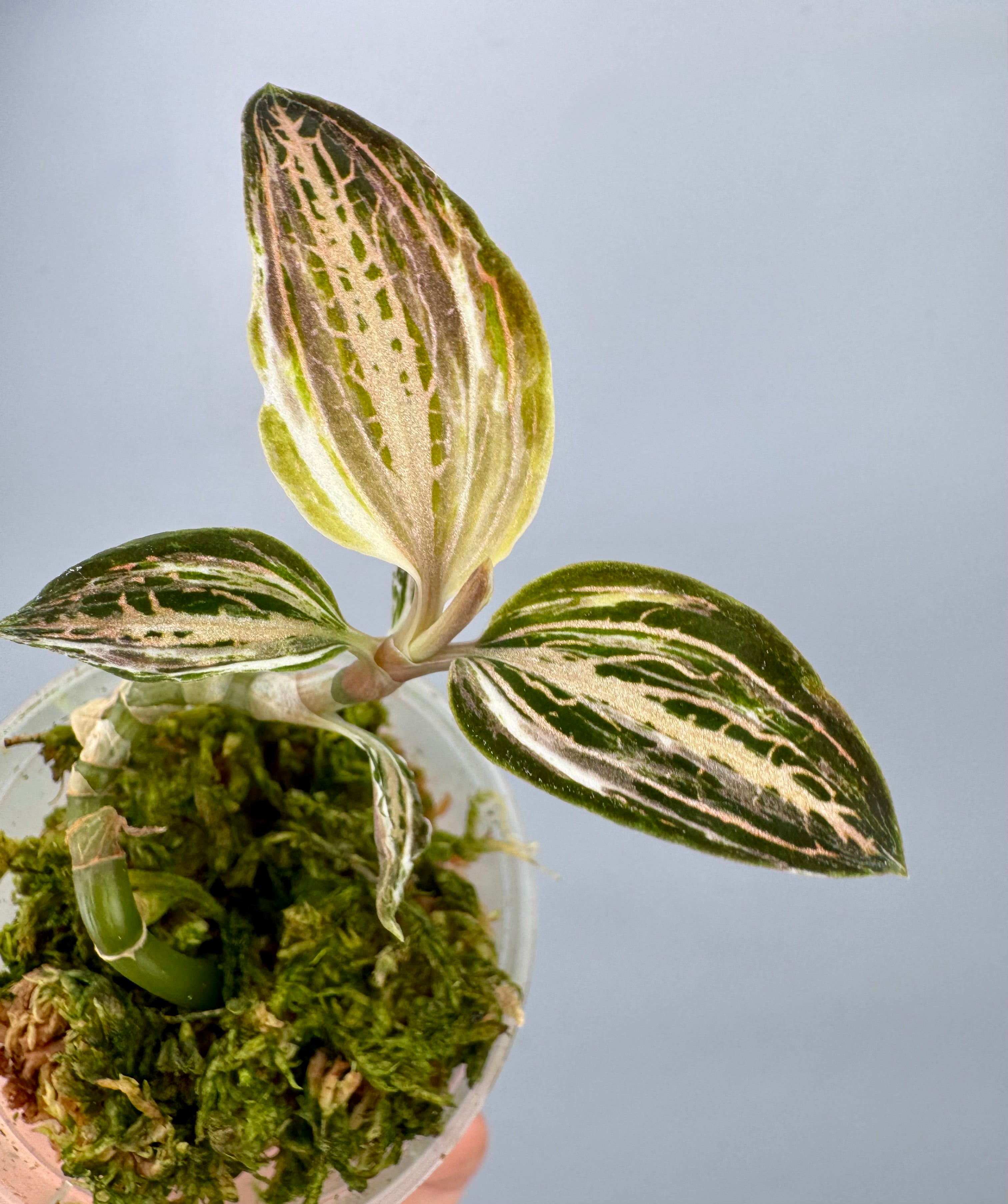
Not every striking leaf pattern is variegation. In many jewel orchids, the contrasting veins and shimmering lines are part of the normal appearance of the species.
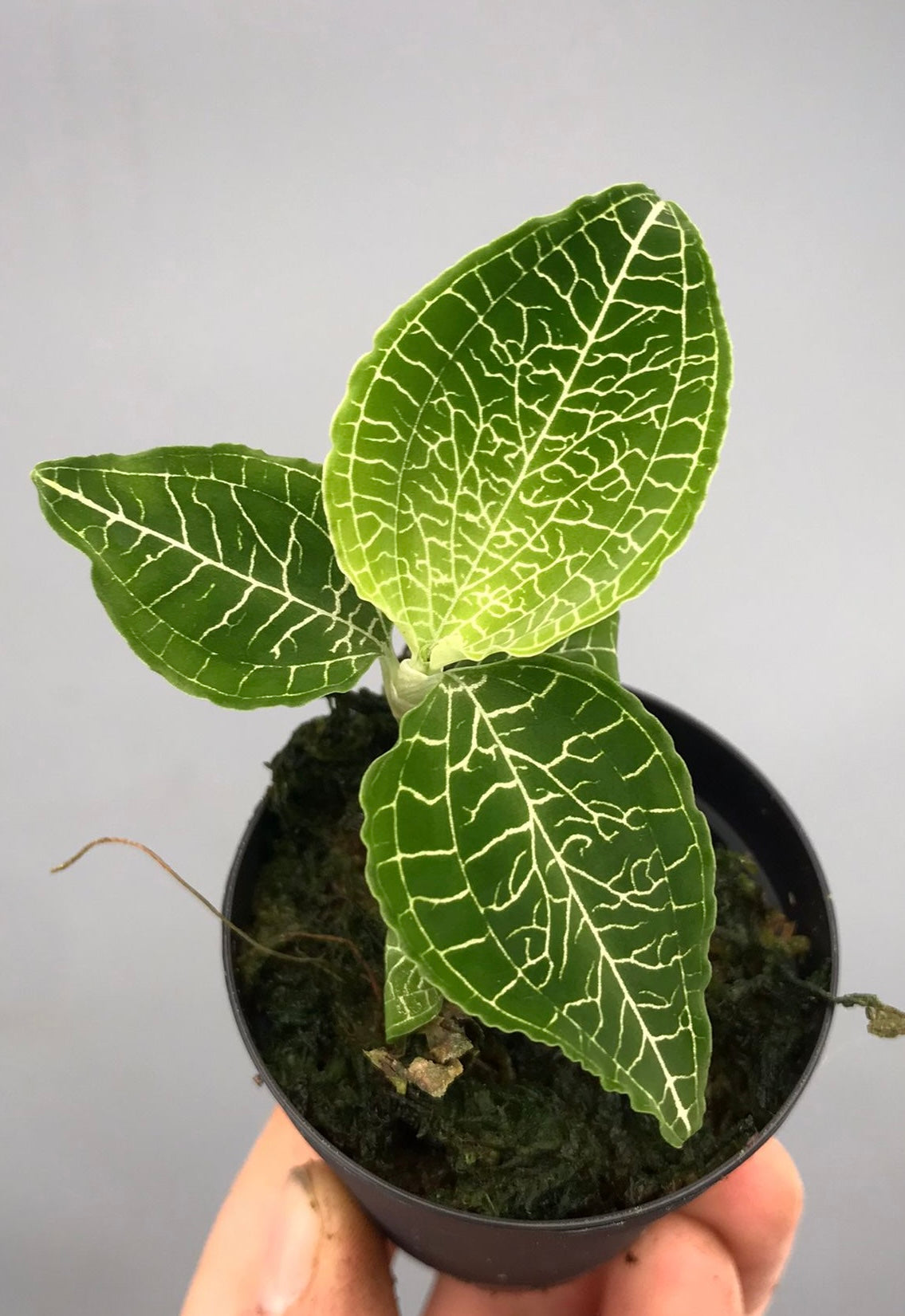
Macodes petola, for example, is known for a finely branched network of light-colored veins. Dossinia marmorata often has broader, contrasting lines on a dark and velvety leaf. Anoectochilus species can have veins ranging from gold and copper to pink or red.
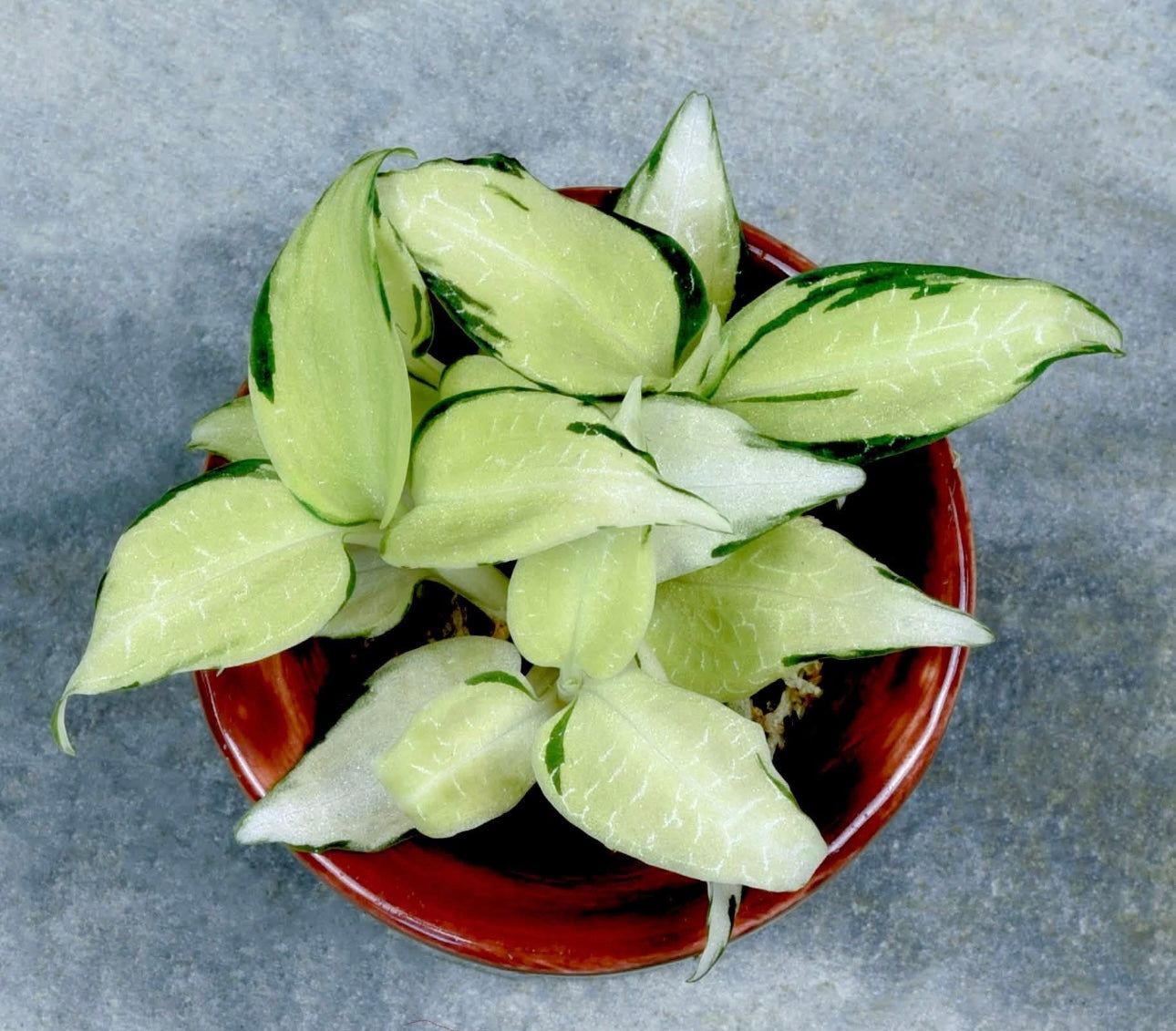
With a real one variegata Part of the leaf tissue is colored differently because there is less or no chlorophyll present. This can be visible as cream, white, yellow or lighter green. A Goodyera with silver-colored veins is therefore not automatic variegata; with names like Inner Variegated, Outer Variegated or albolineatus variegata there is an additional different leaf color.
Therefore, please check the product name and photo when purchasing. The natural leaf pattern, a selected cultivar and true variegation are three different characteristics.
Which jewel orchid is suitable for beginners?
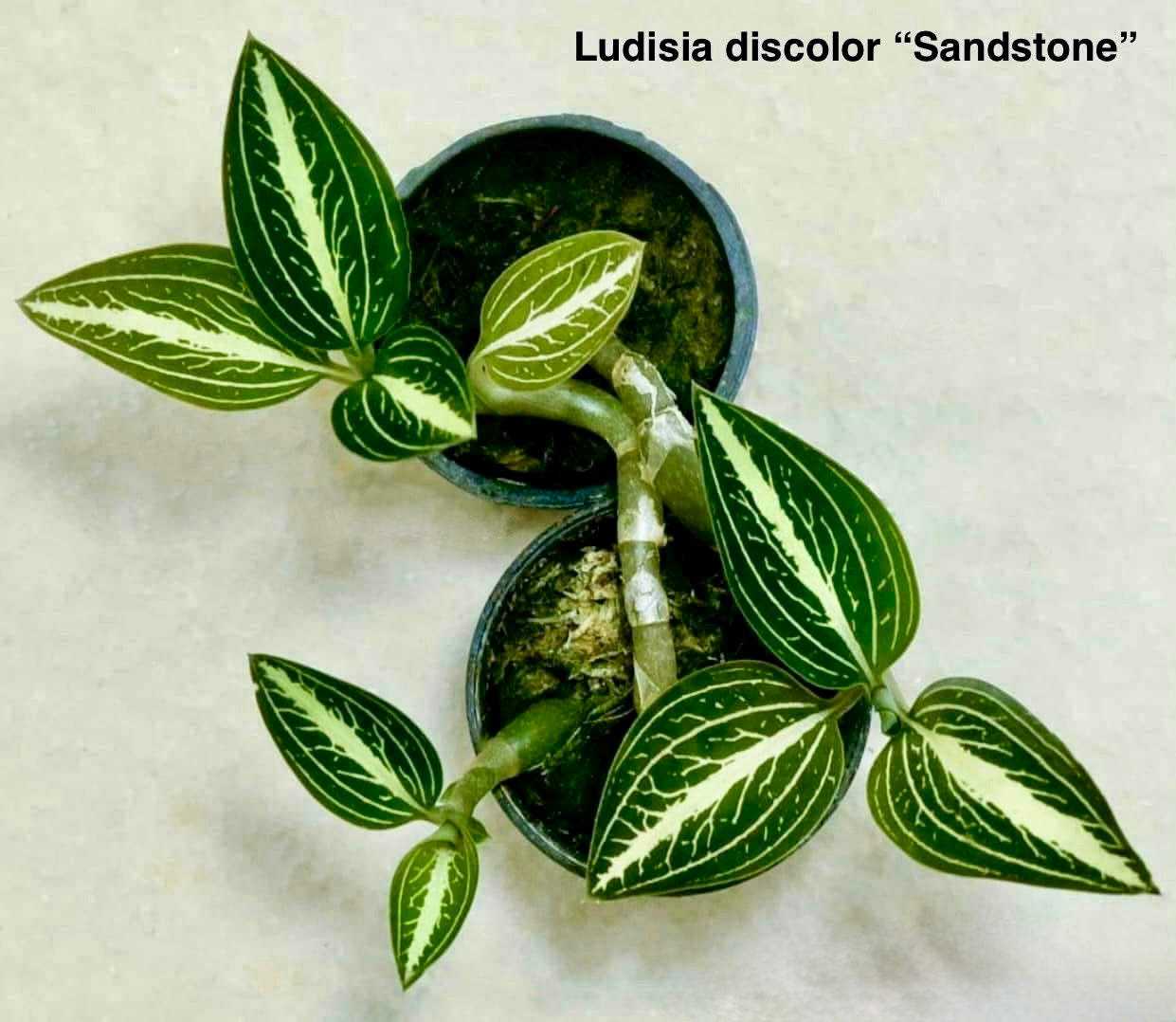
Not every jewel orchid is equally sensitive. Especially Ludisia discolor is suitable as a first jewel orchid. Ludisia is more adaptable to normal indoor conditions than many Macodes and Dossinia species and is described by the American Orchid Society as the easiest of the so-called jewel orchids. The plant grows warm, requires regular watering and can be kept in a moisture-retaining terrestrial mixture.
A larger or well-rooted specimen is usually more forgiving than a very small plant. Ludisia discolor, Ludisia discolor var. alba and cultivars such as 'Green Sandstone' combine a striking foliage with a relatively accessible growth habit.
For someone who already has experience with terrarium plants or moisture-loving orchids, larger Anoectochilus hybrids and established Goodyera plants may be a next step.
Macodes, Dossinia, Cystorchis, small seedlings and plants from a bottle usually require more control over moisture, temperature and air movement. The smallest or most valuable plant is therefore not automatically the best plant to start with.
Ludisia: the most accessible jewel orchid
Ludisia forms creeping, fleshy stems that can re-root upon contact with the substrate. The leaves are usually velvety and dark in color, with contrasting veins.
Over time, these plants can grow into a broad, full group. A product with the designation BigPlant consists of a larger, older or fuller specimen than the usual commercial size. This does not mean that Ludisia will eventually become a huge houseplant, but it does mean that you will receive a mature and richer-looking plant more quickly.
Ludisia does not require a permanently closed terrarium and can be kept at normal warm room temperatures. The plant should not dry out for a long time, but the substrate does not have to remain soaking wet all the time. A rich terrestrial mix with moisture-retaining ingredients is more suitable than the coarse bark mix that contains many epiphytic orchids.
Macodes: fine grains and a stable climate
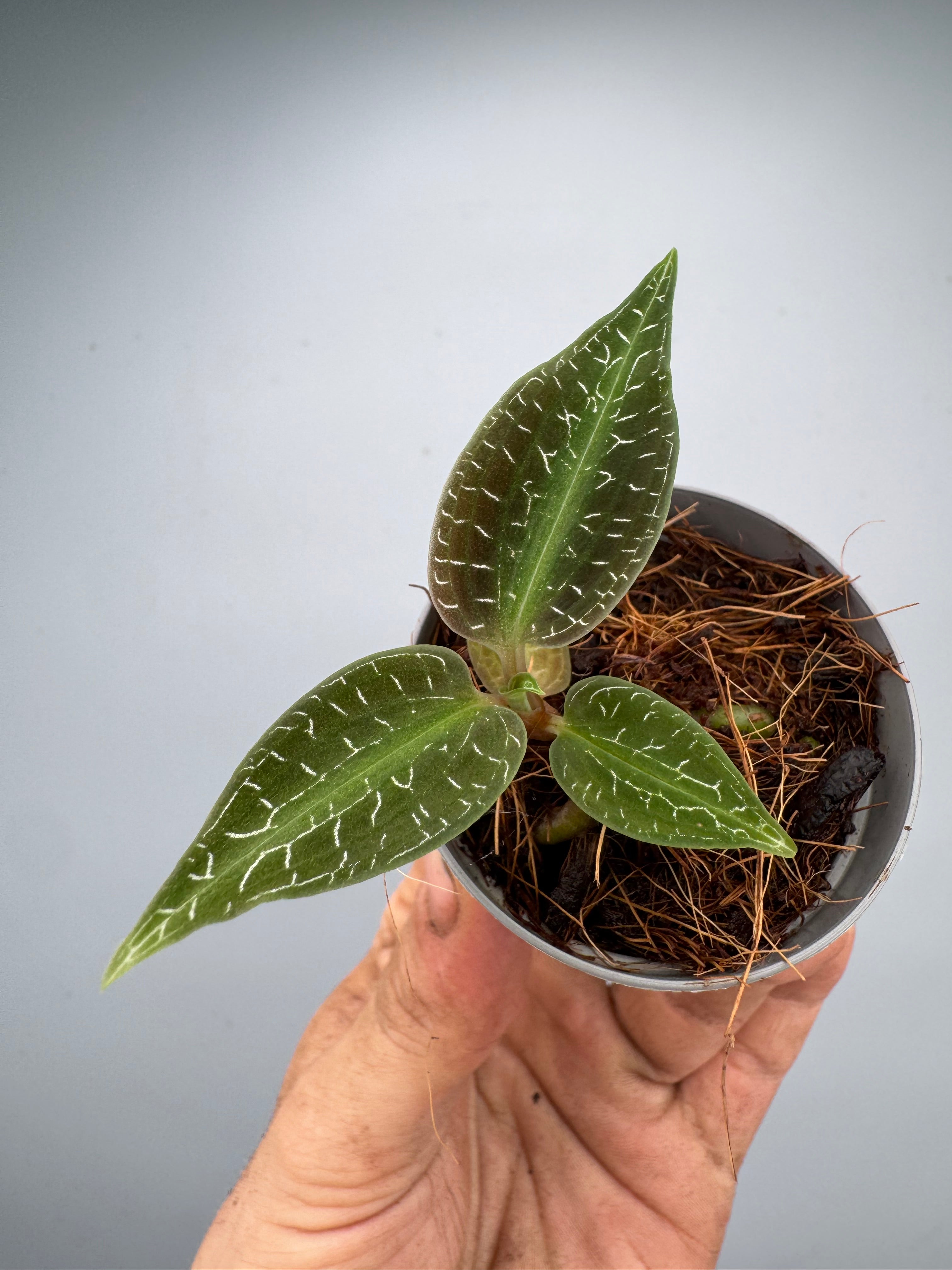
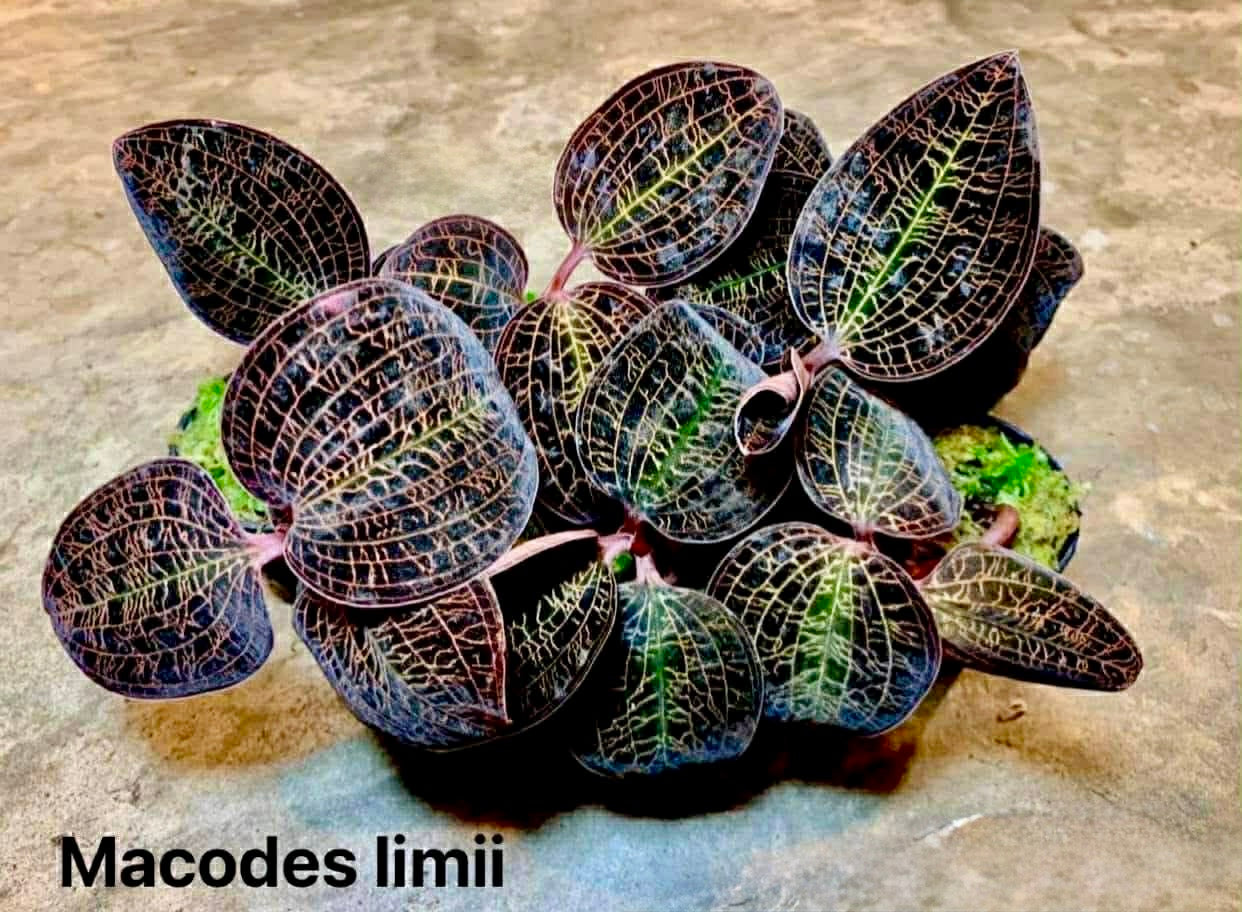
Macodes are collected because of the particularly fine and often highly reflective leaf veins. In Macode's petola, the lines appear to run almost like small lightning bolts across the leaf under oblique light. Species such as Macodes limii and Macodes sanderiana also each have a recognizable pattern and their own leaf color.
Macodes is less tolerant of strong fluctuations than Ludisia. The plants grow best in moderate temperatures, low to medium light and a substrate that remains evenly slightly moist. Prolonged drought, cold drafts and sudden changes in the growing climate can quickly become visible on the leaves and growth.
A terrarium or display cabinet may therefore be suitable, but only if temperature and air movement remain stable. A permanently wet bottom in a completely sealed container is no substitute for a well-regulated climate.
Anoectochilus: color, venation and special selections
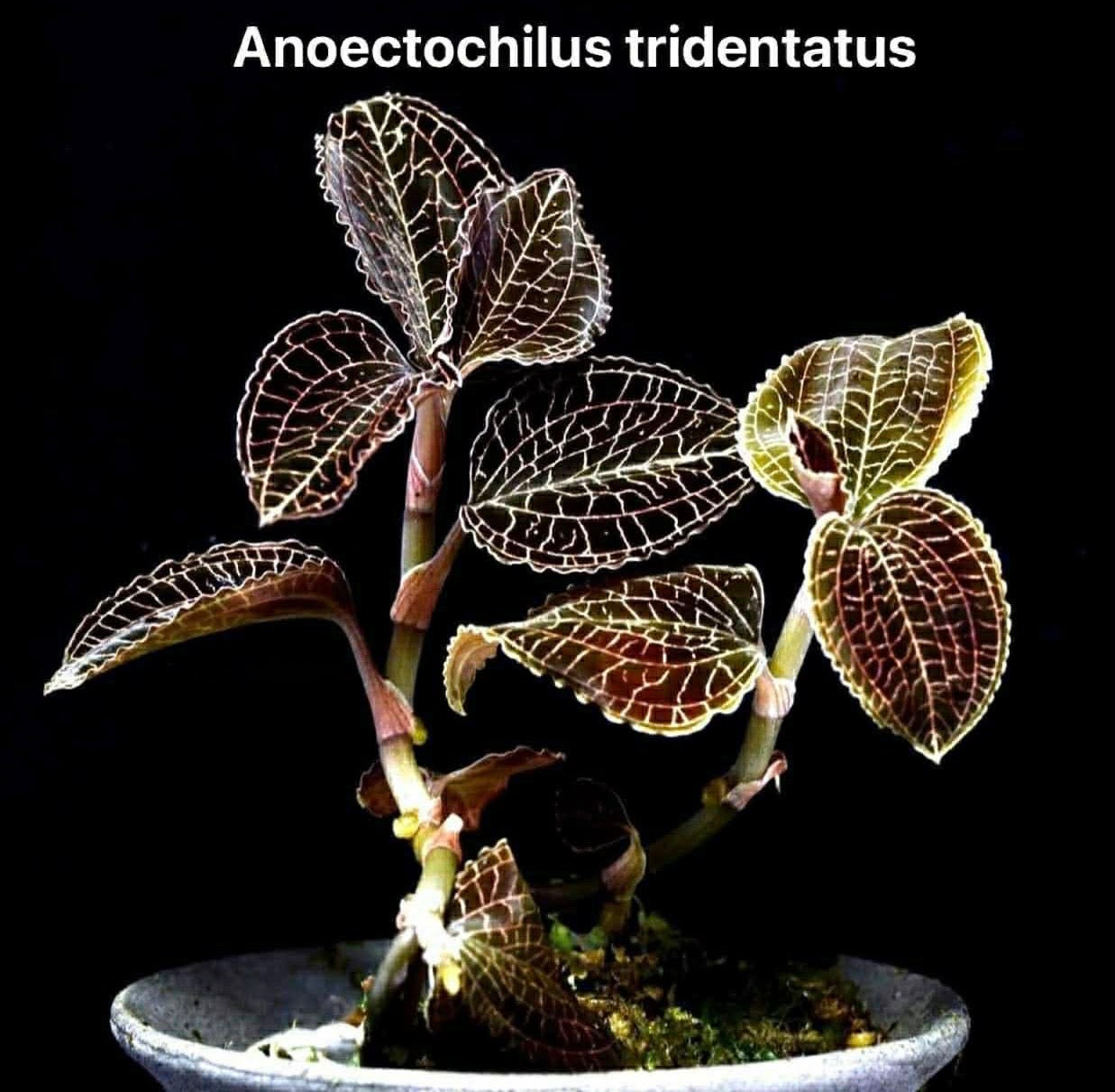
Anoectochilus is a diverse genus with species and selections ranging from bright green leaves to almost black leaves with copper, pink or gold veins.
The range includes Anoectochilus formosanus, Anoectochilus roxburghii, Anoectochilus reinwardtii and hybrids between different species. Selection names such as 'Red', 'Red Dragon' and 'Distinction' refer to a specific leaf color or drawing within the material offered.
Anoectochilus usually grows warm, with relatively little light and an evenly moist root zone. The plants benefit from higher humidity and stable conditions, making them suitable for a terrarium or planter. Temperature extremes and drafts are less well tolerated.
A larger plant or a pot with several plants gives a full presentation faster. A small seedling is cheaper, but has fewer reserves and requires more precise water management.
Goodyera: not every species requires the same temperature
Goodyera is much more widely distributed than most other genera within this collection. The genus is found not only in tropical Asia, but also in temperate parts of Europe, North America and other regions. The care cannot therefore be made the same for every Goodyera.
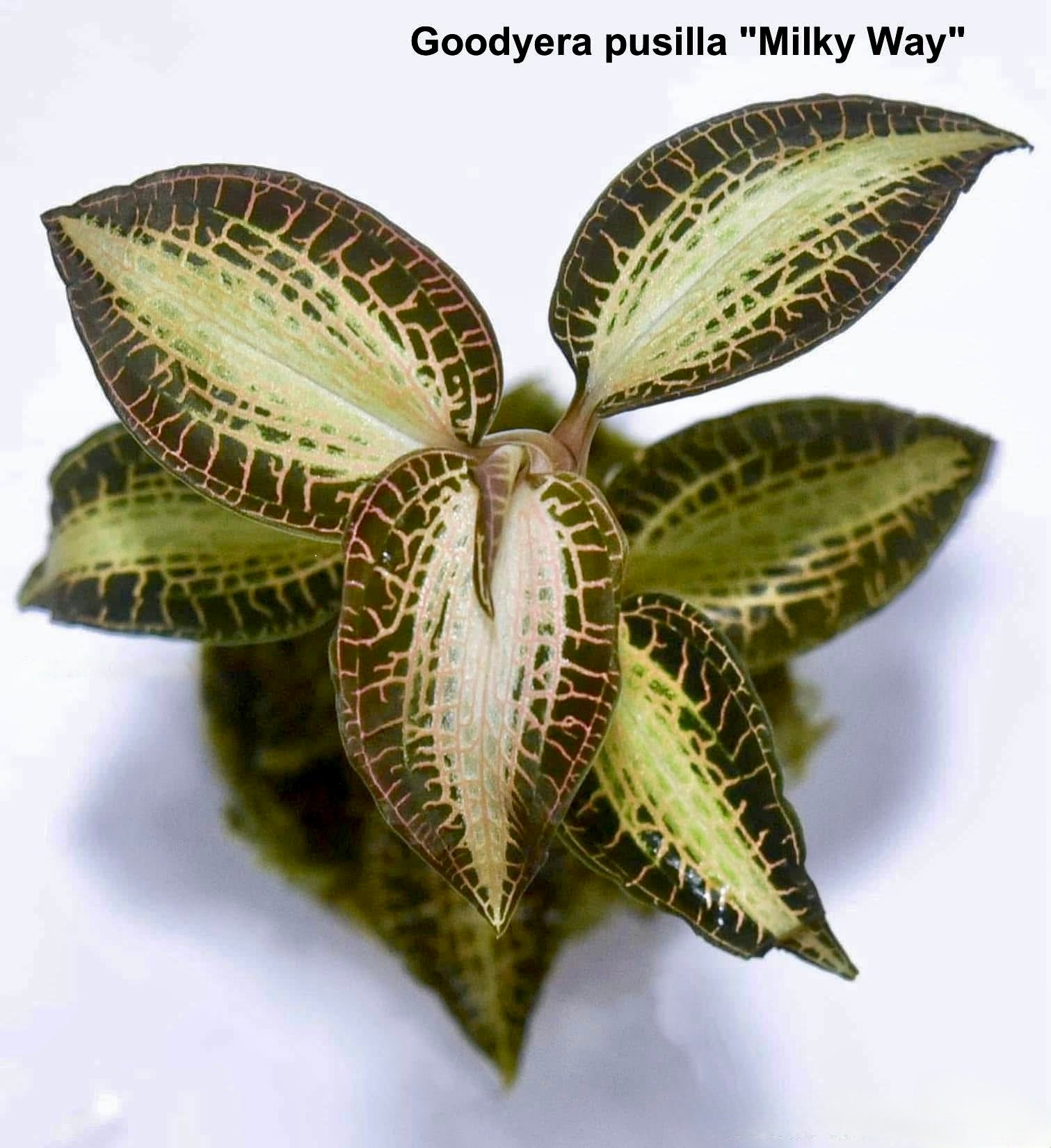
The tropical and subtropical species offered as jewel orchids, such as Goodyera schlechtendaliana, Goodyera pusilla, Goodyera micholitziana and Goodyera hispida, are generally kept in low to medium light and an evenly moist root zone.
Many Goodyeras prefer to grow temperate to cool-temperate rather than extremely hot. Goodyera schlechtendaliana, for example, occurs from Tibet and Japan to Sumatra and grows naturally in a subtropical climate.
Therefore, do not automatically place a Goodyera in the warmest part of a tropical terrarium. Look at the specific origin and temperature requirements of each species. The American Orchid Society recommends medium to low light, regular watering and mostly temperate to cool-temperate conditions during growth for the genus.
Dossinia and Cystorchis for the specialized collector
Dossinia marmorata comes from Borneo and is collected for its wide, velvety leaves with highly contrasting veins. It is the only accepted species within the genus Dossinia.
Dossinia grows warm, in low light and high humidity. The fine root system should not dry out for a long time. A fine terrestrial mix or live sphagnum may be suitable, provided sufficient air remains around the roots and the substrate does not become acidic or smothered.
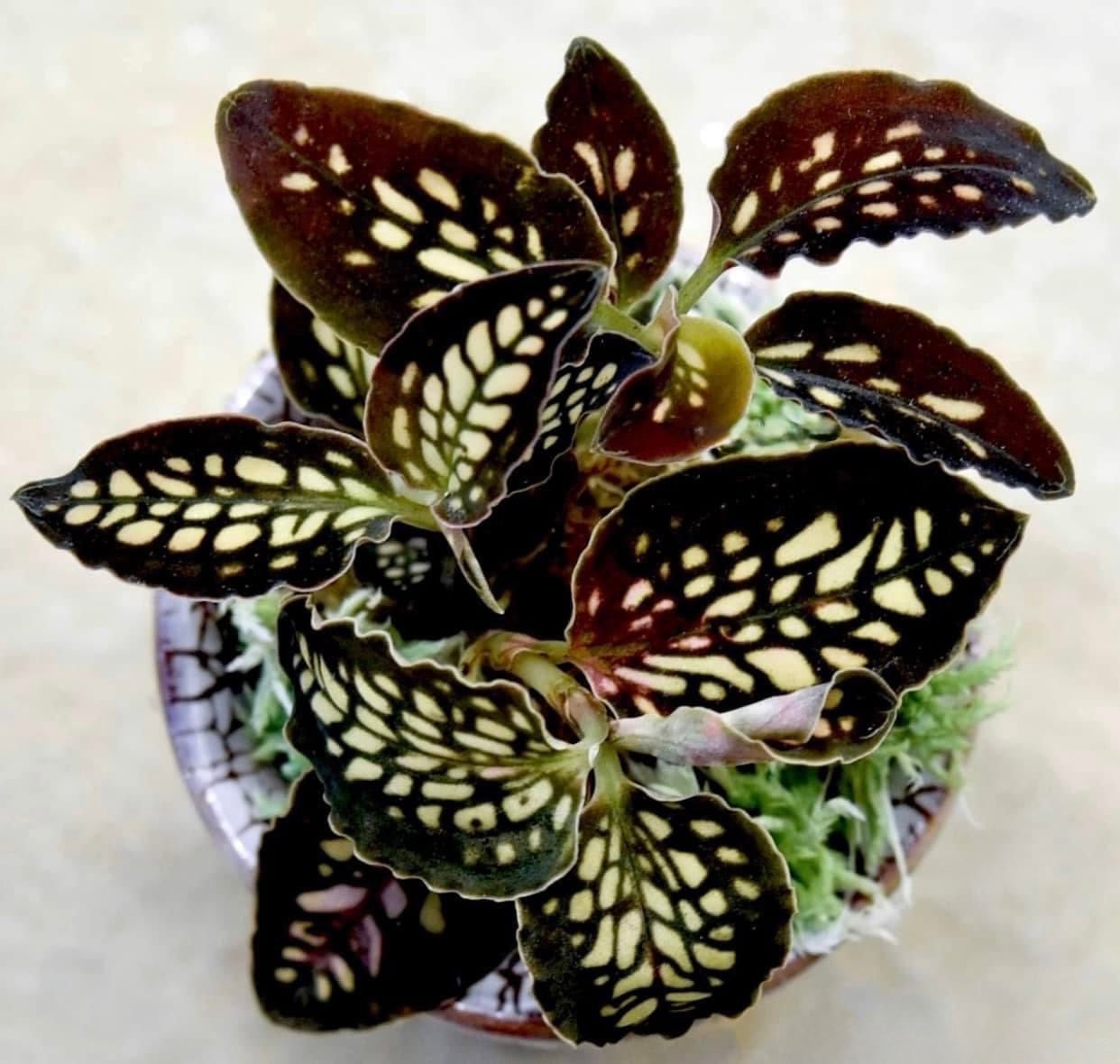
Cystorchis stenoglossa and selections such as 'Batik' have a different leaf appearance, with a pattern that may appear more marbled or painted. Cystorchis also requires warmth, little to medium light and a regularly moist root zone. The plant should not dry out completely.
These genera are especially interesting for collectors who can actively control the climate in a display case, greenhouse or terrarium.
Which substrate is suitable?
There is no mandatory universal substrate for all jewel orchids. The old recommendation to place each species exclusively in sphagnum is too limited.
A suitable mixture should:
be fine enough for the relatively fine roots;
retain moisture for some time;
keep sufficient air in the root zone;
does not quickly close or turn sour;
suit the grower's watering routine and humidity.
Depending on the species and growing environment, a mixture may consist of fine orchid bark, sphagnum, coconut fiber, perlite and a suitable organic component. Ludisia tolerates a richer terrestrial mix, while Dossinia can also be kept in a fine mix or live sphagnum. Macodes are also grown in a terrestrial mixture that remains slightly moist.
Sphagnum can therefore function well, but only if it remains airy and the watering is tailored to it. Old, compacted sphagnum that is constantly saturated can actually worsen root condition.
Water without smothering the roots
Most tropical jewel orchids prefer to grow evenly slightly moist rather than completely dry. However, that does not mean that the pot must be continuously in water.
Water again when the substrate starts to dry at the top, while there is still slight moisture deeper in the pot. How quickly that moment is reached depends on the Potsize, the substrate, temperature and humidity.
A small plant in a 5.5 centimeter pot dries out considerably faster than a Big Plant in a fuller pot. Therefore, check young plants more often, but do not automatically water every day.
Misting can temporarily moisten the air around the plant, but it does not replace targeted watering of the roots. Constantly wet leaves in stagnant air can also cause problems.
Rainwater or osmosis water can be useful when the tap water contains a lot of salts. However, it is not necessary to grow every Ludisia exclusively with osmosis water. Sensitivity varies per species, substrate and local water quality.
How much humidity is needed?
A fixed lower limit of 70% for all jewel orchids is not correct.
Ludisia can often adapt to a normal living space without permanently maintaining very high humidity. Macodes, Anoectochilus, Dossinia and Cystorchis generally respond better to a more stable humid climate and are therefore more suitable for a display cabinet or terrarium.
The higher the humidity, the more important air movement and correct watering become. High humidity slows down evaporation from the substrate. If you continue to water as often in a closed display cabinet as on an open windowsill, you can keep the roots wet for too long.
Do not focus solely on the percentage of a hygrometer. The combination of root condition, drying time, temperature and air movement determines whether the conditions are really suitable.
Are jewel orchids suitable for a terrarium?
Many jewel orchids fit well in a terrarium due to their compact growth and need for an even climate. Macodes and Anoectochilus are also explicitly described as suitable terrarium plants by the American Orchid Society.
However, a completely enclosed bell jar or ecosystem is not automatically suitable. Heat, condensation and stagnant air can quickly accumulate in a small closed space.
Therefore check:
whether the chosen species grows warm or temperate;
how much space the creeping stems ultimately take up;
how quickly the soil dries;
whether fresh air or gentle air movement is present;
whether the leaves are not permanently against wet glass or moss.
In time, Ludisia can grow quite widely and can therefore quickly fill a small terrarium. Dossinia and Macodes remain more compact, but often require a more stable climate.
Flowers of a jewel orchid
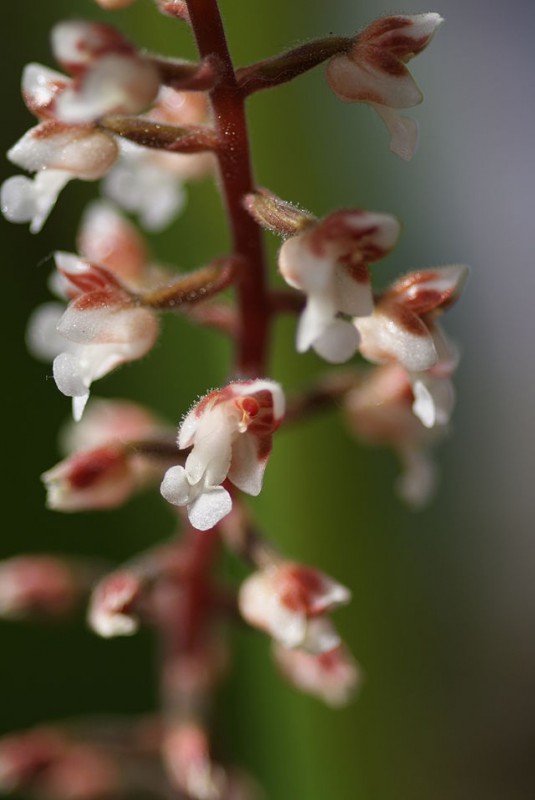
The flowers are smaller and less colorful than many Cattleyas, Vandas or Phalaenopsis, but they are not without botanical value.
Ludisia forms upright flower spikes with small white flowers. The flowers open one after the other, so the entire flowering period lasts longer than that of one individual flower.
Anoectochilus, Goodyera and Macodes can also form fine flower clusters. With a healthy adult plant there is no reason to remove a flower spike as standard. With a very small, weakened or recently acclimatized plant, you can choose to let the energy go to roots and new growth first.
Anyone who buys a jewel orchid primarily chooses the leaves, but still receives a real orchid that can bloom under suitable conditions.
What do Big Plant, multiple plants and flask mean?
Various product forms are offered within this collection.
BigPlant means that the item offered is larger, older or fuller than the usual size. It does not mean that the species will eventually grow exceptionally large.
For example, with products with three plants per pot you will receive several plants together. This immediately gives a fuller appearance and can be attractive when the plant is used as an eye-catcher in a terrarium or display cabinet.
One mix contains various jewel orchids that are put together by us. The exact combination may depend on the available batch.
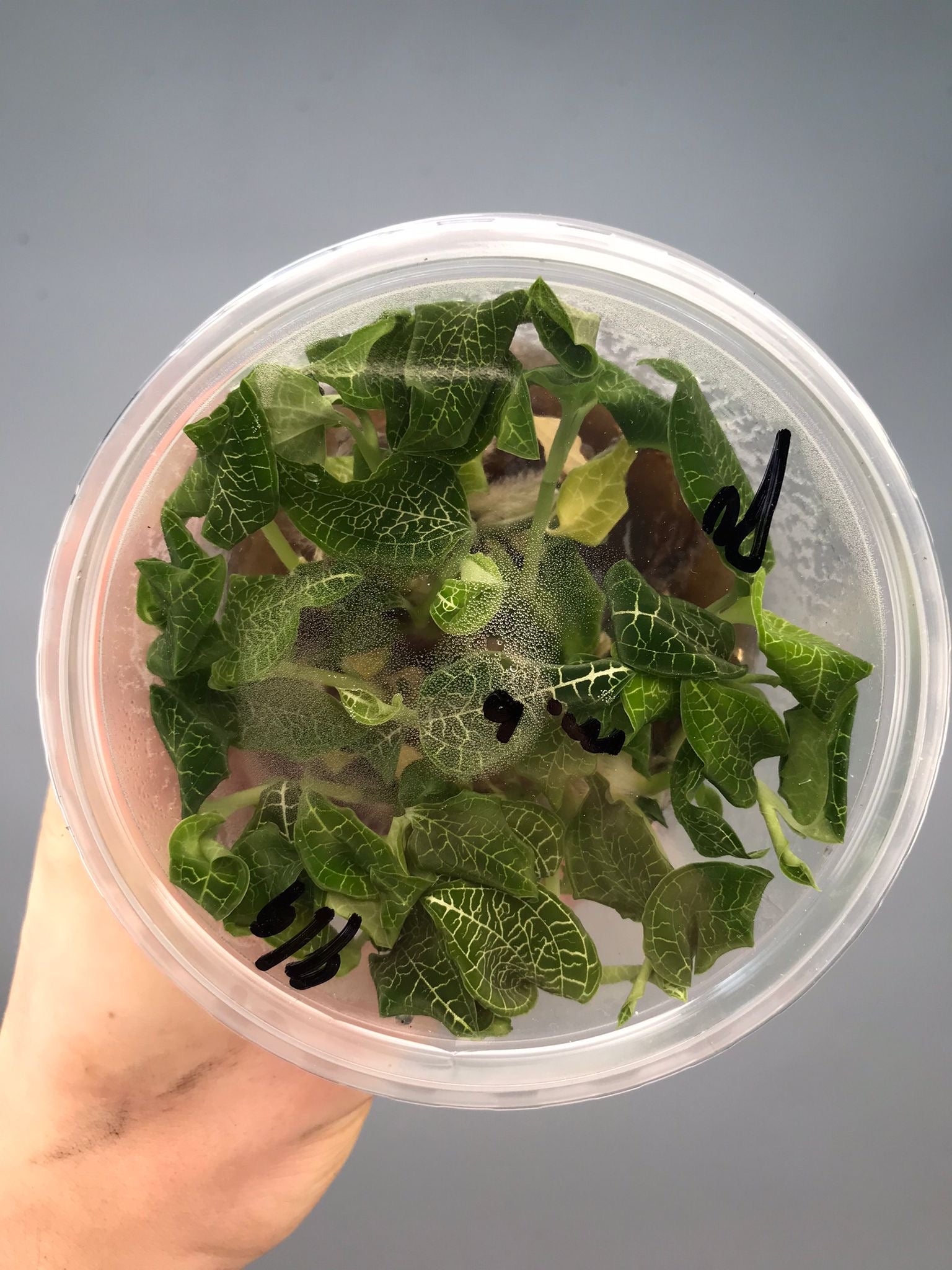
One flask contains very young plants from sterile culture. These plants should be gradually acclimated to normal air, substrate and humidity after opening. A flask is therefore intended for experienced growers and not as a simple houseplant.
Also pay attention to the plant stage. A seedling has fewer roots and reserves than one Adolescent or mature plant and usually requires more time before a full specimen is created.
Buy jewel orchids
Our range consists of accessible Ludisias, classic Macodes, strongly marked Anoectochilus, special Goodyera selections and specialist Dossinia and Cystorchis species. The range changes regularly because some cultivars and variegataselections are only available in limited numbers. The collection can currently be filtered by gender, Potsize, plant stage, flowering status and variegation.
Do not choose solely based on the most striking leaf. Also look at:
the temperature in your grow room;
normal humidity;
available lighting;
experience with fine-rooted terrestrial orchids;
the plant size offered;
the ability to provide a stable moist but airy root environment.
For a first jewel orchid, a well-rooted Ludisia is usually the safest choice. Macodes, Anoectochilus and Goodyera may be interesting for a controlled display case. Dossinia, Cystorchis, small seedlings and flasks are better suited to collectors who can accurately control the climate and watering.
Claessen Orchids & Plants has been working with special orchids since 2005. The plants are checked and carefully packaged before departure. View the current range and choose a jewel orchid that not only stands out visually, but also suits your available growing conditions.